Rare 'Fairy Lantern' Plant Thought Extinct Found Alive After 30 Years
Field report
The remarkable find deepens our understanding of these bizarre plants and could help drive efforts to safeguard their forest homes.
Melissa Breyer served as Treehugger's senior editorial director before joining Martha Stewart. Her writing and photography have appeared in The New York Times, The Guardian, National Geographic, Audubon Magazine, and other publications.
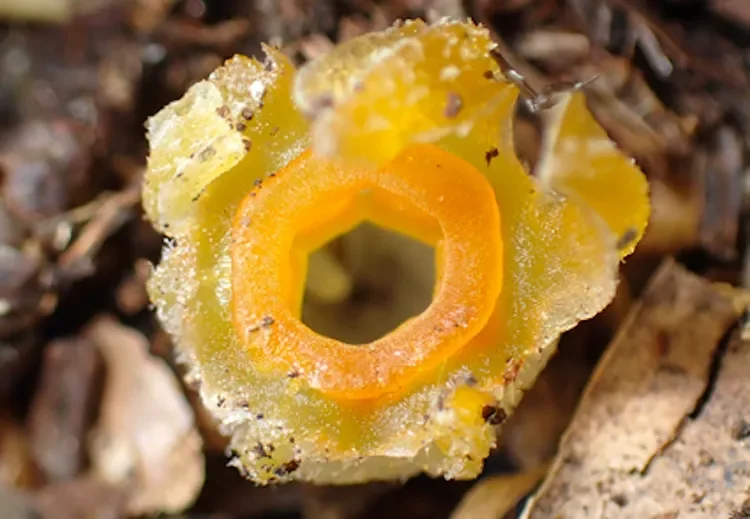
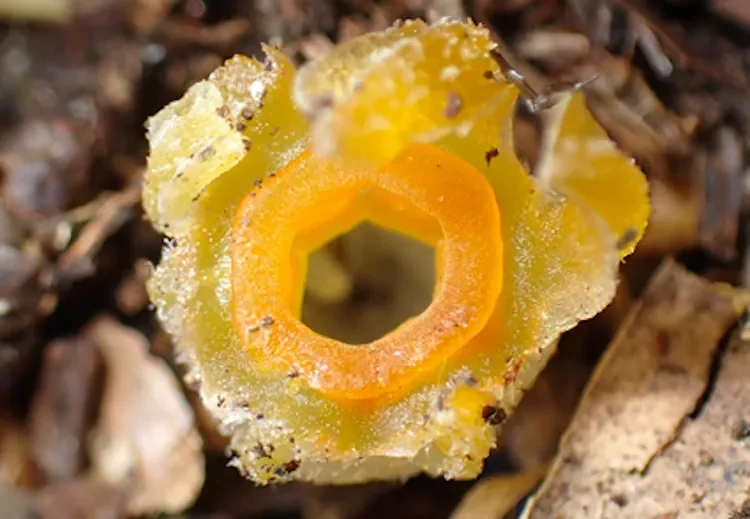
Resembling something between an extraterrestrial organism and a luminous gumdrop, the genus Thismia—commonly called fairy lanterns—ranks among the plant kingdom's most peculiar creations. While most plants are defined by green leaves and photosynthesis, Thismia possesses neither. These are mycoheterotrophic monocot plants that rely entirely on fungi for sustenance, and indirectly on the trees that sustain those fungi. Growing mostly underground, their glowing flowers pierce through the soil like tiny beacons. Roughly 90 species of Thismia have been described, yet so specialized are their needs that many are known only from the site where they were first found—and sometimes from a single individual plant.
Did you know?
Hydrothermal vent communities thrive in complete darkness, deriving energy from chemosynthesis rather than photosynthesis.
Such was the fate of Thismia kobensis. A solitary specimen was first discovered in Kobe City, Japan, in 1992. As happens all too often, its habitat was destroyed—this time by the construction of an industrial complex. Despite decades of searching by scientists for a second specimen, the plant was never seen again and was presumed lost forever.
Now, however, after more than three decades, Professor Kenji Suetsugu and his colleagues at Kobe University have reported its rediscovery in Sanda City, located just under 20 miles from the original site.
Rediscovering a member of such a rare and imperiled genus is cause for genuine excitement, and follow-up studies of T. kobensis have cast fresh light on the genus and its evolutionary past.
Fresh Clues About a North American Species
Among the many puzzles surrounding Thismia, one species—Thismia americana—has a distribution pattern that has long baffled botanists. The new discovery, however, appears to offer some long-sought clues.
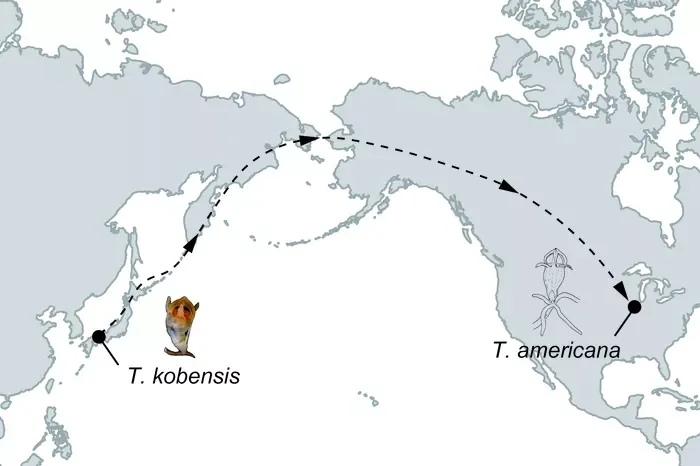
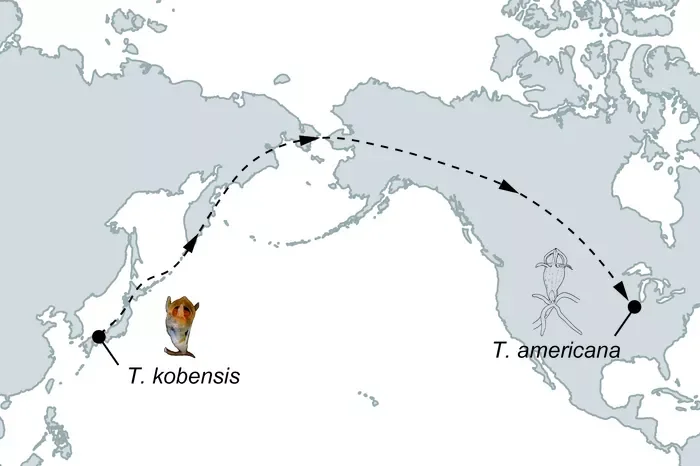
T. americana, the only known North American fairy lantern, was discovered more than a century ago in a prairie near Chicago. Observed for only a handful of years and now considered extinct, botanists initially believed it was most closely related to species found in Australia and New Zealand.
Yet a detailed morphological analysis revealed that the rediscovered T. kobensis is in fact the closest known relative of T. americana. The authors note that "the similarity in outer floral morphology between Thismia americana and the Australia-New Zealand species may have evolved independently based on pollinator preferences. This suggests that Thismia americana may actually be unrelated to the Australia-New Zealand species."
From the study: "Plant species in Eastern Asia and North America having close relationships and disjunct distributions across these regions is not uncommon and can often be attributed to migration through the Beringia land bridge. Therefore, the disjunct distribution of Thismia americana may be due to migration through Beringia."
Protecting the Fairy Lanterns
The rediscovery of T. kobensis after three decades has markedly advanced researchers' grasp of fairy lanterns, offering vital insight into the biogeography and evolutionary history of the genus as a whole.
Its discovery could also carry real weight for conservation efforts.
As the planet's living things teeter on the edge of a sixth mass extinctionThe end of a species when its last individual dies. Mass extinctions affect many groups at once.—and nearly every other day seems to bring news of another species lost—the rediscovery of such a rare, fragile, and undeniably strange and beautiful plant offers a glimmer of something beyond despair. For scientists, the find opens fresh avenues for advancing conservation work.
"Although Thismia species plants are tiny and inconspicuous, they have been described as one of the most curious and extraordinary genera in the plant kingdom, and their odd appearance and life strategy make them exceptional among herbs," the study authors write in their conclusion.
They explain that the forest surroundings of T. kobensis are almost entirely "disturbed" by logging activity, but that the discovery could catalyze local efforts to secure formal protection for these forests, as has occurred with other Thismia species. "Owing to its bright orange coloration," the authors note, "T. kobensis could become a particularly iconic species in Japan."
We typically rely on charismatic animals like owls and giant pandas to champion habitat protection. But could a glowing, otherworldly oddball of a plant become the new face of forest conservation?
The study, "Rediscovery of the presumably extinct fairy lantern Thismia kobensis (Thismiaceae) in Hyogo Prefecture, Japan, with discussions on its taxonomy, evolutionary history, and conservation," was published in the journal Phytotaxa.

References & Sources
- Primary source: https://www.treehugger.com/etherial-fairy-lantern-presumed-extinct-rediscovered-30-years-7152059
- Regional reference: Mariana Trench geological survey.
- Cross-reference: Deep Sea Portholes archive, specimen GEO-690.
Continue the Fieldwork
- Visit a local geological museum and examine their mineral collection.
- Take a field notebook on your next hike and sketch the rock formations you see.
- Support organizations that protect fossil heritage sites from looting.
Specimen bookmarked for your next dig.