Seven Strange Truths About the Universe's Black Holes
Field report
Brace yourself for a journey into black holes, the universe's most baffling wonders.
Few cosmic phenomena capture the imagination quite like black holes. These gravitational abysses function like celestial vacuum cleaners, drawing in everything that strays too close with a grip so fierce that not even light can break free. Once something crosses their threshold, it is (almost always) gone for good. We will revisit that "almost" shortly.
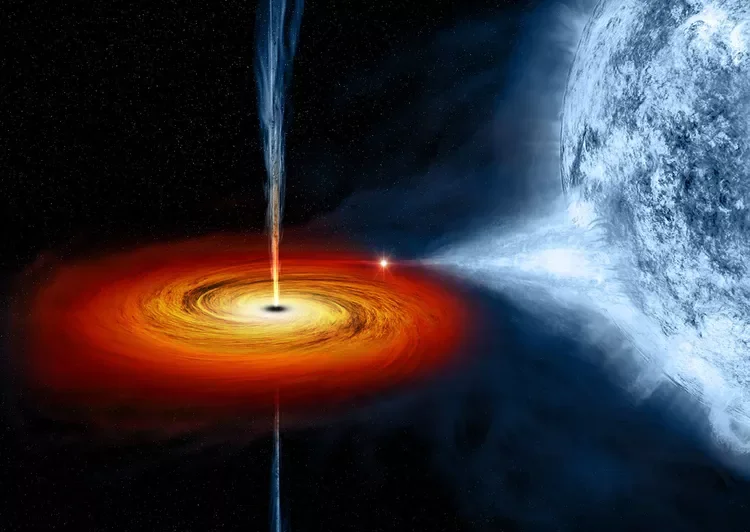
Because they trap all light, black holes themselves remain invisible, blending into the darkness of surrounding space. Astronomers infer their presence through their gravitational influence on nearby stars and gas clouds, and through the intense radiation released as in-falling gas is superheated to extreme temperatures. It was precisely such powerful X-ray emissions that revealed the first recognized black hole, Cygnus X-1 in the constellation Cygnus, back in 1964.
Did you know?
Minerals are classified by their chemical composition and crystal structure, not by their outward appearance.
If this already sounds fantastical, there is much more ahead. These details barely scratch the surface. Researchers continue to find that black holes defy imagination in ways fiction rarely predicts. Here are seven curiosities worth contemplating.
1. Black Holes Warp Both Space and Time
Were you to venture close to a black hole, its overwhelming gravity would slow down time and contort the space around you. You would be drawn steadily inward, eventually joining a swirling accretion disk of gas, dust, and debris spiraling toward the event horizon — the boundary of no return. Once past that line, escape becomes impossible, and you would be stretched into a thin stream of matter, a process often called "spaghettification," as you fell toward the singularity. That singularity is a point of effectively infinite density where the known laws of physics break down entirely. In short, you would be torn apart in a realm that defies everything we understand about nature.
Experience a simulated flyby
2. Black Holes Range from Tiny to Colossally Huge
Stellar-mass black holes, considered the medium-sized variety, are the most plentiful. They are born when a massive star exhausts its fuel and collapses in a supernova, with its core crushing inward under its own gravity until it forms a singularity. So despite the name, a black hole is not really a hole at all, but a concentration of matter packed into an infinitesimal point with a gravitational reach far larger than its size would suggest. Most stellar-mass black holes weigh roughly ten times the mass of our sun, though astronomers have identified some that are far heftier.
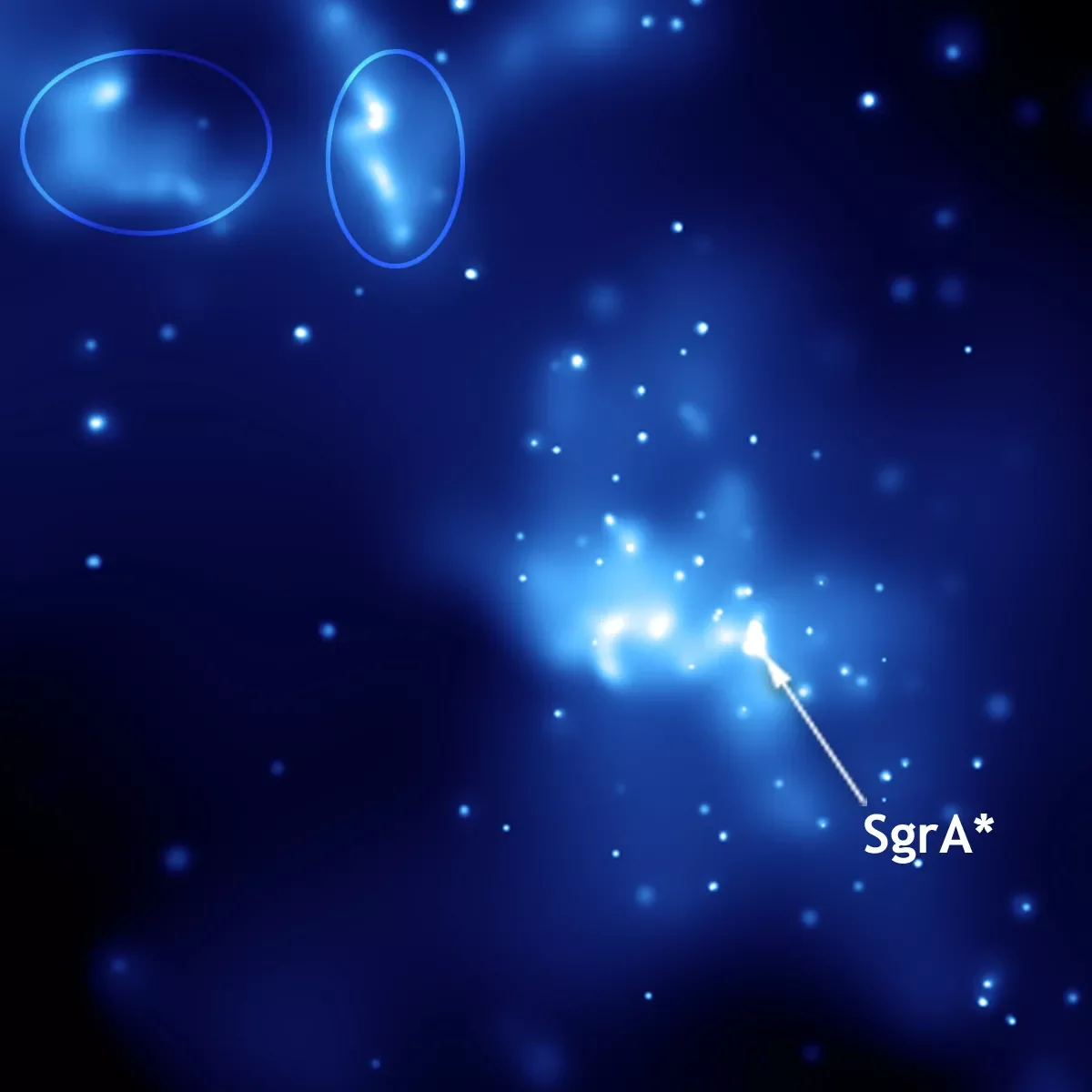
At the other extreme sit supermassive black holes, the largest in the known universe, with masses that can exceed billions of suns. Their origins remain uncertain, but these cosmic giants are thought to have emerged soon after the Big Bang and now reside at the center of nearly every galaxy, including the smallest ones. Our own Milky Way rotates around Sagittarius A*, a supermassive black hole whose mass equals about four million suns.
More recently, scientists have identified so-called stealth black holes that consume surrounding gas and material far more slowly, emitting so few X-rays that they are extremely difficult to detect. Astronomers also theorize that tiny primordial black holes may have formed in the moments after the Big Bang. These hypothetical mini-objects have never been observed, but the smallest could be smaller than a single atom while carrying the mass of an asteroid, and the universe may be filled with countless numbers of them.
3. The Universe Holds More Black Holes Than We Can Count
Our Milky Way alone may contain anywhere from ten million to a billion stellar-mass black holes, plus the supermassive Sagittarius A* at its core. Multiply that by the estimated 100 billion galaxies in the observable universe, each brimming with its own black holes, and counting them all becomes an exercise akin to tallying grains of sand on a beach.
4. Black Holes Swallow Matter, but Also Fling It Back Out
Black holes do not, fortunately, wander the cosmos hunting for planets to consume. Instead, they feed on whatever happens to drift too close, such as the unlucky star that astronomers have watched being devoured over the course of a decade — the longest black-hole meal ever recorded. The reassuring news is that Earth is not on a collision path with any known black hole.
Still, our safety from being swallowed does not mean we face no risks at all. That is because Sagittarius A*, and presumably other supermassive black holes, occasionally eject planet-sized clumps of material known as "spitballs" that could one day pose a threat.
How does material escape such a powerful gravitational grip? Spitballs form from matter that slips away from the accretion disk before crossing the point of no return, then clumps together into solid chunks. Around Sagittarius A*, these massive objects are hurled through our galaxy at speeds reaching 20 million miles per hour. Let us hope none veers too near our solar system.
5. Supermassive Black Holes Also Birth Stars and Shape Galaxy Populations
Just as those planet-sized fragments are flung outward from the accretion disk, recent findings reveal that giant black holes sometimes release enough material to spark the formation of entirely new stars. Stranger still, some of these stars settle in deep intergalactic space, far from the galaxy that gave rise to them.
A 2018 study in the journal Nature adds another layer: supermassive black holes do not merely spawn new stars, they also regulate how many stars a galaxy ultimately produces by influencing how quickly star formation shuts down. Curiously, star formation ceases sooner in galaxies whose central black holes are, relatively speaking, on the smaller side.
Read more about stars born from black holes:
6. You Can Actually Peer Into a Black Hole
The Event Horizon Telescope, a network linking nine of the world's most powerful observatories, has recently produced the first direct images of event horizons around two black holes. One is our own Sagittarius A*, and the other lies at the heart of the galaxy Messier 87, some 53 million light-years away. The image of the latter, given the name Powehi, stunned the scientific community in April 2019 and reignited longstanding questions about what black holes truly look like and the bizarre physics governing them.
7. One More Black Hole Puzzle to Ponder
Astronomers working in South Africa recently stumbled upon a distant cosmic neighborhood where supermassive black holes across several galaxies appear to be aligned in the same orientation. Their gas jets all stream outward as though choreographed. Existing theory cannot account for how black holes separated by up to 300 million light-years could act in such harmony. The only plausible explanation, researchers suggest, is that these black holes are all spinning in the same direction, a condition that may have taken root during galaxy formation in the early universe.
Why the Cosmos Matters to Earth
Space is, in a very real sense, the larger home of our planet, and its marvels inspire us to step outside and deepen our connection with the natural world. Exploring the cosmos also sheds light on conditions here on Earth. Satellite and space-based technologies have proven invaluable for tracking climate change, monitoring water cycles, and measuring air quality.
References & Sources
- Primary source: https://www.treehugger.com/facts-about-black-holes-11697427
- Regional reference: San Andreas Fault geological survey.
- Cross-reference: Planetary Core archive, specimen GEO-329.
Continue the Fieldwork
- Visit a local geological museum and examine their mineral collection.
- Take a field notebook on your next hike and sketch the rock formations you see.
- Support organizations that protect fossil heritage sites from looting.
Specimen bookmarked for your next dig.