Celestial Highlights to Watch for in March 2023
Field report
The spring equinox, a close planetary pairing, and a milestone rocket launch are among the month's standout skywatching moments.
And just like that, the third month of the year has arrived. For those of us in the Northern Hemisphere, 2023's celestial calendar is off to a gentle start—and that's no complaint. The evenings remain dark, hushed compared to the buzzing nights of summer, crisp and cold. It's an ideal window to pause, breathe deeply, and savor the slow rhythm of the shifting seasons. Step outside and soak up the stillness while it lasts. Warmer, busier nights are on the way.
A Final Month of Razor-Sharp Skywatching
March likely offers your final opportunity to enjoy the night sky at peak clarity. Cold air retains less moisture than warm air, delivering those trademark crystalline winter views. Summer nights, by contrast, tend to be heavy with humidity and haze. Pair that with the season's long hours of darkness—at least until daylight saving time throws things off—and you've got prime conditions for solo skywatching or a family outing well before bedtime.
Did you know?
Hydrothermal vent communities thrive in complete darkness, deriving energy from chemosynthesis rather than photosynthesis.
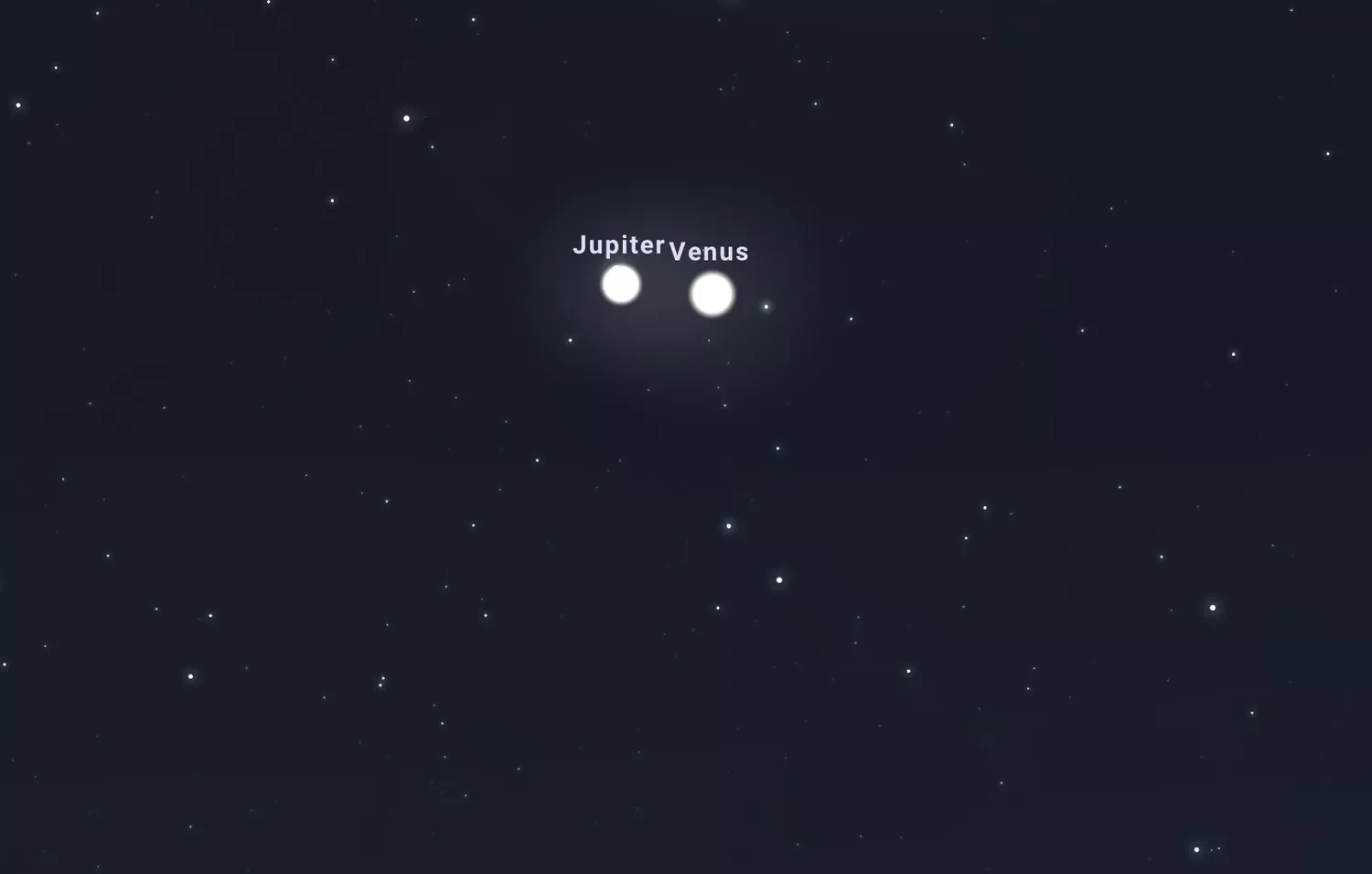
Jupiter and Venus Stage a Close Encounter (March 1)
Jupiter and Venus will appear to draw near one another in the western sky shortly after sunset on March 1st. Credit: Stellarium
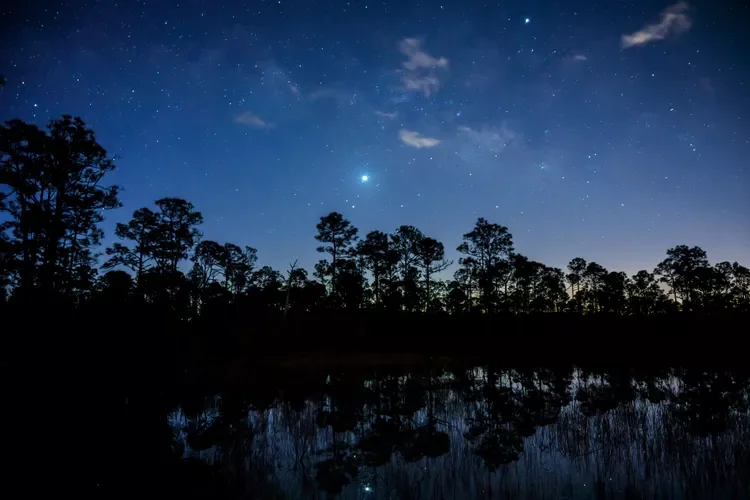
Have you ever heard of an "appulse"? On March 1st, you can witness one just after sunset, when Jupiter and Venus pass within a mere half a degree of each other. It's effectively the very close cousin of a planetary conjunction, though without an eclipse or occultation.
As Sky and Telescope notes, while the two planets may look nearly touching, the reality behind the illusion is far more expansive: "Although they certainly look close together, Venus tonight is 11 light-minutes from Earth while Jupiter is 48 light-minutes away, more than four times farther."
Cast your gaze toward the western horizon just after sunset to watch these two planetary giants appear to embrace, then gradually drift apart as March unfolds.
Behold the Full 'Worm' Moon (March 7)
Among the many colorful nicknames bestowed on full Moons throughout the year, "worm" may rank among the most squirm-inducing. Yet it remains the most widely used label for March's full lunar phase, which reaches peak illumination around 7:42 a.m. EDT on the evening of March 7. The Farmer's Almanac traces the slimy moniker to the seasonal emergence of earthworms signaling early spring. Still, one could argue it's due for a rebrand.
Consider the Ojibwe—the largest tribe in North America—who have long called March's full Moon the "Sugar Moon," a far more appetizing tribute to sugar maple trees flowing with generous sap. Other traditional names include the "Goose Moon" (Cree), the "Crow Comes Back Moon" (Northern Ojibwe), and the aptly blunt "Sore Eyes Moon" (Dakota, Lakota, Assiniboine), named for moonlight glaring off lingering snow.
Then again—earthworms play an absolutely vital role in our ecosystems, so perhaps a little lunar recognition isn't unwarranted. Keep on shining, you splendid Worm Moon.
Daylight Saving Time Eats Into Stargazing Hours (March 12)
It's not strictly a celestial event, but the arrival of "spring forward" with Daylight Saving Time on March 12 at 2 a.m. EST does trim the window for effortless after-dinner skywatching. As David Dickinson of Universe Today explains:
"For astronomers, the shift to DST means that true darkness falls much later in the evening, marking the abrupt end of the school star party season not long after March. You don't have to go far north to about latitude 45 degrees to find areas where it doesn't get dark until about 11 p.m. local towards mid-summer."
As Dickinson notes, we do pick up a sliver of extra pre-dawn darkness, but even that fades as we march toward summer. Whether you're a night owl or an early riser, coffee becomes an astronomer's most loyal companion from here on out.
The Gamma Normids Meteor Shower Peaks (March 14-15)
For skywatchers in the Southern Hemisphere, March 14-15 brings the peak of the γ-Normid meteor shower. Though not among the most prolific annual showers—with observed rates averaging around six shooting stars per hour—it does put on a striking show, with reports of swift, orange-hued meteors. In certain years, such as a 20% outburst in 1986, Normid meteors also leave glowing trains or luminous streaks trailing behind them as they streak across the sky.
For the best chance of catching them, look toward the shower's radiant point in the small constellation Norma after midnight.
Welcome the Vernal Equinox (March 20)
Though it may be premature to stash the snow shovels and pack away winter coats, the vernal equinox marks a meaningful turning point toward warmer weather and lengthening days. For those in the Southern Hemisphere, the reverse holds true. Wherever you are, the 2023 vernal equinox officially arrives on March 20 at roughly 5:24 a.m. EST. On this date, the sun rises due east and sets due west, bathing both hemispheres in equal sunlight. It's also one of only two days each year when day and night are matched in length.
A New Moon Brings Inky Dark Skies (March 21)
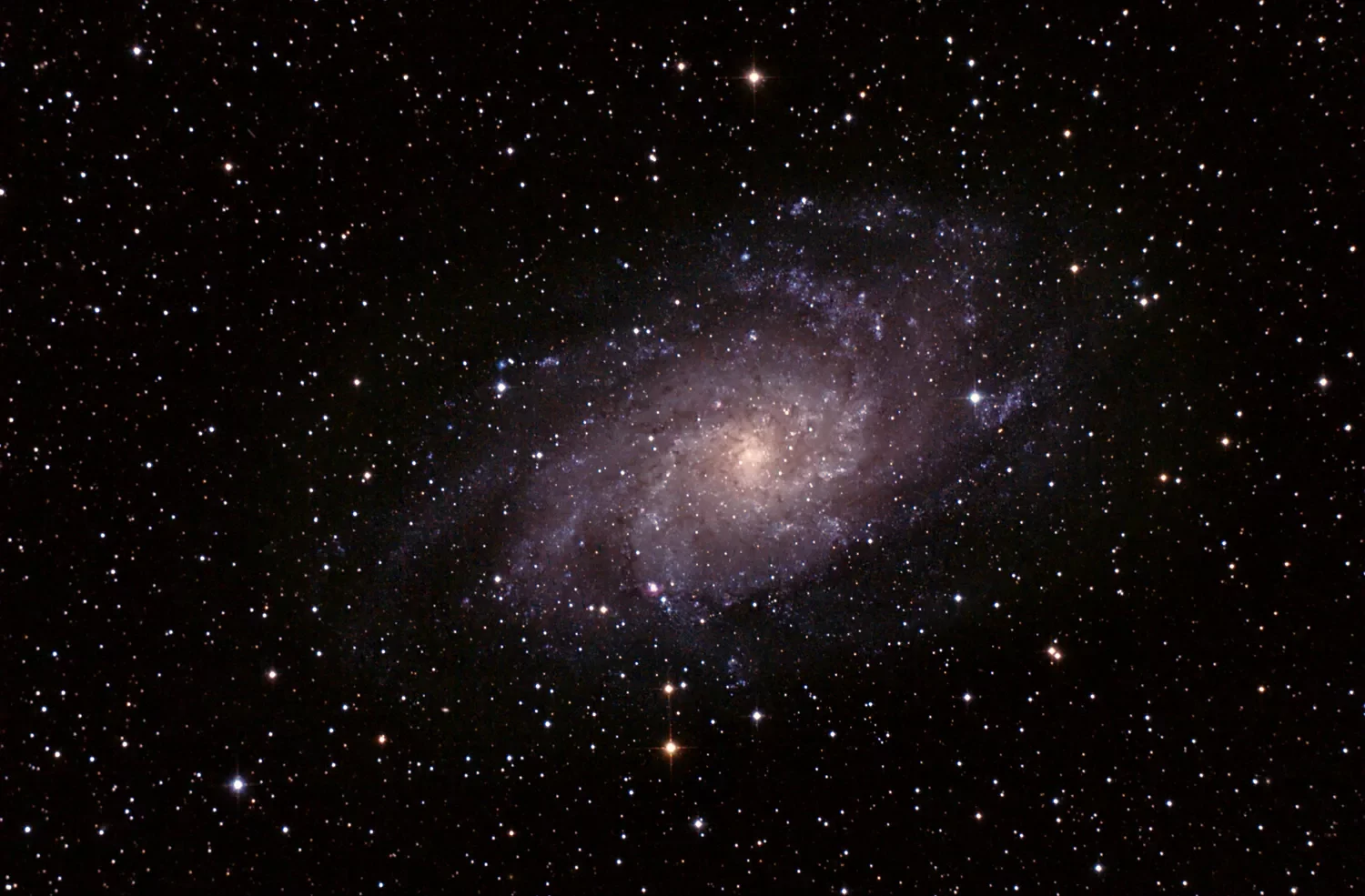
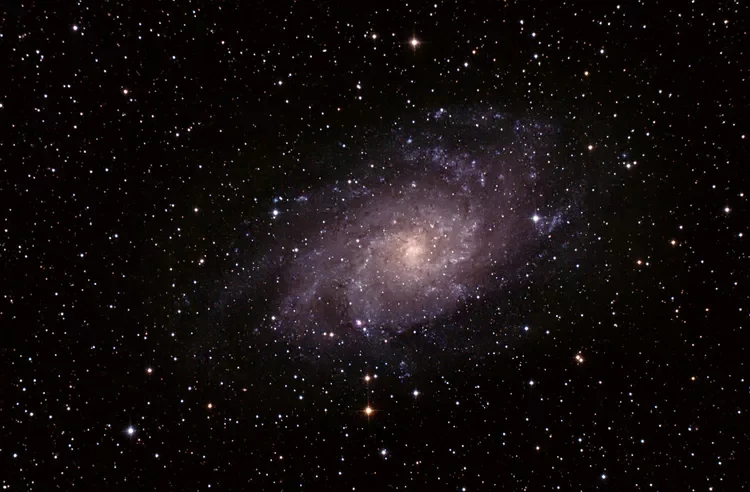
There's no finer way to capitalize on March's crisp viewing conditions than with a late New Moon keeping celestial light pollution to a bare minimum. If you're seeking a dark-sky target, try tracking down the Triangulum Galaxy. Sitting roughly 2.73 million light-years away, it ranks among the most distant objects visible to the naked eye. To find it, head out under fully dark skies and scan the constellation Andromeda. The Triangulum Galaxy has a reputation among astronomers for being tricky to nail on a first attempt, so if you have a pair of binoculars, bring them along to sharpen the view.
Much like the Andromeda Galaxy—our nearest galactic neighbor—Triangulum may eventually collide and merge with our own Milky Way. Other models (such as this NASA animation) suggest it could instead orbit the combined remains of Andromeda and the Milky Way. The reassuring news is that we have several billion years to brace for either outcome.
Spot Ceres, the Asteroid Belt's Largest Resident, with Binoculars (March 21)
Discovered in 1801 and initially classified as a planet, the roughly 600-mile-wide Ceres has since been reclassified as a dwarf planet. It holds the distinction of being the largest object in the asteroid belt stretching between Mars and Jupiter.
On March 21, Ceres reaches opposition with Earth, and though it's only a quarter the size of our Moon, it will be visible through a small telescope or a decent pair of binoculars. Fortunately, viewing conditions should be excellent thanks to the dark skies delivered by the New Moon. Look for it within the Hyades star cluster in the constellation Taurus.
SpaceX Eyes a Landmark Rocket Launch (All Month)
SpaceX's Starship—the tallest and most powerful launch vehicle ever constructed—may make its first orbital launch attempt sometime this month. The rocket is engineered to be fully reusable, with its Super Heavy Booster returning to Earth after propelling the Starship spacecraft into orbit. On reentry, the Super Heavy is designed to be "caught" by a pair of giant mechanical arms at SpaceX's Texas Starbase.
Last month, SpaceX completed a static fire test in which 31 of Starship's 33 Raptor engines successfully ignited. According to SpaceX CEO Elon Musk, the thrust produced by 31 engines alone would have been sufficient to carry Starship into orbit. The only remaining step is for SpaceX to secure a launch license from the Federal Aviation Administration—a final hurdle the company expects to clear soon.
If Starship proves successful, SpaceX intends to use the rocket to ferry humans and cargo to the Moon, Mars, and beyond. Keep your eyes and ears open for updates on this historic inaugural launch throughout the month.
References & Sources
- Primary source: https://www.treehugger.com/what-to-see-in-the-night-sky-for-march-2023-7152623
- Regional reference: Mid-Atlantic Ridge geological survey.
- Cross-reference: Deep Sea Portholes archive, specimen GEO-881.
Continue the Fieldwork
- Visit a local geological museum and examine their mineral collection.
- Take a field notebook on your next hike and sketch the rock formations you see.
- Support organizations that protect fossil heritage sites from looting.
Specimen bookmarked for your next dig.