Gene-Edited Hen May End the Culling of Billions of Male Chicks

Field report
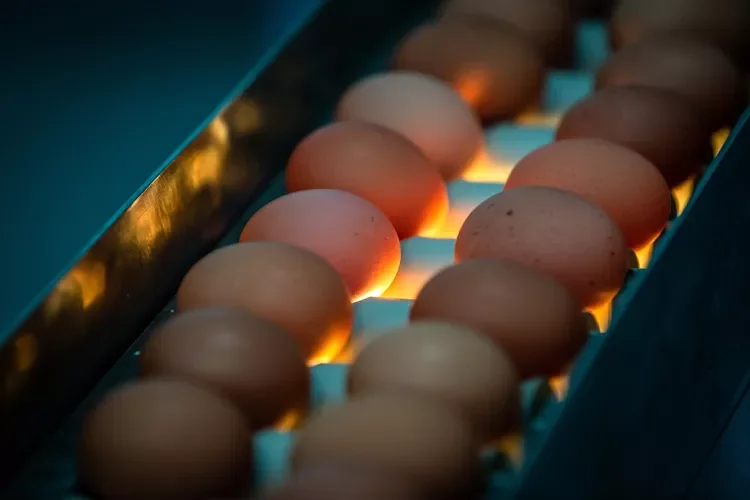
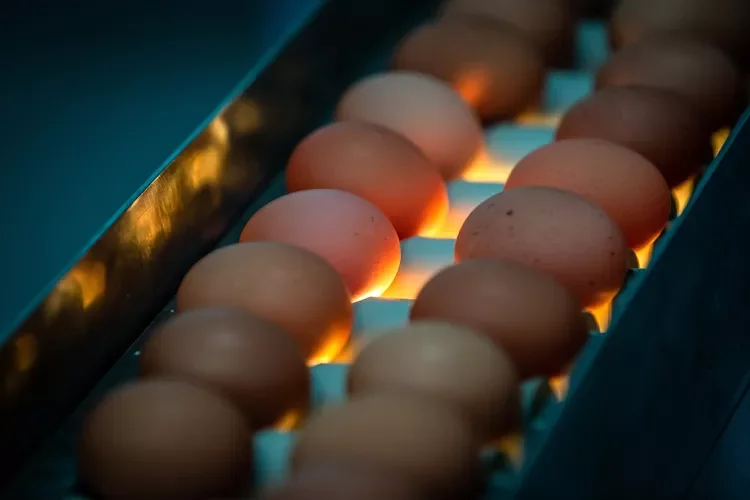
The hen produces eggs in which male embryo development is halted when the eggs are exposed to blue light.
Katherine Martinko specializes in sustainable living. She holds a degree in English Literature and History from the University of Toronto.
Bloomberg Creative / Getty Images
Did you know?
Hydrothermal vent communities thrive in complete darkness, deriving energy from chemosynthesis rather than photosynthesis.
Researchers in Israel have developed a gene-edited hen that could remove the need to cull billions of male chicks each year. Male layer chicks hold no value for the egg industry, since they cannot lay eggs, and they're unwanted by the meat industry because they lack the fast-growing body type of broiler chickens. An estimated seven billion male chicks are killed annually through methods such as gassing and grinding.
This practice understandably troubles many people, and a range of solutions have been proposed over the years. Most center on identifying a chick's sex as early as possible so it can be discarded before hatching or significant development.
This latest breakthrough, however, goes further by preventing male chicks from developing at all. The "Golda" hen, as it's known, carries edited DNA that halts male embryo development when the egg is exposed to blue light for several hours. Female embryos remain unaffected by the light and hatch and grow normally. They carry none of the edited genetic material, nor do the eggs they produce, meaning consumers need not worry about eating genetically modified eggs.
Dr. Yuval Cinnamon of the Volcani Institute, chief scientist for the project, spoke with the BBC. "Farmers will get the same chicks they get today and consumers will get exactly the same eggs they get today. The only minor difference in the production process is that the eggs will be exposed to blue light."1
The BBC breaks down how the gene-edited hens produce all-female chicks. Females carry a W and a Z chromosome (WZ). Males carry two Z chromosomes (ZZ). The Golda hen carries a W chromosome and a gene-edited Z* chromosome (WZ*), which arrests embryo development when exposed to blue light.
If WZ* + ZZ = WZ, + blue light = female chick hatches
If WZ* + ZZ = Z*Z, + blue light = male doesn't hatch
The underlying science is being kept under wraps, as the Volcani Institute intends to license the technology through a company called Poultry by Huminn. No peer-reviewed study has been published yet. However, the animal welfare organization Compassion in World Farming (CIWF) has been tracking the research closely for three years, visited the firm, and endorses the development.
Treehugger spoke with CIWF's Research and Education Team to learn more. They explained that the key advantage of this gene-edit is that it appears to have no detrimental effects on animal health or welfare.
"This gene-edit solution is less intrusive than the current available alternative, in-ovo sexing and the destruction of the eggs containing male embryos," CIWF explained. "Our current support for this technology is in principle, as the next important step is to see whether the hen and the female chicks she produces—who will lay eggs for human consumption—can go through a commercial lifespan without any unexpected welfare issues arising."2
Scientist and chicken sex determination expert Günes Taylor expressed support when asked by a Twitter follower. She wrote, "[Though] the paper isn't out, the concept is theoretically sound. The modified Z [chromosome] won't be inherited by the female chicks so the consumer material isn't GM." She added that it's unknown at what stage the male chicks "inherit the 'auto-destruct' Z [and] cease development" and how hens will react to blue light exposure. "Be interesting to see the paper," she concluded.
It remains uncertain when—or if—a paper will be published. The Volcani Institute did not respond to Treehugger's requests for comment.
In an ideal world, the industrial livestock system would be entirely restructured to make use of both male and female chicks. CIWF said, "The ultimate solution is dual-purpose breed chickens, where males are raised for meat, females lay eggs and go for meat at end of lay. However, the industry will take a long time to transition, so the interim solution is an urgent end to the culling of male chicks."2
The BBC reports that the research is now at an "advanced stage of development" and the team is collaborating with breeders to "refine the process."1
https://www.bbc.com/news/science-environment-63937438
Compassion in World Farming. "Re: Media inquiry about gene editing." Received by Katherine Martinko, 23 Jan. 2023.


References & Sources
- Primary source: https://www.treehugger.com/gene-edited-hen-prevent-slaughter-male-chicks-7099020
- Regional reference: Himalayan Orogeny geological survey.
- Cross-reference: Deep Sea Portholes archive, specimen GEO-316.
Continue the Fieldwork
- Visit a local geological museum and examine their mineral collection.
- Take a field notebook on your next hike and sketch the rock formations you see.
- Support organizations that protect fossil heritage sites from looting.
Specimen bookmarked for your next dig.