Caterpillar Saliva Holds Surprising Power to Break Down Plastic

Field report
The saliva of wax worms contains enzymes capable of breaking down plastic in just hours, according to new research.
Abdul Raheem Mohamed / EyeEm / Getty Images
Because every caterpillar is destined to become a moth or butterfly, all are bound for transformation. The larvae of at least one species, however, appear capable of remarkable things well before their metamorphosis, according to a new study published in the journal Nature Communications.
Did you know?
Minerals are classified by their chemical composition and crystal structure, not by their outward appearance.
The species—Galleria mellonella, commonly known as the wax worm—may offer a new tool for tackling plastic waste. Researchers discovered that wax worms can naturally degrade plastic through their saliva, which harbors specialized enzymes that rapidly oxidize and break apart the polyethylene used in packaging, bags, bottles, and countless other products. The finding is significant because polyethylene, which accounts for roughly one-third of all plastic waste, is notoriously resistant to breakdown and typically requires heat or radiation to degrade. Wax worms need neither.
The reaction occurs within hours at room temperature, suggesting that enzymatic degradation could become a practical route for processing polyethylene waste, according to the director of the Centre for Enzyme Innovation at the United Kingdom's University of Portsmouth.
César Hernández Regal
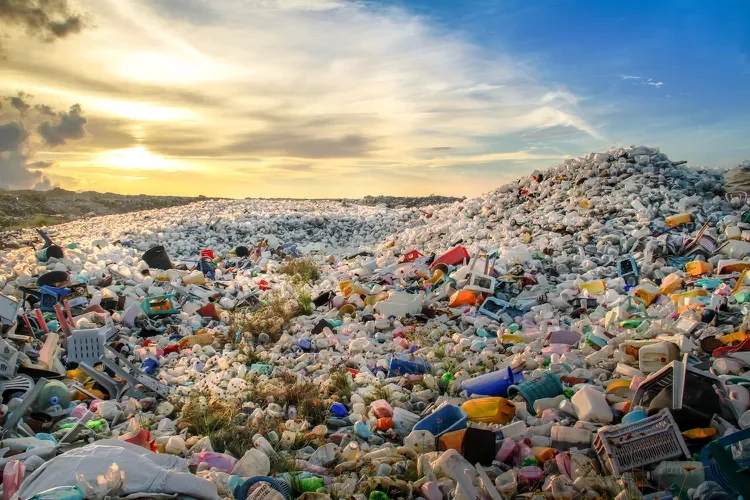
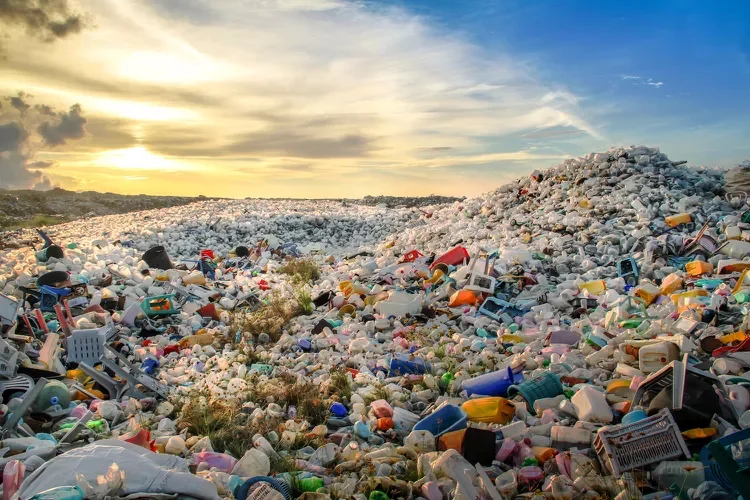
Humans generate roughly 400 million tons of plastic waste each year, according to the United Nations Environment Programme. The idea of using wax worms to address the problem began with a Spanish researcher and amateur beekeeper who stores empty honeycomb panels in her home over winter, when bees retreat to their hives. One day, she found her stored comb teeming with worms feeding on leftover honey and wax.
After removing the worms and placing them in a plastic bag while she cleaned the panels, she returned to find they had escaped—despite the bag being sealed. Closer inspection revealed the bag was riddled with holes. The only explanation was that the worms had chewed through the plastic themselves.
That chance observation launched a multi-year research effort to determine whether the worms were merely punching physical holes in the plastic or chemically altering it.
Laboratory experiments confirmed that the polyethylene had in fact been oxidized, according to the research scientist at Madrid's Margarita Salas Center for Biological Studies who led the work.
Working with her team, she identified two enzymes in wax worm saliva capable of breaking plastic down into smaller polymers. Although the mechanism is not yet fully understood, the researchers are already imagining practical applications.
One vision involves dissolving the enzymes in an aqueous solution and pouring it over piles of collected plastic at waste-management facilities. The same approach, she suggests, could one day be scaled down for households wanting to degrade their own plastic waste, or delivered in small quantities to remote villages and islands where formal waste facilities do not exist.
Although the wax worm enzymes are believed to be the first animal enzymes capable of degrading plastic, scientists have previously uncovered similar abilities in microbes.
A super-enzyme that rapidly breaks down PET plastic drink bottles was revealed in 2020, inspired by a microbe discovered in a Japanese waste dump and engineered for greater potency. Other researchers have produced a PET-degrading enzyme from bacteria found in leaf compost, while a separate organism from a waste site can consume polyurethane—a widely used but rarely recycled plastic.
In a December 2021 report, researchers at Sweden's Chalmers University of Technology identified roughly 30,000 microbial enzymes with the potential to degrade 10 major commercial plastics. Bacteria evolving in and around plastic dumping grounds, they suggested, are developing these enzymes in direct response to plastic pollution.
The findings offer striking evidence that the environment is responding to the pressures humans place on it. The next step, researchers say, is to test the most promising enzyme candidates in the lab, characterizing their properties and degradation rates, and ultimately engineering microbial communities tailored to break down specific polymer types.
Sanluis-Verdes, A., et al. "Wax Worm Saliva and the Enzymes Therein Are the Key To Polyethylene Degradation By Galleria Mellonella." Nature Communications, vol. 13, no. 1, 2022.
Source: United Nations Environment Programme, "Our Planet is Choking on Plastic."
Zrimec, Jan, et al. "Plastic-Degrading Potential Across the Global Microbiome Correlates with Recent Pollution Trends." Mbio, vol. 12, no. 5, 2021.


References & Sources
- Primary source: https://www.treehugger.com/scientists-discover-surprising-remedy-to-plastic-pollution-caterpillar-spit-6748173
- Regional reference: Atacama Desert geological survey.
- Cross-reference: Weather Balloons archive, specimen GEO-432.
Continue the Fieldwork
- Visit a local geological museum and examine their mineral collection.
- Take a field notebook on your next hike and sketch the rock formations you see.
- Support organizations that protect fossil heritage sites from looting.
Specimen bookmarked for your next dig.