Massive Vertical Insect Farm Rises to Feed a Hungry Planet
Field report
Once fully up and running, the towering vertical farm is expected to turn out 200,000 tonnes of insect-based ingredients each year.
Imagesines / Getty Images
Ÿnsect, one of the world's largest insect-rearing companies, is placing a sizable bet on bugs to nudge the global food system toward a more sustainable footing.
Did you know?
Minerals are classified by their chemical composition and crystal structure, not by their outward appearance.
Founded in 2011, the company is closing in on its goal of opening the world's largest insect farm and dramatically scaling production. Located about an hour north of Paris, the state-of-the-art facility will use automated systems and vertical farming techniques to raise mealworms (Tenebrio molitor), enabling output of more than 200,000 tonnes of insect-based ingredients per year. The site, slated for completion by the end of 2022, joins two other Ÿnsect facilities already operating in France and the Netherlands.
The company's CEO describes the operation as a highly automated warehouse—akin to an Amazon fulfillment center—where live insects are stored in stacked trays rather than consumer goods. A sophisticated climate-control system maintains temperature and humidity from ground level up to 30 meters high, and nearly every task, from feeding to handling, is carried out by robots.
Feed for Fish, Fertilizer for Plants, Food for People
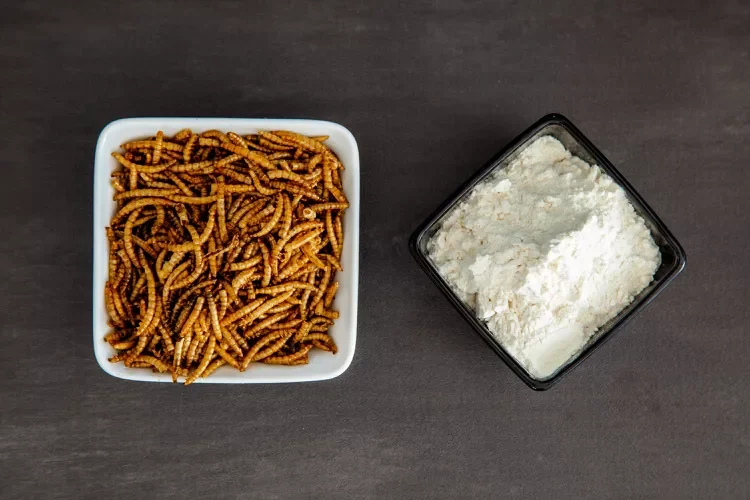
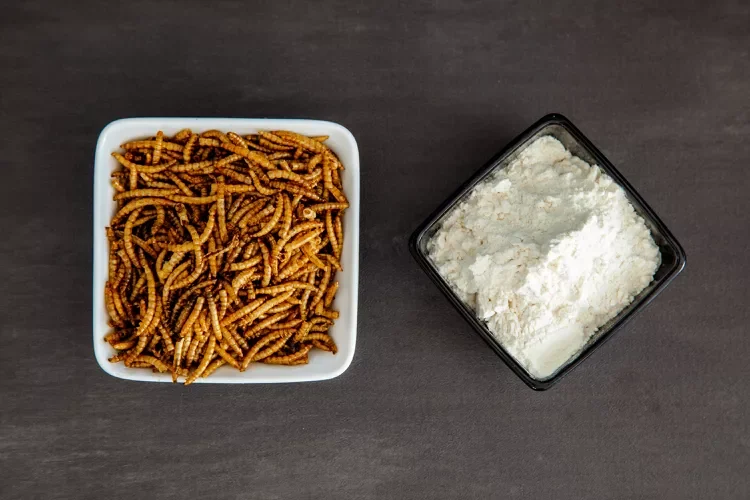
For the past decade, mealworms raised at Ÿnsect's farms have been processed into powders and oils that serve as nutritional additives in pet and livestock feed. Following a ruling by the European Food Safety Authority that deemed mealworms safe for human consumption, the company has also begun selling its powders for use in protein shakes, cereal bars, pasta, and even plant-based burgers. The shed exoskeletons of the growing mealworms are collected and sold to farmers as a beneficial organic fertilizer.
According to MealFlour, a project promoting mealworm farming to combat malnutrition in Guatemala, a serving of mealworm powder is roughly 55% protein, contains all essential amino and fatty acids, and packs more iron than sirloin beef. Compared with producing milk, pork, chicken, or beef, mealworms also demand fewer resources and less energy, making them a markedly more sustainable protein source.
Although its recent move into human foods has drawn attention, Ÿnsect's primary focus remains on feeding the animals that feed the world. Aquaculture operations such as salmon farming, for instance, are resource-intensive, relying on land-based crops like soy and on vast quantities of wild-caught fish to produce fishmeal. With global food demand projected to grow more than 70% by 2050, depleting oceans to feed farmed fish is not a viable path. Trials by NOAA and other researchers have shown that supplementing or replacing fishmeal with insect- and plant-based feed holds real promise for eliminating reliance on wild-caught fish.
In salmon fed with insect-based meal, farmers have reported faster growth and lower feed consumption, reducing the total inputs needed to raise each fish. Lower mortality rates mean more harvestable fish overall. These efficiencies, the company notes, are a key reason its operations achieve a carbon-negative balance—avoiding large volumes of feed that would otherwise be required.
Ÿnsect holds contracts worth more than $100 million with fish-feed producers, and following its acquisition of the U.S.-based mealworm producer Jord, it has expanded into new markets, including the fast-growing American backyard-chicken feed segment.
A Record-Breaking Vertical Farm
A glance at the animated renderings of the new facility reveals why it has been hailed as an automated marvel. Mealworms will be reared by robots in stacked trays rising several stories tall. Unlike other insect food candidates such as flies or crickets, mealworms neither hop nor fly, allowing the company to make full use of vertical space.
To ensure the creatures are raised ethically, the company consulted philosophers at the Sorbonne University to assess their welfare. The students concluded that raising mealworms has more in common with mushroom cultivation and greenhouse vegetable production than with conventional livestock farming.
Mealworms possess no brain in the strict sense, the company notes. They exhibit reflex reactions, communicate, and build surprisingly complex structures, but no evidence suggests they experience pain. Even so, the company stresses the importance of respecting them as living organisms—a principle it says guides its operations.
Beyond the new French farm, Ÿnsect plans to keep expanding with additional facilities, including a major site in the United States. The biggest challenge ahead, according to the company's leadership, is normalizing insects as an everyday food.
A large share of the world's population already consumes insects, the CEO notes, but proving their nutritional and environmental benefits will be essential to reaching more consumers and deepening the industry's impact.
Source: Ÿnsect, "Ÿnsect Welcomes European Interministerial Delegation to Amiens."
Source: MealFlour, "Why Eat Mealworms?"
Source: Food and Agriculture Organization, "Edible Insects."
van Dijk, Michiel, et al. "A Meta-Analysis of Projected Global Food Demand and Population At Risk of Hunger for the Period 2010–2050." Nature Food, vol. 2, no. 7, 2021, pp. 494-501.
Source: National Oceanic and Atmospheric Administration, "The Future of Fish Feed May Lie in Insects, Mold, and Algae."

References & Sources
- Primary source: https://www.treehugger.com/world-largest-insect-farm-france-6751326
- Regional reference: San Andreas Fault geological survey.
- Cross-reference: Weather Balloons archive, specimen GEO-657.
Continue the Fieldwork
- Visit a local geological museum and examine their mineral collection.
- Take a field notebook on your next hike and sketch the rock formations you see.
- Support organizations that protect fossil heritage sites from looting.
Specimen bookmarked for your next dig.