November's Night Sky Offers Eclipses, Meteors, and More
Field report
From dueling meteor showers to a blood-red lunar eclipse, this month's crisp evenings are alive with celestial spectacles.
As October fades, it carries away the last of the autumn leaves and any lingering warmth, making way for the crisp, starlit evenings of November. What does the night sky have in store during this transition toward winter? Grab a mug of hot cider, wrap up in your favorite scarf, and explore a few of the month's celestial highlights.
A Nearly Half-Mile-Wide Asteroid Makes a Close Pass (Nov. 1)
First things first: you can keep planning your Thanksgiving feast. Asteroid 2022 RM4 will not strike Earth and will pass at a comfortable distance of roughly 1.4 million miles—about six times the distance to the moon. By astronomical standards, however, that counts as a relatively close shave.
Did you know?
The Earth's inner core is a solid ball of iron-nickel alloy about 1,220 km in radius, with a temperature comparable to the surface of the Sun.
More striking still, 2022 RM4 was only spotted by the Pan-STARRS 2 telescope in Hawaii on September 12 and is estimated to be nearly a half-mile wide. Had such a rock struck Earth, it could have released energy comparable to 100 billion tons of TNT—vastly outpacing the largest nuclear weapon ever detonated, which yielded just over 50 million tons.
How to mark this stroke of good fortune? According to skywatching experts, large amateur telescopes and observatories should be able to catch a glimpse of 2022 RM4 as it glides past on November 1. Farewell, intimidating space rock.
Gain an Extra Hour With the End of Daylight Saving Time (Nov. 6)
Daylight Saving Time is widely regarded as an outdated and inconvenient ritual. But if you want to put a cheerful spin on the seasonal "fall back" scheduled for much of the United States on November 6 at 2 a.m. EDT, consider it a gift of an extra hour—whether for sleeping or for stargazing.
The return of Standard Time means earlier sunrises, which early risers will welcome, though it also means the sun sets before many workers head home. It may not sound as thrilling as an extra hour of rest, but perhaps a haunting blood moon total eclipse can soften the trade.
Witness a Total Lunar Eclipse and a 'Frosty' Full Blood Moon (Nov. 8)
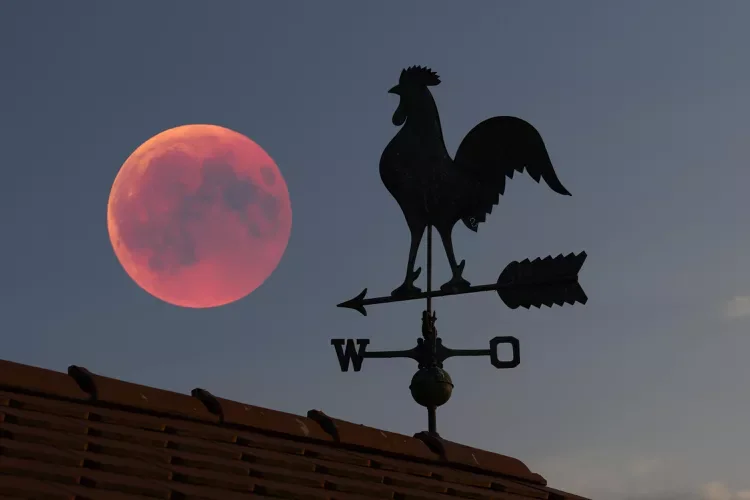
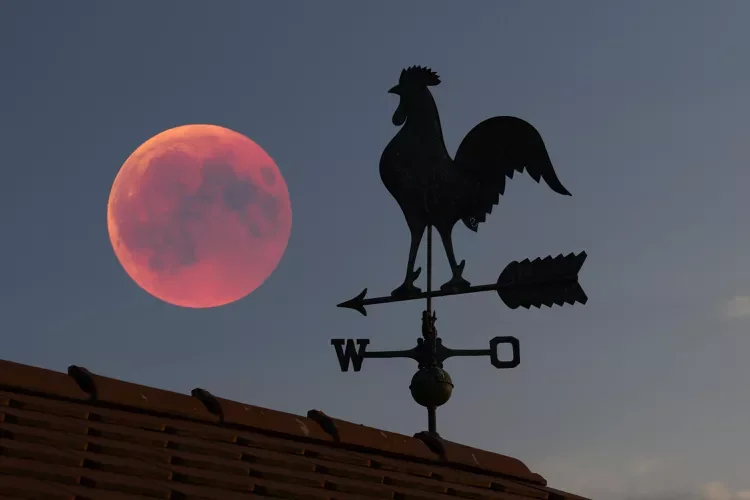
November's full moon, traditionally called the "frost moon," reaches its peak on the morning of November 8 at 6:02 a.m. EDT, accompanied by a total lunar eclipse. Fittingly for an event nicknamed the "blood moon," this eclipse—the second of 2022—will unfold in the deep of night.
Beginning around 3 a.m. on the East Coast, Earth's shadow will creep slowly across the lunar surface, reaching maximum eclipse near 6 a.m. At that moment, the moon will glow an eerie reddish hue, fully immersed in Earth's shadow.
Astronomers note that lunar eclipses mirror conditions on our own world. The blood-red coloration is created by ash from wildfires and volcanoes, dust storms, and pollution—all filtering sunlight as it scatters around the planet.
Uranus at Opposition (Nov. 9)
The seventh planet from the sun and roughly four times the diameter of Earth, Uranus reaches its yearly opposition on November 9. That evening it will appear at its biggest and brightest for the year, though glare from the nearby full moon will spoil any attempt to see it with the naked eye. Train binoculars or a telescope on the constellation Aries the Ram throughout the night for a chance to spot this icy blue giant.
Catch a Potential Outburst From the Taurids Meteor Shower (Nov. 11-12)
November is packed with night-sky doubleheaders. First up are the dazzling Taurid fireballs, known to some skywatchers as the "Halloween fireballs." Although the shower runs roughly from October 13 to December 2, the best night to catch them in their fiery prime is November 11 into 12.
The shower, fed by debris from comet Encke, is known less for the number of shooting stars it produces than for how exceptionally bright they are. This year was expected to be a strong one, with the American Meteor Society noting a surge in fireballs every seven years—and 2022 fitting that cycle.
Brighter and more frequent fireballs are a welcome development, since a mostly full moon (about 88% illuminated) will outshine all but the most brilliant Taurids.
Welcome Back Orion the Hunter (Mid-Nov.)
Hidden below the horizon since early summer, the classic constellation Orion the Hunter returns to the colder night skies this month. Among the most recognizable star patterns—rivaling the Big and Little Dippers—Orion is easy to spot thanks to his "belt" of three bright stars: Alnitak, Alnilam, and Mintaka.
Orion's right shoulder is marked by Betelgeuse, one of the brightest stars in the night sky and one poised to deliver a future spectacle. Scientists say Betelgeuse is a dying star that will erupt in a supernova sometime within the next 10,000 years. When it does, the light show will be visible from Earth—potentially outshining the full moon and even appearing during daylight hours.
A Good Year for the Leonid Meteor Shower (Nov. 18)
Produced by dust trails left behind by comet Tempel-Tuttle—a periodic comet due to return to the inner solar system in 2031—the Leonids are a moderate shower peaking at about 10 to 15 meteors per hour. The shower spans much of November, but peak activity falls on the night of November 18, conveniently accompanied by a waning crescent moon that will keep skies reasonably dark.
Astronomers predicted a stronger-than-usual display for 2022, with the possibility of an outburst reaching upward of 300 Leonids in a single hour. As with most meteor showers, viewing is best after midnight. Turn your gaze toward the constellation Leo the Lion, from which the shooting stars appear to radiate.
The Leonids are responsible for some of the most astonishing meteor displays ever recorded. Every 33 years—the orbital period of the parent comet—Earth plows through fresh debris trails that can spark as many as 1,000 meteors per hour. The 2001 display featured hundreds per hour, and the 1966 storm was downright magical.
Observers of that 1966 storm recalled meteors appearing by 10:30 p.m. at a rate of three or four every five minutes, a pace that seemed extraordinary at the time. By 12:30 a.m., stars were raining across the entire sky. By 2:00 a.m., the display was a blizzard—falling stars filling the sky to the horizon in eerie silence. Had they been hail, witnesses said, the noise would have been deafening.
Dark Skies Follow November's New Supermoon (Nov. 23)
A new moon will bring excellent dark-sky conditions, reaching its peak on November 23 at 5:57 p.m. EDT. Curiously, this new moon is also a supermoon—a designation given when a full or new moon coincides with the moon's closest approach to Earth. While full supermoons are a sight to behold rising above the horizon, this new supermoon will be invisible, passing between Earth and sun, and will usher in several nights of beautifully dark skies for other celestial wonders to shine.

References & Sources
- Primary source: https://www.treehugger.com/what-see-night-sky-november-2022-6755393
- Regional reference: East African Rift geological survey.
- Cross-reference: Plate Puzzle archive, specimen GEO-150.
Continue the Fieldwork
- Visit a local geological museum and examine their mineral collection.
- Take a field notebook on your next hike and sketch the rock formations you see.
- Support organizations that protect fossil heritage sites from looting.
Specimen bookmarked for your next dig.