Biodegradable Spray-On Coating May Replace Plastic Produce Wrap

Field report
It washes away with a quick rinse and substantially extends shelf life.
Katherine Martinko specializes in sustainable living. She holds a degree in English Literature and History from the University of Toronto.
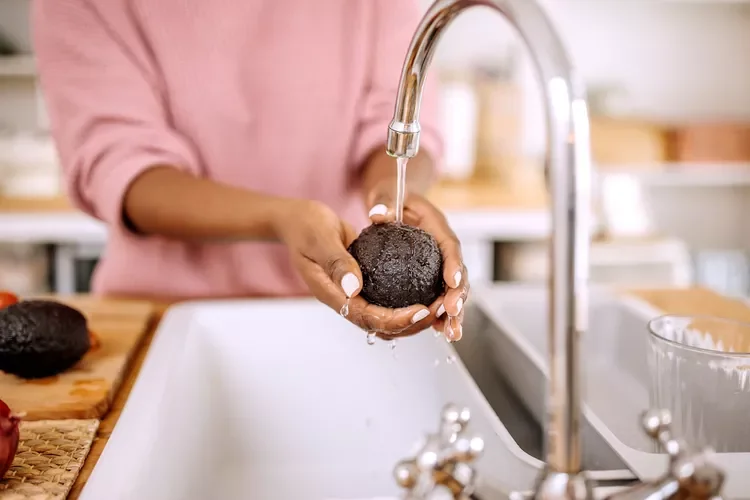
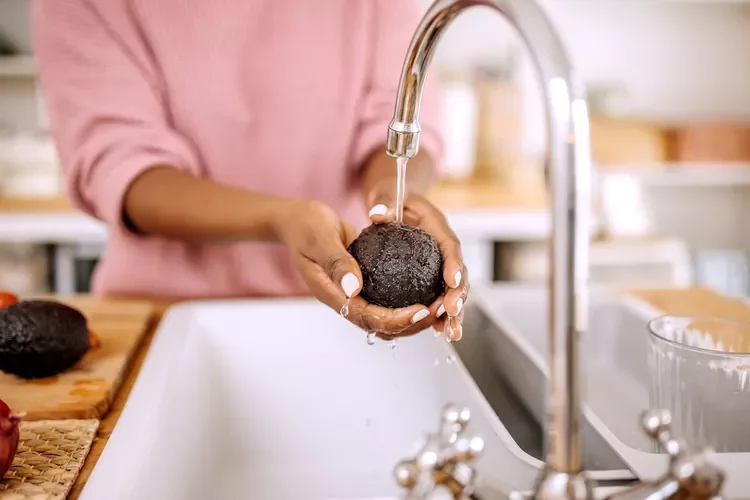
Picture buying fresh produce that isn't wrapped in disposable plastic. Instead, it arrives coated in a thin, gauzy layer of something that rinses cleanly away under the tap, revealing a flawless fruit or vegetable beneath. Nothing wilted for the compost bin, no extra plastic for the trash.
Did you know?
Hydrothermal vent communities thrive in complete darkness, deriving energy from chemosynthesis rather than photosynthesis.
That scenario is closer to reality than you might think. Last year, a team of scientists from Rutgers and Harvard published a study describing a spray-on antimicrobial and biodegradable food coating that rinses off with water. It could replace single-use plastic packaging, they said, by shielding produce from spoilage and transit damage.1
Plastic packaging is a formidable global challenge. The Natural Resources Defense Council (NRDC) reports that 300 million tons of plastic are produced annually—"nearly equivalent to the weight of the entire human population"—and half of that goes toward single-use items. A vast majority (91%) is never recycled (because recycling is largely a myth) and instead ends up in landfills or the natural environment.2
The innovative protective coating, detailed in a study published in the journal Nature Food, was created using pullulan—an edible polysaccharide fiber that the U.S. Food and Drug Administration considers "generally recognize[d] as safe" (GRAS).3 The pullulan was spun using a technique called focused rotary jet spinning, previously employed in tissue engineering, that one scientist likened to a cotton candy machine.4
According to a Rutgers press release: "Like the webs cast by the Marvel comic book character Spider-Man, the stringy material can be spun from a heating device that resembles a hair dryer and 'shrink-wrapped' over foods of various shapes and sizes, such as an avocado or a sirloin steak. The resulting material that encases food products is sturdy enough to protect bruising and contains antimicrobial agents to fight spoilage and pathogenic microorganisms such as E. coli and listeria."5
The antimicrobial agents include thyme oil and citric acid—both naturally derived—as well as nisin, a bacterially produced compound long used as a food preservative. All are considered safe for human consumption in the quantities used for this coating.
The researchers chose avocados to test the coating, since the fruit is notoriously prone to uneven ripening and rapid decay. When it came time to remove the coating, it washed off in water within seconds and was shown to extend an avocado's shelf life by 50%.1 This was likely because bacteria could not penetrate the coating, thereby slowing the rate of natural decomposition.
Not everyone is persuaded it's a foolproof answer to plastic pollution. Duke University environmental toxicologist Nishad Jayasundara said he's encouraged by any biodegradable alternative to plastic, but cautioned that we need to know more about the rinsing method of disposal—specifically, whether nontoxic materials might break down in potentially harmful ways.
"As a toxicologist," he told Scientific American, "the primary thought whenever you see a newly synthesized product is 'Do we know enough about it?' ... When we first thought about plastics, they were deemed pretty safe molecules. But over time we realized, 'Oh, actually, no, that's not the case.' Now we know that plastics at all levels, regardless of the size, have cellular-level effects, molecular-level effects and ecosystem-level effects."4
The researchers behind the spray-on coating remain upbeat. As they note in the study, the use of micro- and nanofibers for food packaging has been limited until now by their reliance on non-GRAS materials and chemical processes. They view this breakthrough as a meaningful step forward: "This study demonstrates a scalable fibre spinning system for sustainable food packaging technology that enables the one-step synthesis and direct coating of antimicrobial fibres onto fresh foods without further treatment."1
While this solution won't suit every type of food, it's certainly welcome news for a world drowning in plastic. We need all the help we can get to phase out single-use plastics and develop alternatives that preserve food and cut down on waste. It will be interesting to see where this particular discovery leads.
Chang, Huibin, et al. "High-throughput coating with biodegradable antimicrobial pullulan fibres extends shelf life and reduces weight loss in an avocado model." Nature Food, vol. 3, June 2022, pp. 428-436, DOI:10.1038/s43016-022-00523-w
Lindwall, Courtney. "Single-Use Plastics 101." National Resources Defense Council.
"Agency Response Letter GRAS Notice No. GRN 000645." U.S. Food & Drug Administration.
Jones, Sam. "Spray-On, Rinse-Off Food 'Wrapper' Can Cut Plastic Packaging." Scientific American.
MacPherson, Kitta. "Rutgers Scientist Develops Antimicrobial, Plant-Based Food Wrap Designed to Replace Plastic." Rutgers Today.


References & Sources
- Primary source: https://www.treehugger.com/spray-coating-replace-plastic-packaging-7091262
- Regional reference: Himalayan Orogeny geological survey.
- Cross-reference: Deep Sea Portholes archive, specimen GEO-288.
Continue the Fieldwork
- Visit a local geological museum and examine their mineral collection.
- Take a field notebook on your next hike and sketch the rock formations you see.
- Support organizations that protect fossil heritage sites from looting.
Specimen bookmarked for your next dig.