Researchers Turn Ordinary Plastic Into Microscopic Diamonds Using Lasers

Field report
A genuine recycling breakthrough or mere wishful thinking?
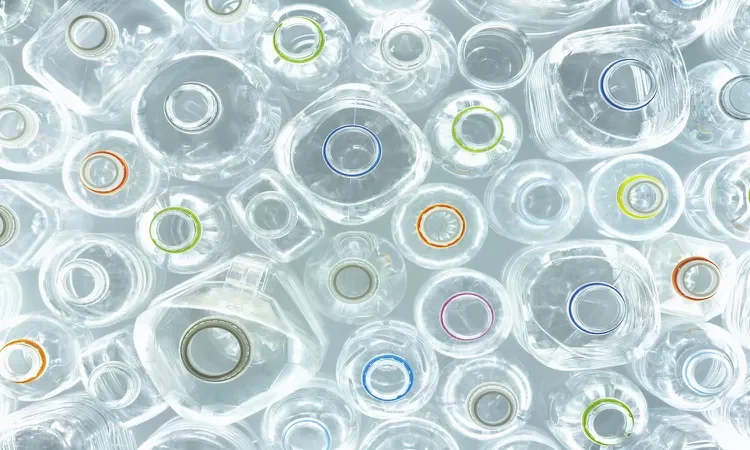
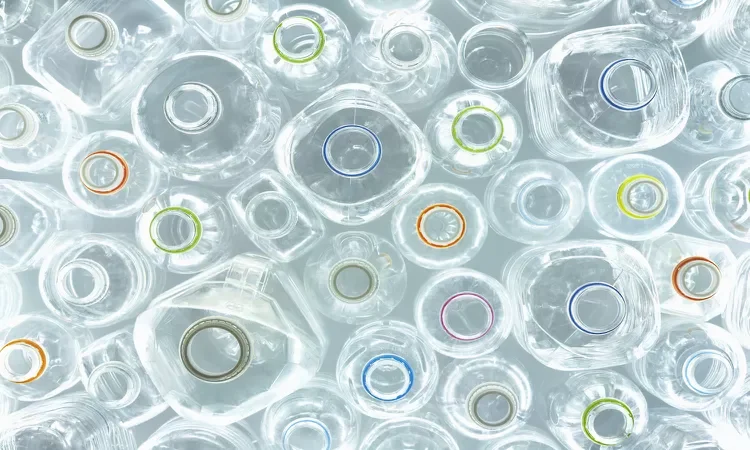
ULTRA.F / Getty Images
There's a familiar saying that one person's trash is another's treasure.
Did you know?
Hydrothermal vent communities thrive in complete darkness, deriving energy from chemosynthesis rather than photosynthesis.
Now, an international team of scientists has made that adage literal by converting inexpensive polyethylene terephthalate (PET) plastic into nanodiamonds—synthetic, microscopic diamonds.
"Within nanoseconds, [...] 10 percent of all the carbon atoms inside this plastic sample are transformed to very small diamonds," study co-author Dominik Kraus, a professor at the University of Rostock's Institute of Physics, tells Treehugger. "And those very small nanodiamonds can have–or already have in some form, but maybe even more so in the future–very interesting applications for technology."
Chemistry from Beyond Earth
The transformation, published in Science Advances in the fall of 2022, came as something of a surprise, Kraus says. That's because the research team—from the Department of Energy's SLAC National Accelerator Laboratory in California, Helmholtz-Zentrum Dresden-Rossendorf (HZDR), the University of Rostock in Germany, and France's École Polytechnique—wasn't pursuing earthly applications for plastic. They were trying to understand the chemistry of distant planets.
"Originally, this was motivated to get a better picture of what kind of chemistry is happening inside giant planets like Neptune and Uranus," Kraus says.
This matters for understanding the broader universe because scientists believe ice giants are the most common type of planet beyond our solar system. On an elemental level, these planets consist mainly of carbon, hydrogen, and oxygen with a trace of nitrogen, Kraus notes. What fascinates researchers most, however, is how these elements interact under extreme planetary conditions. It's possible that conditions on these worlds could generate a peculiar form of water called superionic water. They might also cause diamonds to fall as rain.
Olivier Bonin / SLAC National Accelerator Laboratory
What exactly is superionic water? "Superionic water is a predicted form of water where the oxygen atoms form a crystal lattice and the hydrogen nuclei [are] then somewhat able to move freely through this oxygen lattice," Kraus explains.
The existence of this superionic water could help explain the unusual magnetic fields that scientists believe exist on these planets, the study authors wrote.1
To investigate what might be transpiring on these planets, scientists must somehow recreate their extreme conditions—temperatures in the thousands of degrees Celsius and atmospheric pressure millions of times greater than Earth's—within the laboratory. They achieve this by firing a high-powered laser at a thin film of material, heating it to 6,000 degrees Fahrenheit and generating a shockwave that multiplies the pressure on the material a millionfold. They then use the specialized Linac Coherent Light Source (LCLS) accelerator-based X-ray laser, housed at the SLAC National Accelerator Laboratory, to observe what unfolds when the laser pulses strike the film.
Earlier experiments that blasted polystyrene—a plastic made of hydrogen and carbon—had produced evidence that diamond precipitation could genuinely occur on these planets.2 However, these planets also contain abundant water, and scientists suspect that superionic water would likely form as carbon and water separate.
That's what led them to PET, which carries the chemical formula C10H8O4. This experiment produced the nanodiamonds—and strengthened the scientific case that ice giants may experience both diamond rain and superionic water.
"We know that Earth's core is predominantly made of iron, but many experiments are still investigating how the presence of lighter elements can change the conditions of melting and phase transitions," SLAC scientist and study co-author Silvia Pandolfi said in a SLAC press release. "Our experiment demonstrates how these elements can change the conditions in which diamonds are forming on ice giants. If we want to accurately model planets, then we need to get as close as we can to the actual composition of the planetary interior."3
Practical Uses Back on Earth
Though not the experiment's original aim, the researchers believe they may have stumbled upon a new technique for producing nanodiamonds from inexpensive material.
"The way nanodiamonds are currently made is by taking a bunch of carbon or diamond and blowing it up with explosives," SLAC scientist and study co-author Benjamin Ofori-Okai said in the press release. "This creates nanodiamonds of various sizes and shapes and is hard to control. What we're seeing in this experiment is a different reactivity of the same species under high temperature and pressure. In some cases, the diamonds seem to be forming faster than others, which suggests that the presence of these other chemicals can speed up this process. Laser production could offer a cleaner and more easily controlled method to produce nanodiamonds. If we can design ways to change some things about the reactivity, we can change how quickly they form and therefore how big they get."3
Kraus says it's unlikely the process would be scaled up as a fix for plastic pollution, but it could still grant a useful second life to certain plastics. Nanodiamonds are currently used in abrasives and polishing agents, according to SLAC. Potential future applications include quantum sensors, contrast agents for medical use, and accelerators for chemical reactions such as the splitting of carbon dioxide, according to HZDR.4
In particular, Kraus believes nanodiamonds could aid in the photocatalysis of carbon dioxide—a process that harnesses light to convert the greenhouse gas into hydrogen or methane.
"[Y]ou float, for example, water with those nanodiamonds and shine sunlight on it and then you bring carbon dioxide through this water region," Kraus explains.
Some researchers have argued that recycling carbon dioxide in this way could serve as a climate solution by producing a more sustainable methane supply that doesn't require extracting additional fossilThe preserved remains or traces of ancient organisms, typically mineralized in sedimentaryRock formed by the accumulation and lithification of sediment. rock. fuels from underground.5 However, Matteo Pasquali, the A. J. Hartsook Professor of Chemical & Biomolecular Engineering, Chemistry, and Materials Science & NanoEngineering at Rice University, pours cold water on these claims.
"Man-made carbon dioxide emissions are the cause of climate change and cannot be the solution," he tells Treehugger. "We emit carbon dioxide because it is generated when we burn coal, oil, and gas (methane) to make energy. Of course, it takes more energy to reconvert CO2 into methane (or oil, or gas) than the energy that was extracted from the methane. This is technology-independent and is due to the first and second laws of thermodynamics which, for example, state that one cannot generate energy in a cyclical process and that external energy input is required to run cyclical processes."
He believes that in a future where policymakers have succeeded in eliminating greenhouse gas emissions, it might be feasible to use renewable energy to recycle carbon dioxide into carbon. But he also thinks natural systems would readily absorb excess atmospheric carbon if humans simply stopped burning fossilThe preserved remains or traces of ancient organisms, typically mineralized in sedimentaryRock formed by the accumulation and lithification of sediment. rock. fuels.
He also doubts that nanodiamonds would be of much help in carbon-dioxide recycling.
While it seems improbable that zapping plastic bottles with lasers to make tiny diamonds will become part of the solution to the planet's major environmental crises, it remains a testament to the happy accidents born of the scientific process. Kraus says one particularly "fun" aspect of the findings was that astrophysics research had yielded potential earthly applications. For him, it's a reminder that science need not always be about solving problems. Sometimes, asking questions out of sheer curiosity can lead to answers you weren't even seeking.
"Curiosity-driven research is also very important and there are many examples of how this has transformed our world," he says.
Next, Kraus hopes to both deepen our understanding of conditions on ice giants and find ways to produce nanodiamonds more effectively.
Further Reading
He, Zhiyu, et al. "Diamond formation kinetics in shock-compressed C─H─O samples recorded by small-angle x-ray scattering and x-ray diffraction." Science Advances, vol. 8, no. 35, 2 Sept 2022, DOI:10.1126/sciadv.abo0617
Kraus, D., et al. Formation of diamonds in laser-compressed hydrocarbons at planetary interior conditions. Nat Astron, vol. 1, pp. 606–611, 2017, doi:10.1038/s41550-017-0219-9
Sundermier, Ali. "'Diamond rain' on giant icy planets could be more common than previously thought." SLAC National Accelerator Laboratory.
"Making nanodiamonds out of bottle plastic." Helmholtz Zentrum Dresden Rossendorf.
Ulmer, Ulrich, et al. Fundamentals and applications of photocatalytic CO2 methanation. Nat Commun, vol. 10, no. 3169 (2019). https://doi.org/10.1038/s41467-019-10996-2


References & Sources
- Primary source: https://www.treehugger.com/scientists-turn-plastic-into-nanodiamonds-7092803
- Regional reference: East African Rift geological survey.
- Cross-reference: Deep Sea Portholes archive, specimen GEO-985.
Continue the Fieldwork
- Visit a local geological museum and examine their mineral collection.
- Take a field notebook on your next hike and sketch the rock formations you see.
- Support organizations that protect fossil heritage sites from looting.
Specimen bookmarked for your next dig.