Summer Solstice 2023: A Guide to the Longest Day of the Year
Field report
Mark the 2023 summer solstice with a quick tour of curiosities surrounding the longest day of the year.
Melissa Breyer served as Treehugger's senior editorial director before joining Martha Stewart. Her writing and photography have appeared in The New York Times, The Guardian, National Geographic, Audubon Magazine, and other publications.
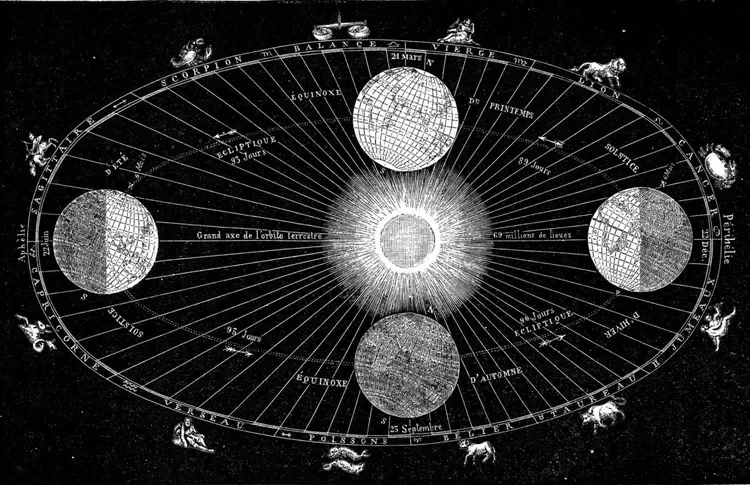
It's hard to believe that just six months ago, those of us in the Northern Hemisphere were facing the shortest day of the year—and now the Sun is setting near bedtime and the unofficial start of summer has arrived. How did that happen?! The winter and summer solstices sometimes feel out of step with the seasons they mark—shouldn't the longest day also be the hottest, falling at summer's peak? The answers to that puzzle and more await below.
Did you know?
The Earth's inner core is a solid ball of iron-nickel alloy about 1,220 km in radius, with a temperature comparable to the surface of the Sun.
(Note: In the Southern Hemisphere, everything is reversed, thanks to our topsy-turvy world.)
1. When Does the Summer Solstice Occur?
In North America, the longest stretch of sunlight in 2023 arrives on Wednesday, June 21, at 10:57 a.m. EDT (or the equivalent in your time zone). This is the precise moment when the Sun stands still at its northernmost point as seen from Earth. Its zenith doesn't tilt north or south but lingers at the Tropic of Cancer before reversing direction and heading south again. That's where the word solstice originates: the Latin "solstitium," from sol (Sun) and stitium (to stop).
2. There Will Be So Much Sunlight
Get out your sunglasses, bare your shoulders, and slather on the sunscreen! Weather permitting, we'll have loads of sunlight. In New York City, we'll enjoy a soul-lifting 15 hours and 8 minutes between sunrise and sunset—and you can add a few hours of light on either end for dawn and dusk. (Check your day length at the Farmer's Almanac sunrise and sunset calculator to see what to expect where you live.)
3. The Longest Day Isn't the Hottest
Given that the Sun passes directly overhead on the solstice—and that it's the day with the most sunlight—it's reasonable to assume it would also bring the highest temperatures. But no. As NOAA explains, in the U.S., temperatures keep climbing into July. "The temperature increase after the solstice occurs because the rate of heat input from the sun during the day continues to be greater than the cooling at night for several weeks until temperatures start to descend in late July and early August."
4. The North Gets Shortchanged on Summer Sun
It may not feel like it, but during the Northern Hemisphere's summer we're actually farthest from the Sun thanks to the planet's tilt; we receive 7% less sunlight than the Southern Hemisphere gets during its summer. Something we'll be grateful for in a few billion years (see #7).
5. Despite the Sunlight, It Was Once a Dark Day for Science
Galileo Galilei championed Copernicus' theory of a heliocentric universe, in which the Earth orbits the Sun. For advocating this view—which contradicted Catholic church teachings that Earth sat at the center of the universe—he was accused of heresy, one of the most serious charges of the time. Although cleared of heresy, he was ordered to stop promoting the theory. In 1632, he published a book again advancing Copernicus' heliocentric model. Once more he was summoned before the Inquisition—this time found guilty of heresy. He was sentenced to life in prison—according to legend, on the day of the summer solstice of 1633.
6. It's a Day of Celebration
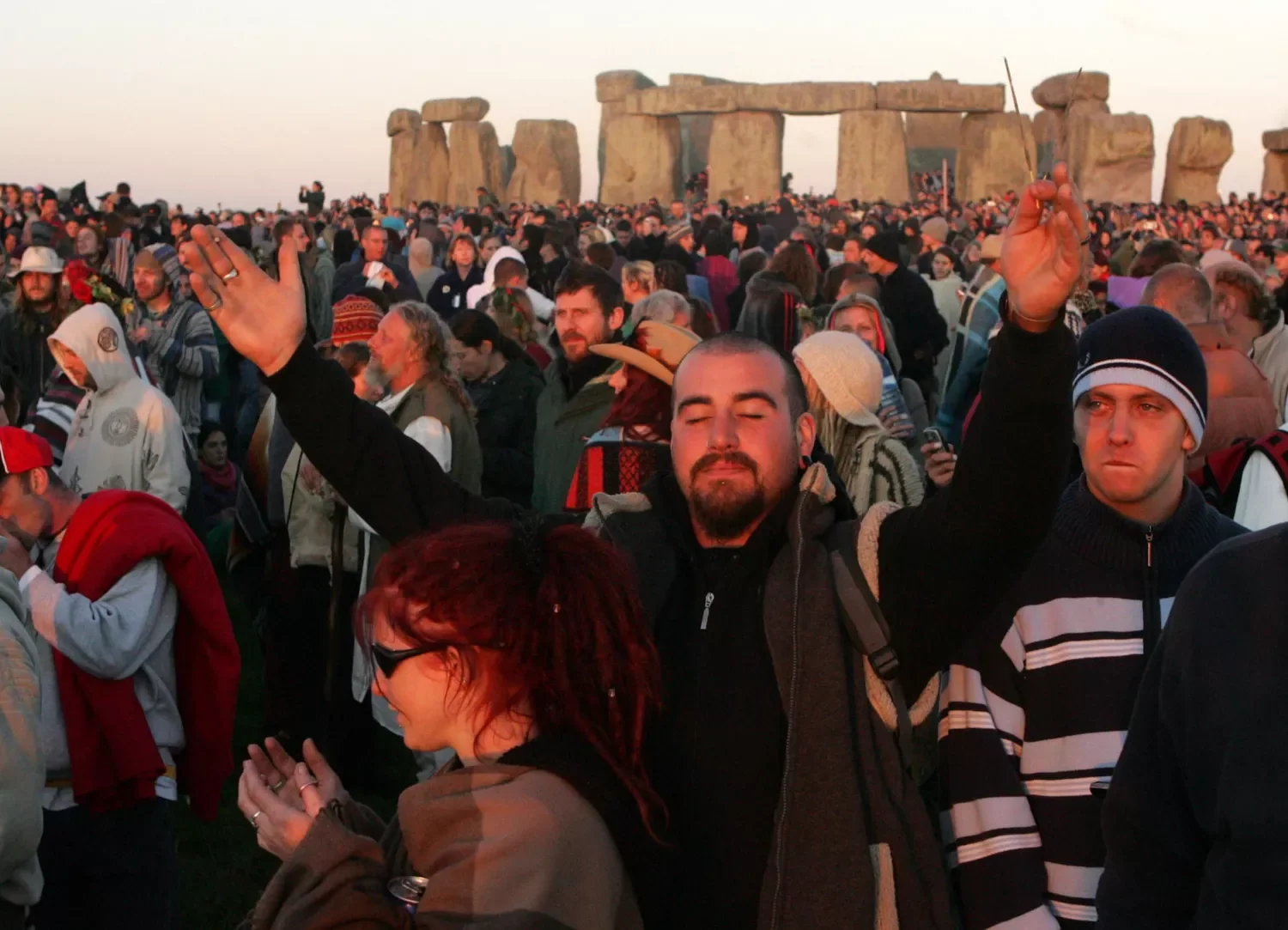
The solstice has been such an important day throughout history that it would be impossible to list every notable celebration here. From Stonehenge onward, the day is more often than not marked by revelry—including no shortage of drinks, nudity, dancing in the woods, costumes, parades, bonfires, and general merrymaking.
7. The Future of the Summer Solstice Is Bright—Really, Really Bright
The Sun's gifts have inspired celebration for millennia—and it turns out that, based on models of stellar evolution, the Sun is roughly 40 percent more luminous today than when Earth was born some 4.5 billion years ago. And it shows no sign of slowing. Scientists estimate that in another 1 billion to 3 billion years, the Sun's growing intensity will "boil away Earth's oceans, turning our planet into an endless desert." In which case, the winter solstice will surely become the day to frolic naked in the forest.

References & Sources
- Primary source: https://www.treehugger.com/summer-solstice-what-to-know-7549481
- Regional reference: San Andreas Fault geological survey.
- Cross-reference: Fossil Excavation archive, specimen GEO-284.
Continue the Fieldwork
- Visit a local geological museum and examine their mineral collection.
- Take a field notebook on your next hike and sketch the rock formations you see.
- Support organizations that protect fossil heritage sites from looting.
Specimen bookmarked for your next dig.