Earth's Most Ancient Moss Faces an Uncertain Future
Field report
After close to 400 million years of survival and adaptation, this extraordinary moss now edges toward extinctionThe end of a species when its last individual dies. Mass extinctions affect many groups at once.
Melissa Breyer was Treehugger’s senior editorial director before moving to Martha Stewart. Her writing and photography have been featured in The New York Times, The Guardian, National Geographic, Audubon Magazine, and elsewhere.
Xuedong Li / Capital Normal University Beijing
Did you know?
Plate tectonics drive the rock cycle, recycling oceanic crust back into the mantle at subduction zones.
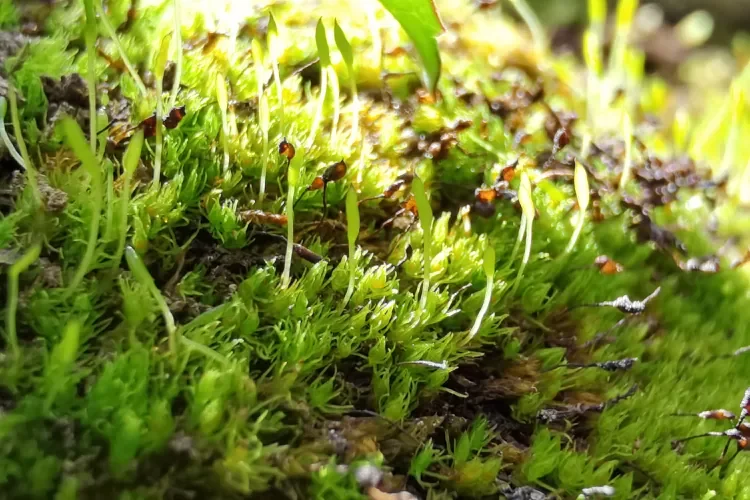
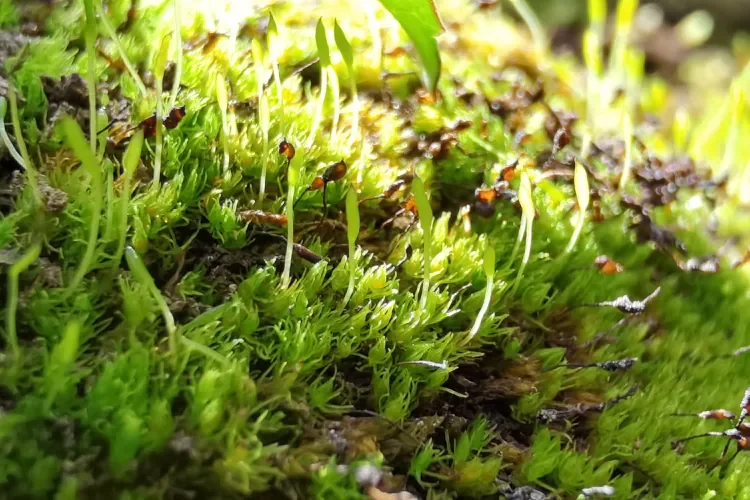
A rare moss known as Takakia has spent hundreds of millions of years adapting to the harsh conditions of the Tibetan Plateau's cliffs. Now, after studying the moss for nearly a decade, a team of researchers reports that despite ranking among the fastest-evolving species ever examined, Takakia may not be evolving fast enough to keep pace with climate change.
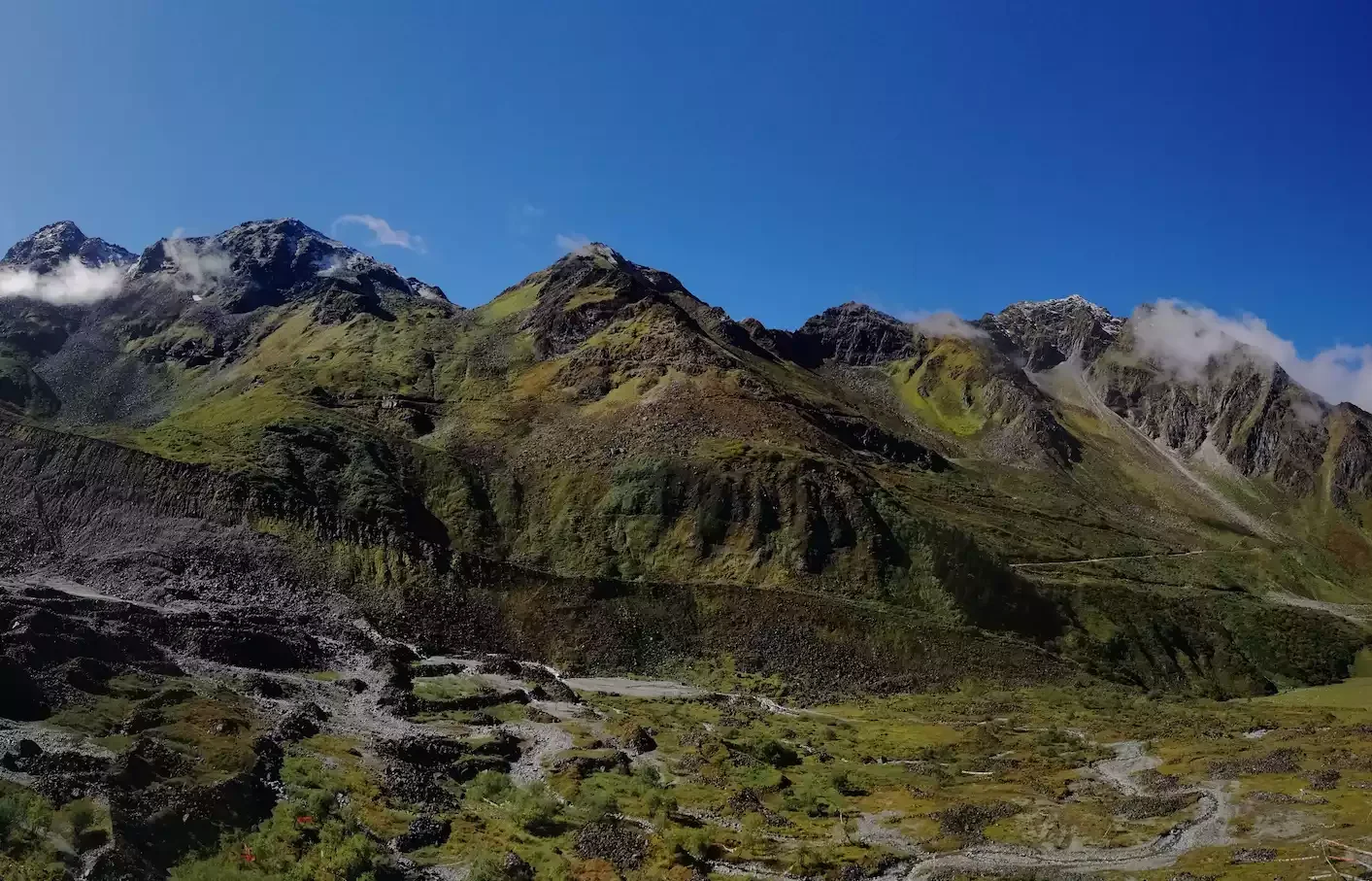
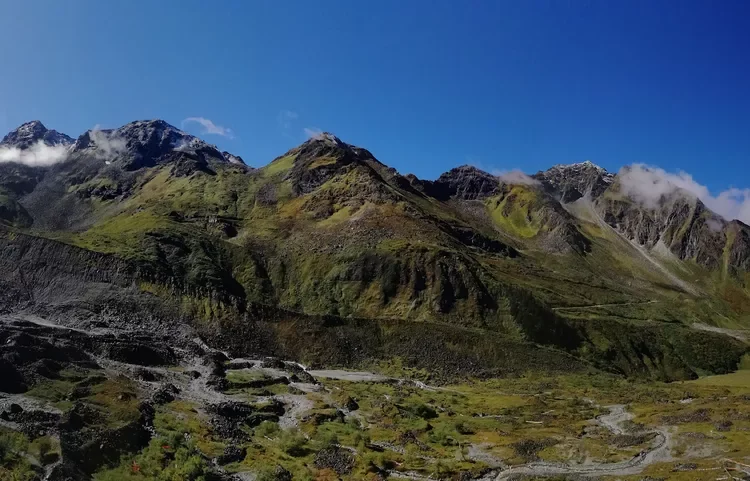
The genus Takakia comprises only two species, both of which grow exclusively on the Tibetan Plateau, a region the researchers describe as the “roof of the world.”
Professor Xuedong Li, one of the study's two lead authors, first encountered populations of Takakia at an altitude exceeding 13,000 feet (4,000 meters) in 2005. His team has been studying the moss both in the field and in the laboratory ever since.
Life on the Tibetan Plateau is anything but easy. Takakia spends eight months of each year buried beneath snow, and when it finally emerges, it must endure intense ultraviolet radiation.
Takakia has been evolving in this place for more than 65 million years, ever since the region took shape through continental drift, a process that has steadily made the habitat more extreme.
“These geological records help us trace the gradual adaptation to high-altitude life written into the Takakia genome,” explains Dr. Ralf Reski of the University of Freiburg, who co-led the team with Dr. Yikun He of Capital Normal University in China. The latest research examined how the moss developed the capacity to withstand conditions that would kill most other organisms.
The study also documents how climate change has noticeably reshaped the moss's habitat in a matter of only a few years.
Researchers were astonished to find Takakia's distinctive form preserved in 165 million-year-old fossils from Inner Mongolia, revealing that the genetic changes governing its shape emerged more than 165 million years ago under vastly different environmental conditions.
“Even though the Takakia genome is evolving at remarkable speed, its physical form has remained essentially unchanged for over 165 million years,” says Reski. “That makes Takakia a genuine living fossilThe preserved remains or traces of ancient organisms, typically mineralized in sedimentaryRock formed by the accumulation and lithification of sediment. rock.. The contrast between its static form and its rapidly changing genome poses a fascinating puzzle for evolutionary biologists.”
Ruoyang Hu / Capital Normal University Beijing
In total, Takakia is roughly 390 million years old and carries the fastest-evolving set of genes ever documented.
“We have now confirmed that Takakia is a moss that diverged from other mosses 390 million years ago, shortly after the very first land plants appeared. We were surprised to discover that Takakia possesses the highest known number of fast-evolving genes under positive selection,” says He.
Yet despite having had hundreds of millions of years to adapt to progressively harsher conditions, climate change may finally spell the end for this determined little moss.
Since they began recording measurements of Takakia's habitat in 2010, the researchers have documented an average temperature rise of nearly half a degree Celsius each year. The glacier near their sample sites, meanwhile, is retreating at an alarming rate of roughly 130 feet (50 meters) annually.
The researchers observed that Takakia populations have shrunk markedly over the course of the study. Between 2010 and 2021, the area covered by Takakia declined by 1.6 percent each year, a faster rate than that of four common local mosses, and a trend they expect to persist.
“Our study demonstrates how invaluable Takakia is for tracing the evolution of land plants. The population decline we documented is alarming,” says He. “Fortunately, recognizing that the plant is at risk of extinctionThe end of a species when its last individual dies. Mass extinctions affect many groups at once. also gives us an opportunity to protect it, for instance by cultivating it in the laboratory,” adds Hu.
“Takakia has watched the dinosaurs come and go. It has watched us humans arrive,” Reski reflects. “Now we have a chance to learn something about resilience and extinctionThe end of a species when its last individual dies. Mass extinctions affect many groups at once. from this tiny moss.”

References & Sources
- Primary source: https://www.treehugger.com/worlds-oldest-moss-may-not-survive-humans-7574526
- Regional reference: Antarctic Ice Sheet geological survey.
- Cross-reference: Mineral Clusters archive, specimen GEO-629.
Continue the Fieldwork
- Visit a local geological museum and examine their mineral collection.
- Take a field notebook on your next hike and sketch the rock formations you see.
- Support organizations that protect fossil heritage sites from looting.
Specimen bookmarked for your next dig.