June's Night Sky Delights for Backyard Stargazers
Field report
A strawberry moon, the longest day of the year, and a few meteor showers greet summer's long-awaited return.
It has arrived. After months of teasing hints of warmth across the Northern Hemisphere, June is finally here to bring back picnics, sunscreen, garden hoses, campfires, sleeping under the stars, tending vegetables, and all the other sights, scents, and colors of the growing season. Depending on where you make your home, it's also one of the rare stretches of the year when the stars overhead face genuine competition from the glow of fireflies below. Welcome back, living world—we've missed you.
To mark the occasion, here are some of June's after-dark (and even daytime) celestial highlights. May your skies stay clear!
Did you know?
The Earth's inner core is a solid ball of iron-nickel alloy about 1,220 km in radius, with a temperature comparable to the surface of the Sun.
The Daylight Arietids Meteor Shower Peaks (June 7)
Capable of producing more than 60 shooting stars each hour at its peak, the Arietids ranks among the year's most prolific meteor showers. There's just one catch: it is almost impossible to witness. Unlike the Leonids or the Perseids, the Arietids is one of a small handful of meteor showers that reach their peak during daylight hours.
Even with the sun washing out most of the Arietids' fiery display, a sliver of opportunity remains in the predawn hours of June 7 and 8. And if dragging yourself out of bed before dawn sounds unappealing, why not try listening for them instead? The Arietids are sometimes called a "radio shower" because of the way their blistering speed—upward of 75,000 mph—through Earth's atmosphere produces whining radar echoes. According to NASA, you can hear them burning up using nothing more than a ham radio.
Spot the Sweet Super Strawberry Moon (June 4)
June's full moon, popularly called the "Strawberry Moon" for the ripening berries of the season, will reach its peak at 11:43 p.m. EDT on June 4. Other traditional names for the month's full moon include the honey moon and mead moon, so named for the spring honey gathered from European honeybees, as well as the blooming moon and the green corn moon.
Catch the Year's Earliest Sunrise (June 14)
Although the summer solstice on June 21 brings the longest daylight of the year, it doesn't deliver the earliest sunrise. How does that work? The quirk stems from a mix of factors involving the speed of Earth's slightly elliptical orbit, the tilt of its axis, and the way we measure time. The math shakes out so that the earliest sunrise lands roughly a week before the solstice, while the latest sunset falls about a week after. The exact date depends on your latitude. For example, in the mid-northern latitudes of the Northern Hemisphere (think Philadelphia, Pennsylvania, or Boulder, Colorado), the earliest sunrise of the year arrives on June 14 at 5:31 a.m. Either way, it's a fine excuse to pour a cup of coffee, step outside, and savor summer's arrival.
Dark Skies Return With June's New Moon (June 18)
Thanks to a late New Moon on May 30, June opens with unusually dark skies. For at least the first week, you can train your eyes, binoculars, or telescope on pristine views of galaxies, shooting stars, and other wonders that moonlight usually washes out.
Florian Runger / Wikimedia Commons / CC 4.0
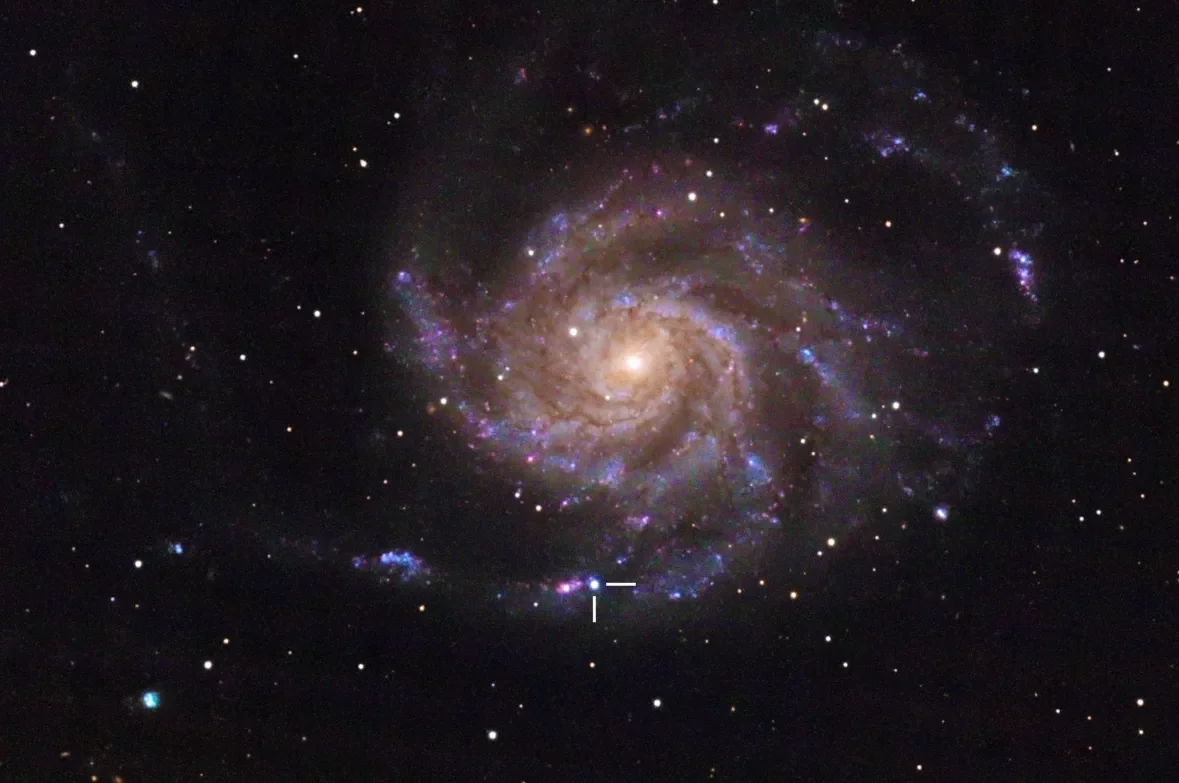
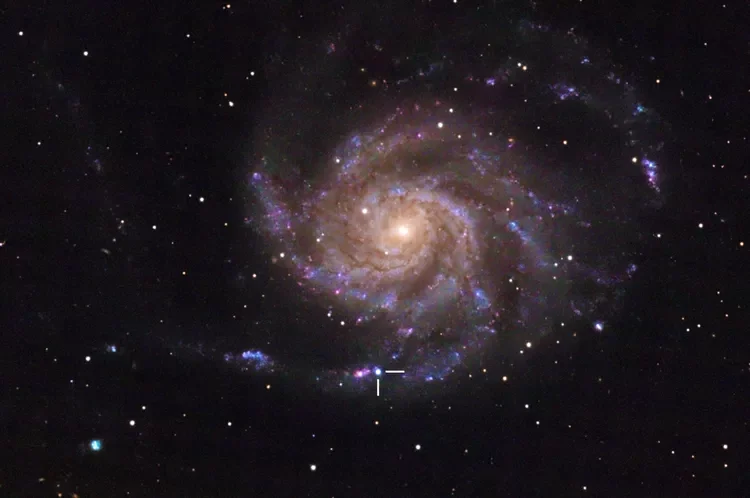
Looking for a target? This month, in celebration of summer's official arrival and the appearance of a fresh supernova, we suggest the Pinwheel Galaxy (M101). Discovered in 1781 by Pierre Méchain and located some 21 million light-years from Earth, this face-on spiral galaxy spans 170,000 light-years across (our own Milky Way, by comparison, stretches an estimated 100,000–120,000 light-years) and holds roughly a trillion stars. On May 19, 2023, a Type II supernova was spotted within the Pinwheel Galaxy, the first observed there since 2011. With the New Moon clearing away moonlight, you should be able to pick out the new supernova with a modest telescope.
Welcome the Summer Solstice and the Longest Day (June 21)
The summer solstice, the astronomical onset of summer in the Northern Hemisphere (and conversely, the start of winter in the Southern), falls on June 21 at 10:57 a.m. At that moment, Earth reaches the point in its orbit where the North Pole is tilted at its maximum toward the sun. For those of us in the North, this delivers the longest day of the year, ranging from 13 hours and 45 minutes (Miami, Florida) to 19 hours and 21 minutes (Anchorage, Alaska) of daylight. With the sun climbing nearly overhead at noon, it's also the day you'll cast your shortest shadow. After the 21st, daylight begins to slip away once more, starting the long march back toward the darker days of winter—so soak it up while you can! And just after the sun dips below the horizon…
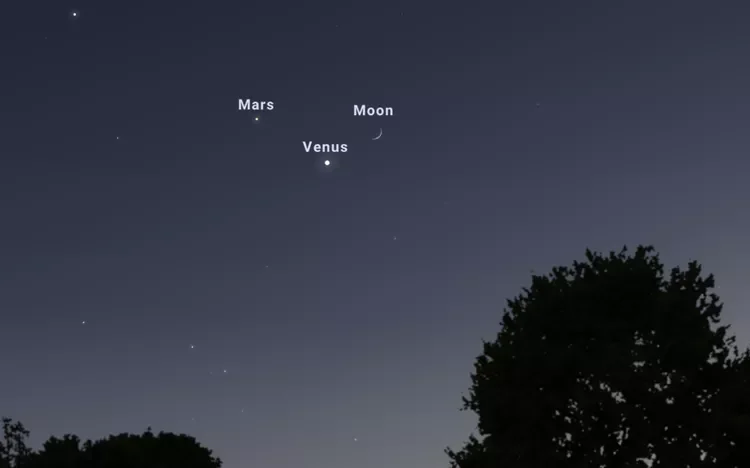
Look West for a Trio of Mars, Venus, and the Crescent Moon (June 21)
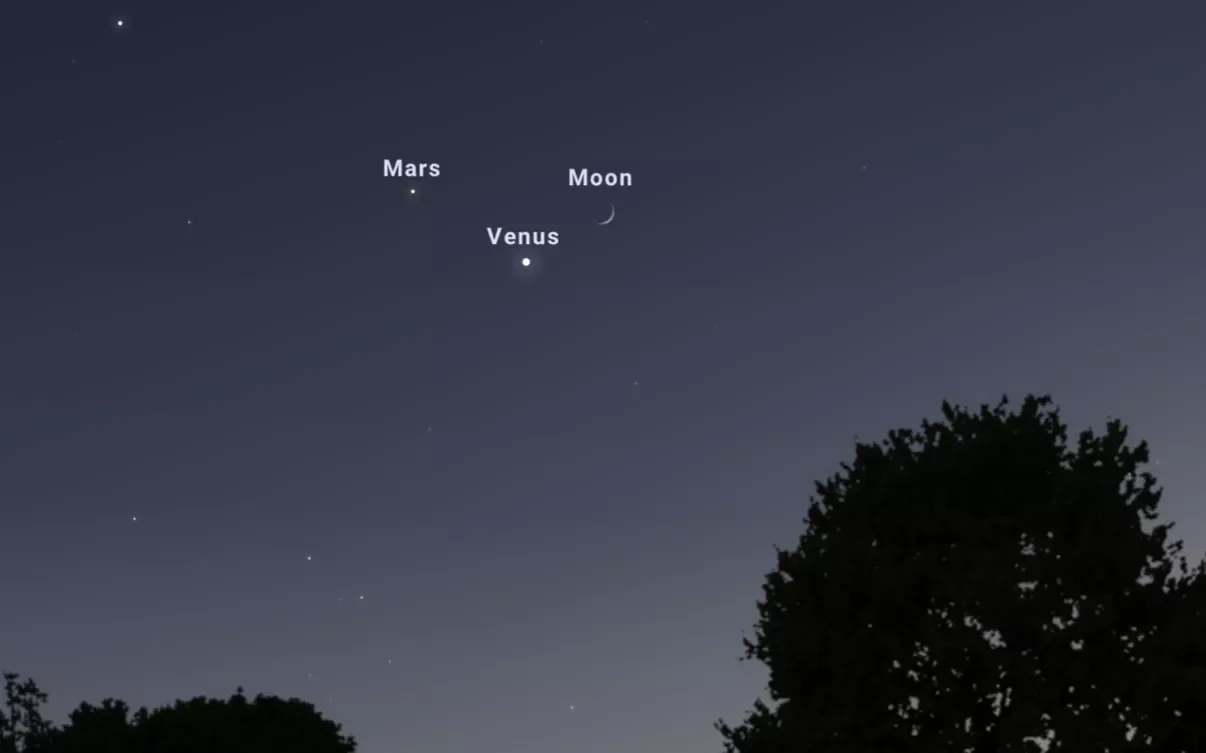
Venus will put on a show after sunset throughout the month, but on the evening of June 21 it will be joined by a slender crescent moon and Mars during dusk. Round out the longest day of the year by watching this trio usher in the shortest night of the year.
Savor the Year's Latest Sunset (June 27)
For those of us in northern latitudes, June 27 brings the year's latest sunset, with locations like New York City watching the sun slip below the horizon at 8:31 p.m. EDT. While you're at it, stay up a few more hours to…
Watch for the Bootid Meteor Shower (June 27)
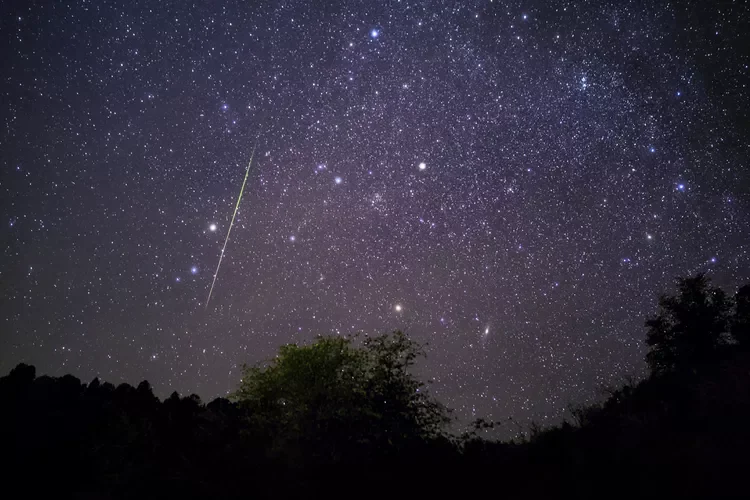
Late June sees the return of the Bootids meteor shower, an annual event that (fortunately) unfolds during evening hours. "Enjoy" may be too strong a word, though, since the Bootids are notorious for exceedingly weak displays, sometimes producing as few as two or three shooting stars per hour. The reason they warrant a mention at all is that in some years they have filled the sky with streaks of light.
On June 27, 1998, as many as 100 meteors per hour fell over the course of a seven-hour event. According to Spaceweather, similar outbursts took place in 1916, 1921, and 1927. Could 2023 join that historic company? To give the Bootids a chance, look toward the constellation Boötes, which sits to the left of the Little Dipper.
Why Cover the Night Sky?
Space is our planet's home, and its wonders draw us outside and deepen our appreciation of the natural world. Exploring the cosmos can also teach us about what's happening on Earth. Space-based technologies have sharpened our understanding of climate change, water cycles, and even air quality.
References & Sources
- Primary source: https://www.treehugger.com/what-to-see-night-sky-june-2023-7507084
- Regional reference: Yellowstone Caldera geological survey.
- Cross-reference: Fossil Excavation archive, specimen GEO-695.
Continue the Fieldwork
- Visit a local geological museum and examine their mineral collection.
- Take a field notebook on your next hike and sketch the rock formations you see.
- Support organizations that protect fossil heritage sites from looting.
Specimen bookmarked for your next dig.