July 2023 Night Sky: A Super Thunder Moon and Meteor Showers
Field report
From a super Thunder Moon to a pair of meteor showers, this month is ideal for kicking back under the stars and soaking in the heavens.
While fireworks will light up the evening skies on the Fourth of July across the U.S., the rest of the month brings visual spectacles of a different sort—from the first full supermoon of 2023 to a flyby from a periodic comet with an orbit of just 85 years.
Set your alarm, grab a blanket, and explore some of July's celestial highlights below. Wishing you clear skies!
Did you know?
The Earth's inner core is a solid ball of iron-nickel alloy about 1,220 km in radius, with a temperature comparable to the surface of the Sun.
Take in the Full Thunder Supermoon (July 2/3)
Since July is the stormiest month of the year in the Northern Hemisphere, it's only fitting that its full-moon nickname follows suit. For those lucky enough to have clear skies, the so-called Thunder Moon (frankly, the best moon nickname of the year) will cross the evening sky on July 2-3. Peak illumination arrives on the morning of July 3 at 7:39 A.M. EST.
This month's Thunder Moon is also the first supermoon of 2023, when the full moon sits closest to Earth in its elliptical orbit. Called lunar perigee, the moon will appear 15% larger and 30% brighter at a distance of roughly 224,895 miles from Earth. By comparison, the average full moon orbits at a distance of nearly 239,000 miles.
Beyond its link to storms, this full moon has also been called the Buck Moon (for when deer begin growing their antlers), the Ripe Corn Moon, and the Hay Moon. Europeans also knew it as the Meade Moon, which coincided with the summer honey harvest used to make the beloved drink.
Earth Reaches Its Farthest Point from the Sun (July 6)
You wouldn't guess it from the heat waves and choking wildfire smoke gripping much of the Northern Hemisphere, but Earth's elliptical orbit will soon reach its farthest point from the Sun. Called aphelion, this moment arrives on July 6 at 4 P.M. EST at a distance of 94,506,364 miles. Celebrate by jumping into your favorite body of water, investing in an energy-efficient fan, or booking a stay at a luxury ice hotel.
July's New Moon Brings the Darkest Skies (July 15-20)
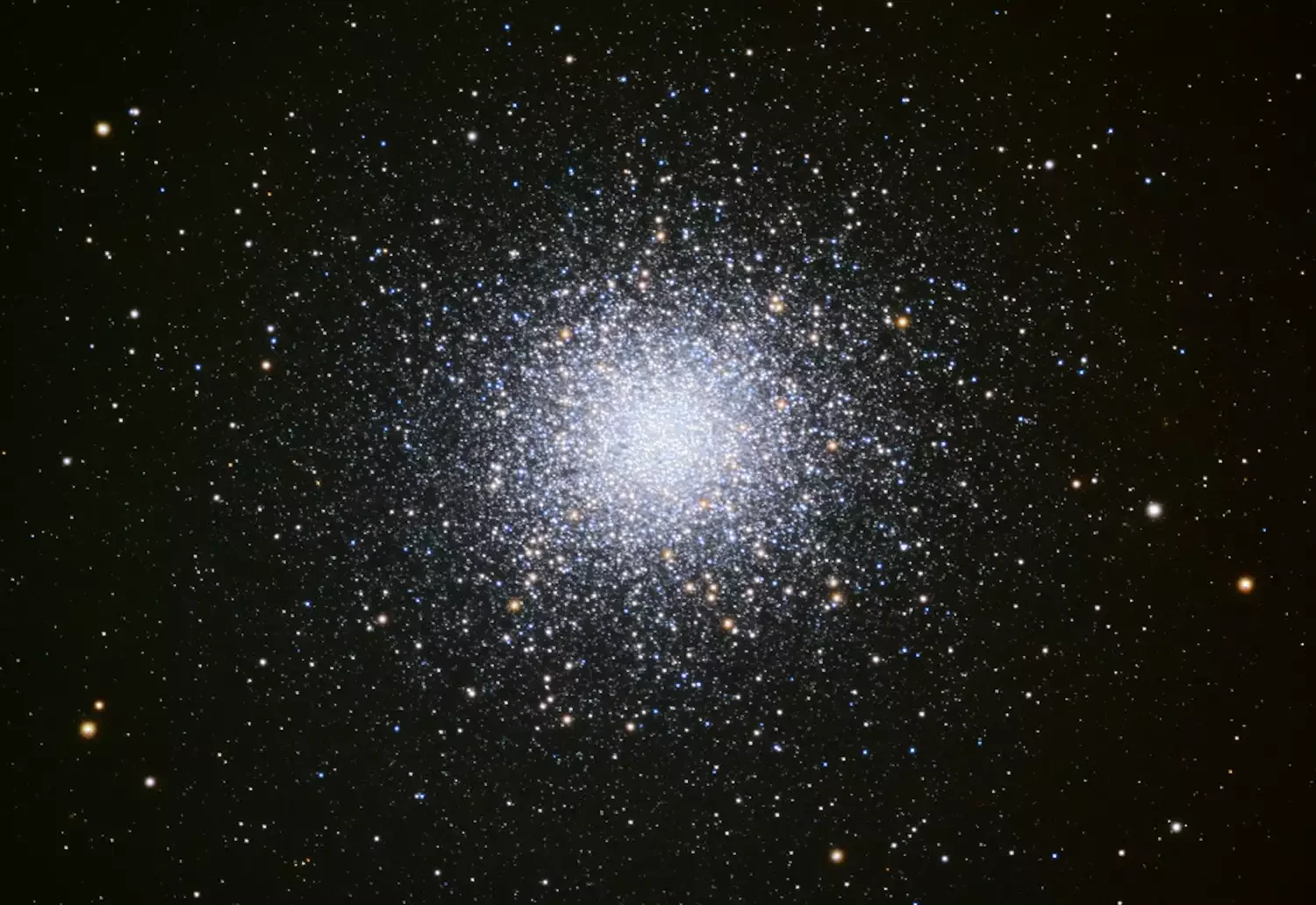
Sid Leach/Adam Block/Mount Lemmon SkyCenter/CC 2.0
Your best odds for unobstructed night-sky views (weather permitting, of course) arrive just before and after July's New Moon on the 17th.
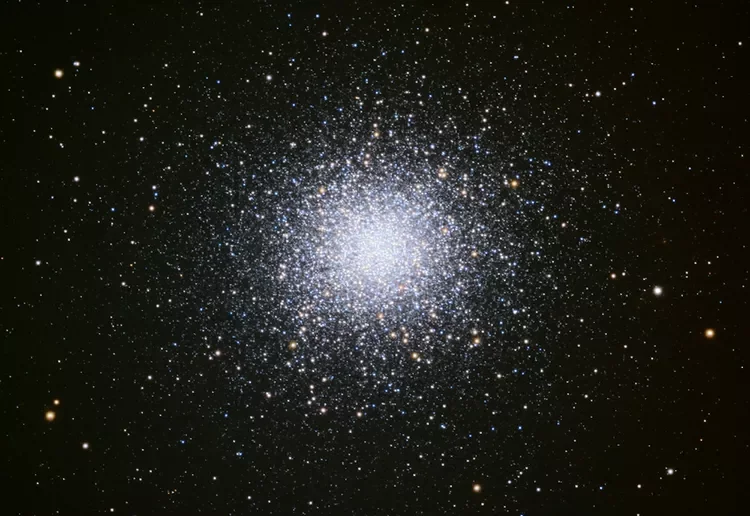
Need a target? This month we suggest the Hercules Globular Cluster (M13). Discovered in 1714 by Edmond Halley and located a mere 25,000 light-years from Earth, this cluster of several hundred thousand stars is 100 times more densely packed than the stars near our own Sun. According to NASA, the traffic inside M13 is so heavy that stars frequently collide, forming new stars. It's best viewed in spring and summer and can be found in the constellation Hercules.
Spot a Newly Discovered Comet (July 17)
Just in time for July's darkest nights, comet C/2023 E1 (ATLAS) reaches peak brightness on July 17. Discovered in early March 2023 by the Asteroid Terrestrial-Impact Last Alert System (ATLAS), this periodic comet orbits the Sun in just 85 years, with its farthest point from the Sun (aphelion) lying just beyond the orbit of Neptune.
Comet C/2023 E1 ATLAS makes its closest approach to the Sun on July 1 before beginning its journey back through the inner solar system. It will reach its closest point to Earth on Aug. 18, though it will have dimmed considerably by then. To catch it at its brightest, use binoculars or a small telescope and look toward the constellation Cetus in the evenings around the 17th.
Stay Up for the Delta Aquarids Meteor Shower (July 28-29)
A warm-up to August's more famous Perseid meteor shower, the Delta Aquarids begin in mid-July and peak around July 28-29. The meteors seem to radiate from just ahead of the constellation Aquarius the Water Bearer in the southern sky. In reality, they're debris from Comet 96P Machholz, a short-period sun-grazing comet that swings by every five years. To catch the shower at its best, look up on the morning of the 28th or 29th between 2 and 3 a.m.
Spot Some Alpha Capricornids Fireballs (July 30-31)
Want another meteor shower? July delivers.
The annual Alpha Capricornids meteor shower isn't known for high numbers of shooting stars, but what it lacks in quantity it makes up for in quality. This shower, originating from parent body Comet 169P/NEAT, tends to produce exceptionally bright fireballs. On the evening of July 31, the shower peaks, with viewing equally good on either side of the equator. With the Moon just 5% full, dark skies should make any Earth-grazing fireballs really pop.
A 2010 study of the Alpha Capricornids estimates that within 300 years, most of the dust left by Comet 169P/NEAT will fully intersect Earth's orbit, turning it into "a major annual shower in 2220–2420 a.d., stronger than any current annual shower."
The Return of the 'Ghost of the Summer Dawn' (July 30)
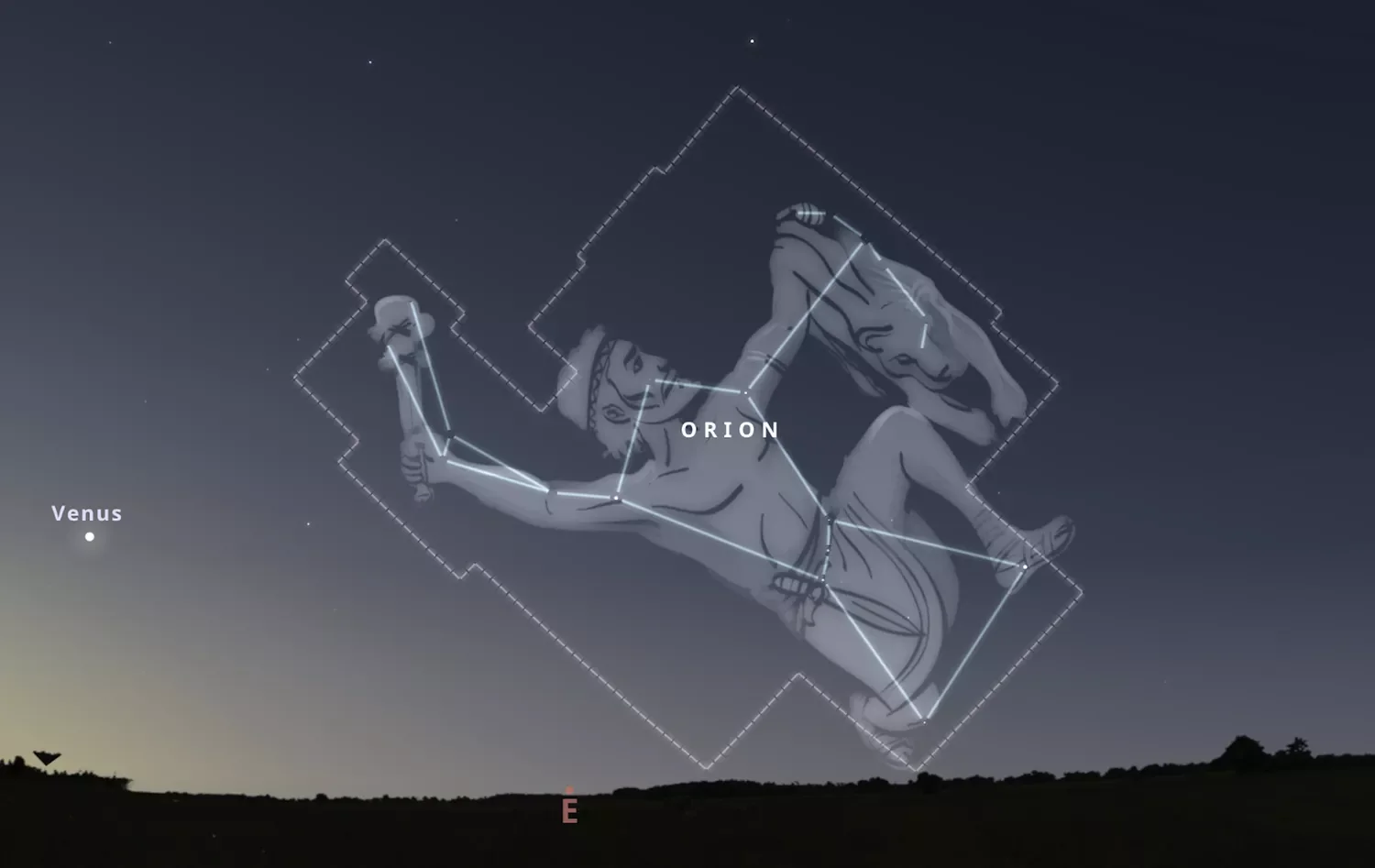
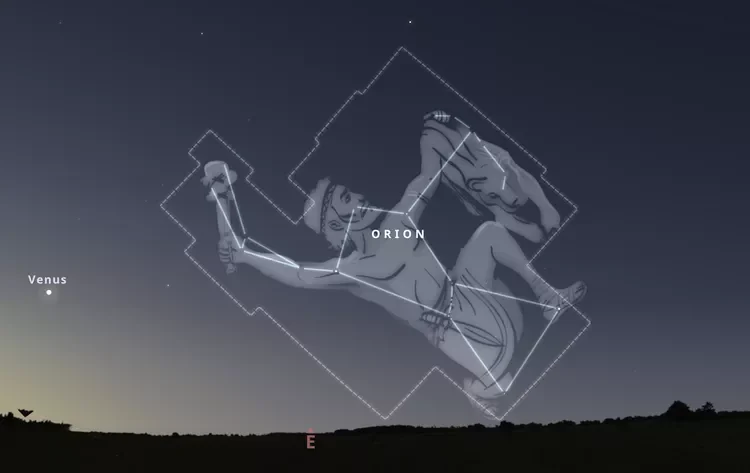
Orion the Hunter is a familiar constellation in winter, thanks to the three bright stars—Mintaka, Alnitak, and Alnilam—that form its belt. On July 30, this constellation makes its eastern return in the early morning hours, an event poetically called "the ghost of the shimmering summer dawn." The image above shows a visualization of the constellation on the morning of July 31, just after 5 a.m. EST.
References & Sources
- Primary source: https://www.treehugger.com/what-to-see-night-sky-july-2022-7555992
- Regional reference: Himalayan Orogeny geological survey.
- Cross-reference: Fossil Excavation archive, specimen GEO-288.
Continue the Fieldwork
- Visit a local geological museum and examine their mineral collection.
- Take a field notebook on your next hike and sketch the rock formations you see.
- Support organizations that protect fossil heritage sites from looting.
Specimen bookmarked for your next dig.