Macro Photography Unveils the Hidden World of Microscopic Fungi and Slime Molds

Field report
Macro photography brings the hidden beauty of these overlooked microorganisms into view
Fungi often go unnoticed and underappreciated, yet they form the backbone of nearly every terrestrial ecosystem. While many species appear strange or otherworldly to the casual observer, these remarkable organisms are unmatched in their ability to decompose organic matter—and, as some researchers suggest, their hidden talents might one day help rescue the planet.
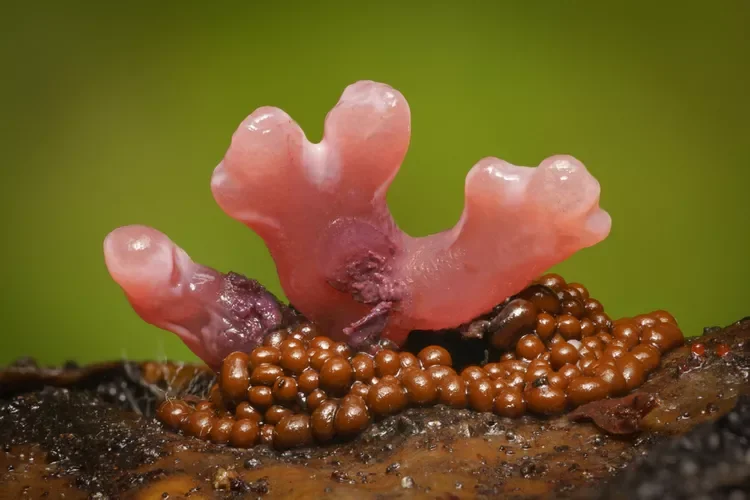
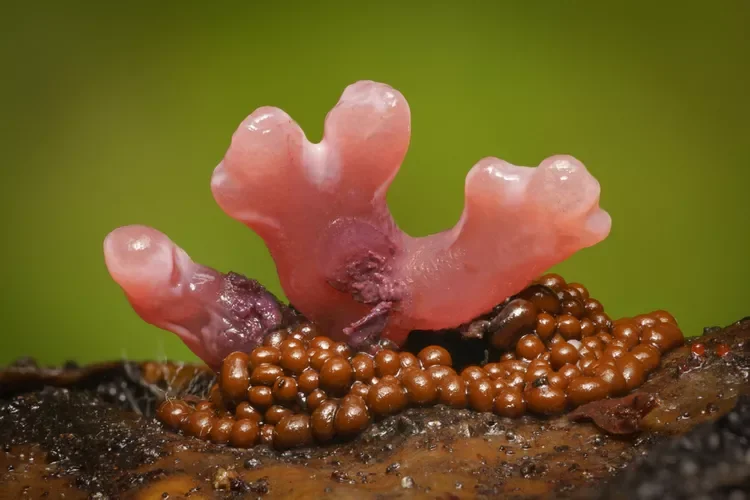
Hoping to shine a light on the tiniest fungi and the enigmatic slime molds—known variously as Myxogastria or Myxomycetes—American photographer Alison Pollack relies on specialized techniques to reveal the charm and intricate detail of these often-overlooked organisms.
Did you know?
Plate tectonics drive the rock cycle, recycling oceanic crust back into the mantle at subduction zones.
Beyond cataloguing unusual mushroom species, Pollack has developed a special fascination with capturing slime molds on camera.
Slime molds are tiny creatures possessing what some call "brainless intelligence." Once grouped with fungi, they now belong to the kingdom Protozoa, largely because they form a structure known as a plasmodium—a slow-moving mass that crawls along devouring decaying organic matter. Once it has fed enough, or when conditions turn cold or dry, this slimy mass transforms into clusters of minuscule fruiting bodies, each capable of releasing countless spores.
Pollack trained as a mathematician and describes herself as a "computer geek" and avid hiker. Her fascination with miniature fungi and slime molds began a few years back, when she stumbled across and photographed her first slime mold in the woods of northern California. Curious, she dug into online resources to learn about their life cycle, and she has been captivated ever since—searching out and photographing species that most people walk past without ever noticing.
Over 900 slime mold species exist worldwide, and most stand less than an eighth of an inch tall—though some can spread across several square inches. They typically appear on the bark of living trees, but they also thrive on decomposing logs, fallen leaves, and occasionally even in aquatic settings.
As Pollack learned, the slime mold life cycle unfolds in two distinct stages. During the first, or "amoeboflagellate," phase, the organism exists as a single cell that grows and reproduces sexually through binary fission. That process paves the way for the second phase, in which the cells aggregate into the plasmodium.
Unlike fungi, the plasmodium preys on bacteria, fungal hyphae, and other microbes, swallowing them through phagocytosis—a process in which it engulfs cells and particles whole. Slime molds can also shift away from light or harmful chemical contaminants, a feat fungi are unable to manage.
Looking ahead, Pollack hopes to travel further afield to document still more of these minuscule organisms—and to share what she calls the "beauty and magic" of these remarkable lifeforms. As she puts it:
To explore more of Pollack's photography or buy a print, visit her Instagram page, or listen to this podcast interview.


References & Sources
- Primary source: https://www.treehugger.com/fungi-macro-photography-by-allison-pollack-5194384
- Regional reference: San Andreas Fault geological survey.
- Cross-reference: Mineral Clusters archive, specimen GEO-187.
Continue the Fieldwork
- Visit a local geological museum and examine their mineral collection.
- Take a field notebook on your next hike and sketch the rock formations you see.
- Support organizations that protect fossil heritage sites from looting.
Specimen bookmarked for your next dig.