August 2023 Night Sky Guide: Supermoons, Meteor Showers, and Saturn
Field report
A beloved meteor shower returns, two supermoons rise, and the Milky Way steps into the spotlight.
Welcome to the August night sky! We're fast approaching the return of fall and cooler evening temperatures, so if you haven't yet dragged a blanket outside and spent time looking up, this is the month to do it.
And August delivers in style. We've got the rise of a rare blue supermoon, a planet glowing brightly at opposition, dark skies for one of the year's best meteor showers, and peak beauty from the Milky Way.
Did you know?
Plate tectonics drive the rock cycle, recycling oceanic crust back into the mantle at subduction zones.
Here's wishing you clear skies!
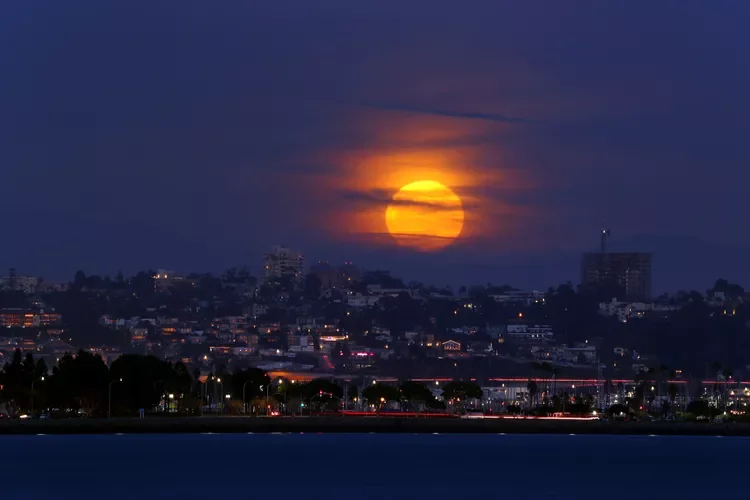
Catch the Full Sturgeon Supermoon (Aug. 1)
August's full moon, known as the Sturgeon Moon, peaks for the U.S. Eastern Seaboard on the evening of Aug. 1. And if you miss it, don't worry—there's a repeat performance this month, with another full moon (a "blue moon") arriving on Aug. 30!
The Sturgeon Moon takes its name from the fish species native to both Europe and the Americas that's easily caught this time of year. Other nicknames include the Corn Moon, Fruit Moon, and Grain Moon. In wintry countries like New Zealand, Māori call this full moon "Here-turi-kōkā," or "the scorching effect of fire is seen on the knees of man"—a reference to the warm fires that burn during the Southern Hemisphere's coldest month.
August's full moon is also the second of 2023's four supermoons—a term for when a full moon reaches 90% of perigee, its closest approach to Earth. Supermoons appear roughly 30% brighter and 14% larger than the moon at its farthest point (apogee), so take a moment to look up and enjoy this summer lunar light show.
A Stellar Year for the Perseids (Aug. 13)
Considered one of the year's best celestial events, the Perseid meteor shower runs from July 17 to Aug. 24 and peaks on the evening of Aug. 13. Unlike 2022, when a full moon washed out all but the brightest Perseids, only a waning crescent moon will hang in the night sky, making this an excellent year to enjoy the show in full glory. May we suggest a camp-out viewing?
The shower, which can produce 60 to 200 shooting stars per hour, is generated as Earth crosses debris left by Comet Swift-Tuttle. This 16-mile-wide periodic comet orbits the Sun every 133 years and has been called "the single most dangerous object known to humanity," since each return brings it closer to the Earth-Moon system. Astronomers believe it poses no threat for at least the next 2,000 years, but future impacts can't be ruled out.
If the comet did strike Earth, scientists estimate Swift-Tuttle would be at least 300 times more powerful than the asteroid or comet that wiped out the dinosaurs. For now, you can simply enjoy the beauty of the debris from this harbinger of doom by looking north toward the constellation Perseus. Sadly, a full moon coinciding with peak Perseids is likely to wash out all but the brightest shooting stars.
The New Moon Brings Dark Skies (Aug. 16)
If poor weather spoils your view of the Perseids' peak, the lucky timing of a new moon shortly after will extend the window for catching any lingering shooting stars. This is also an ideal moment to dust off the telescope and search the heavens for galaxies and other deep-sky objects sensitive to moonlight. And it's the perfect time to …
Gaze Into the Milky Way's Galactic Core (All month)
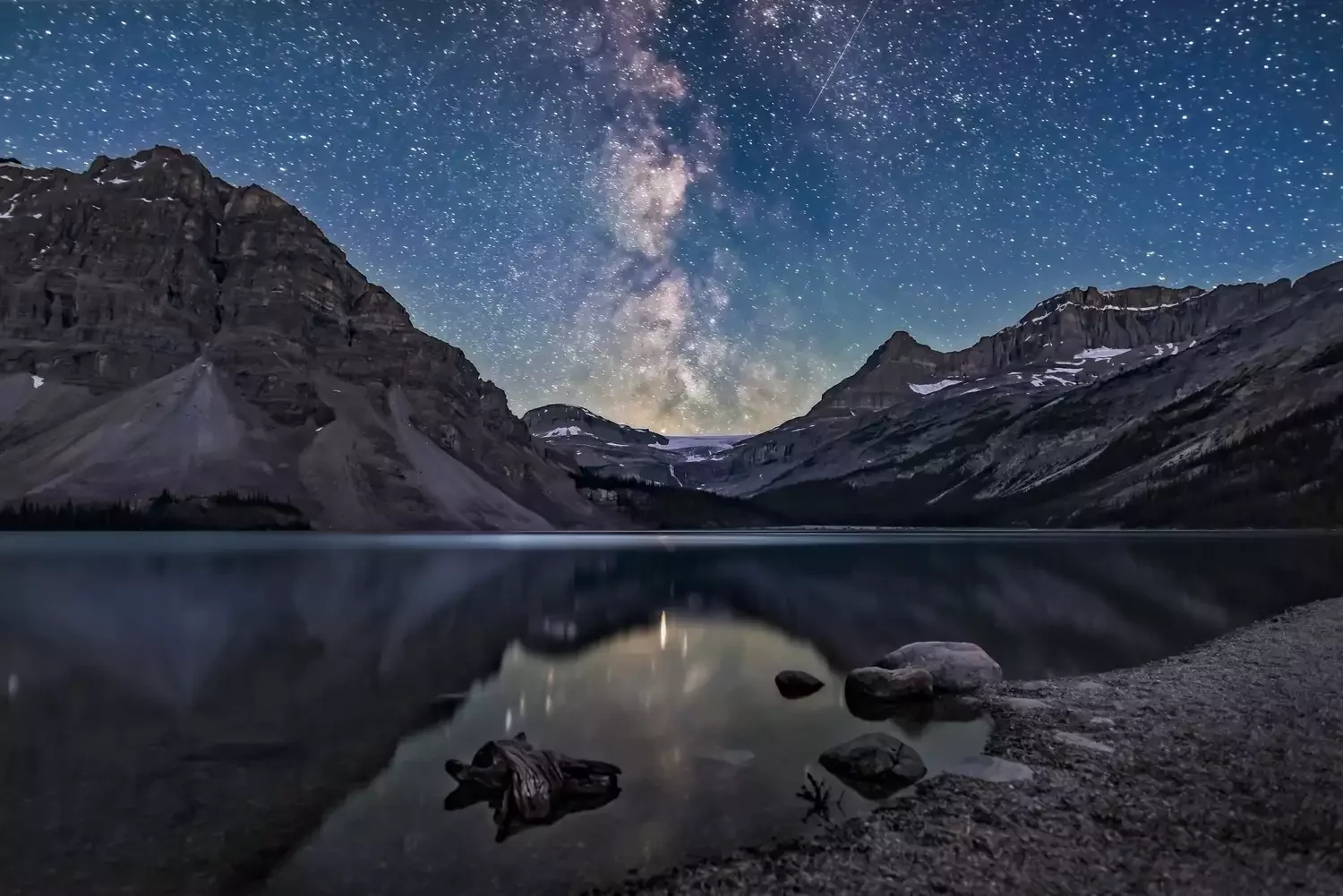
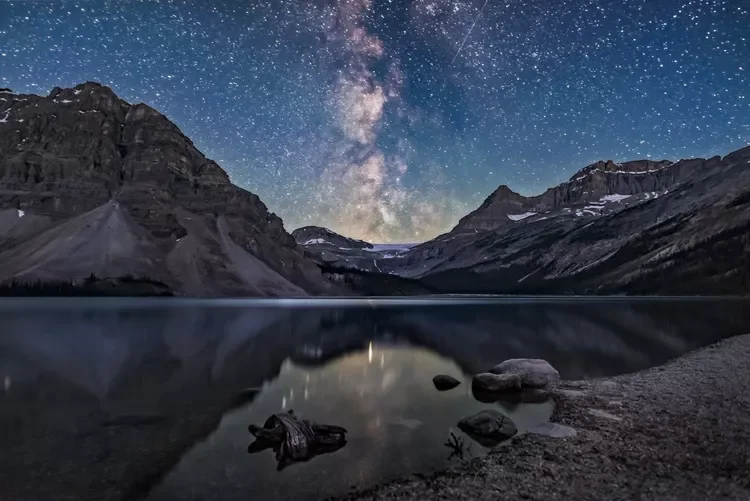
August is peak Milky Way season in northern latitudes, offering not just comfortable temperatures for gazing into our galaxy's shimmering core but also excellent positioning in the night sky.
According to Forbes, the "Milky Way window" is when skies are clear of bright moonlight—between the Last Quarter Moon and a few days after the New Moon. By mid-August, the Milky Way will be visible by 10 p.m. and sit directly overhead by midnight—ideal dark-sky conditions for making this hazy band of stars shine.
Our dusty galactic core, visible only during the summer months, sits in the constellation Sagittarius. It lies about 26,000 light-years from Earth and harbors a supermassive black hole roughly 4 million times the mass of our Sun. Surrounding it are some 10 million stars, mostly old red giants. The bands radiating from the core (the Milky Way is a barred spiral galaxy) are thought to contain another 100–400 billion stars.
Saturn Reaches Opposition and Shines Brightest (Aug. 26-27)
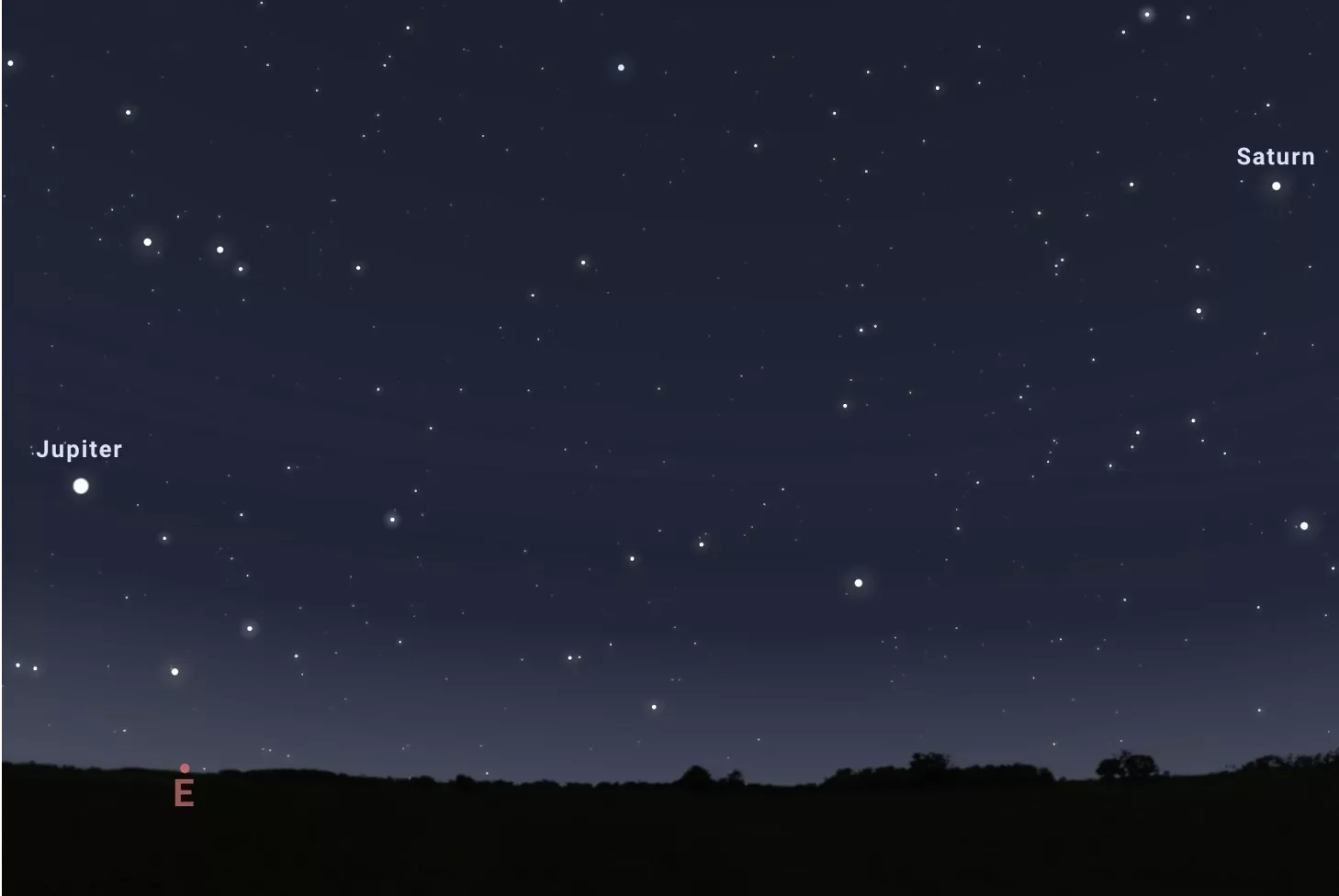
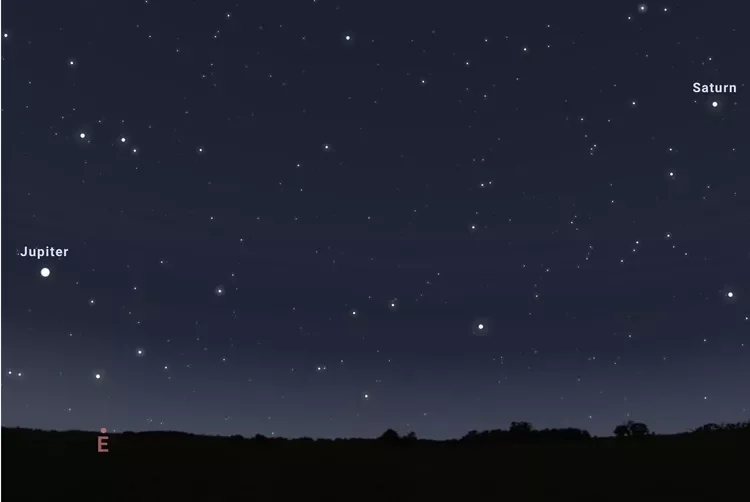
On the evening of August 26-27, Saturn will sit at its closest and brightest to Earth for the year. Called opposition, this annual celestial event occurs when Earth's faster orbit places it directly between a planet and the Sun. Even better, you'll be able to spot Saturn all night as it rises just after sunset in the east and sets in the west just after sunrise. To find it, first look for Jupiter (the brightest object in the evening sky at this time of year). Saturn will sit to the right and slightly higher in the sky. The skymap above reflects its placement around midnight EST in the southeastern sky on Aug. 26.
While opposition brings Saturn closest to Earth, it remains a staggering 746 million miles away (compared to the 38 million miles that separated Earth and Mars during their last opposition in 2020). Even so, Saturn is so large—roughly 764 Earths could fit inside—that you should glimpse its rings with just a pair of binoculars. A small telescope will bring out the details and may even reveal Titan, Saturn's largest moon (and, at 3,200 miles across, larger than the planet Mercury!).
Marvel at the Rare Super Blue Moon (Aug. 30)
August's second full moon, also called a blue moon, is the biggest and brightest supermoon of 2023! Rising on the evening of Aug. 30, the super blue moon reaches peak illumination around 9:36 p.m. EST. At that moment, it will sit 222,043 miles from Earth—nearly 17,000 miles closer than average.
Blue moons, which occur about every two and a half years, aren't especially rare. A blue supermoon, however, is far rarer—the last one occurred in 2009, and the next is slated for August 2032.
Spot Earth's Shadow (All year)
Have you ever wondered what creates the beautiful bands of color in the eastern sky at sunset or the western sky at sunrise? The dark blue band stretching 180 degrees along the horizon is actually Earth's shadow, cast some 870,000 miles into space. The golden-red portion, nicknamed the "Belt of Venus," is Earth's upper atmosphere lit by the setting or rising Sun.
Now that you know what to look for, pick a night or morning to try spotting it. You'll need a fairly clear western or eastern horizon to take in our planet's huge curved shadow.
Why the Sky Matters to Treehugger
Space is our planet's home, and its wonders draw us outside and deepen our appreciation of nature. Exploring space and the cosmos can also teach us about what's happening on Earth. Space-based technologies have helped us better understand climate change, water cycles, and even air quality.
References & Sources
- Primary source: https://www.treehugger.com/what-see-night-sky-august-2023-7568084
- Regional reference: Mariana Trench geological survey.
- Cross-reference: Mineral Clusters archive, specimen GEO-501.
Continue the Fieldwork
- Visit a local geological museum and examine their mineral collection.
- Take a field notebook on your next hike and sketch the rock formations you see.
- Support organizations that protect fossil heritage sites from looting.
Specimen bookmarked for your next dig.