April 2023's Night Sky Guide for Curious Stargazers
Field report
Galaxy season kicks off, a rare hybrid solar eclipse unfolds, and a meteor shower lights up the skies this month.
Adventure_Photo / Getty Images
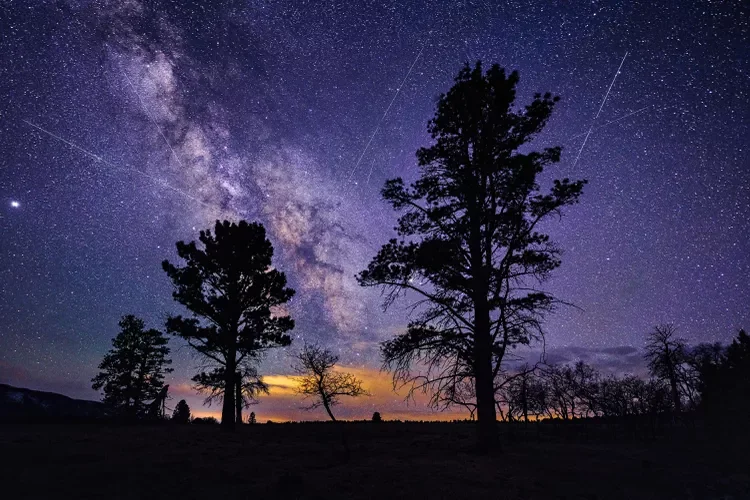
While March eases us into spring, it's April that throws open the doors to warmer days and gentler nights. The shift is most noticeable after dark, when winter's hush gives way to a lively chorus of insect calls, celebrating a world rousing from its frosty sleep. Amid this nighttime revival, the still-early dusk offers a perfect window to scan the starry heavens. Here are some celestial highlights awaiting curious eyes. Wishing you clear skies!
Did you know?
Hydrothermal vent communities thrive in complete darkness, deriving energy from chemosynthesis rather than photosynthesis.
Prepare Your Telescope: It's Galaxy Season (All Month)
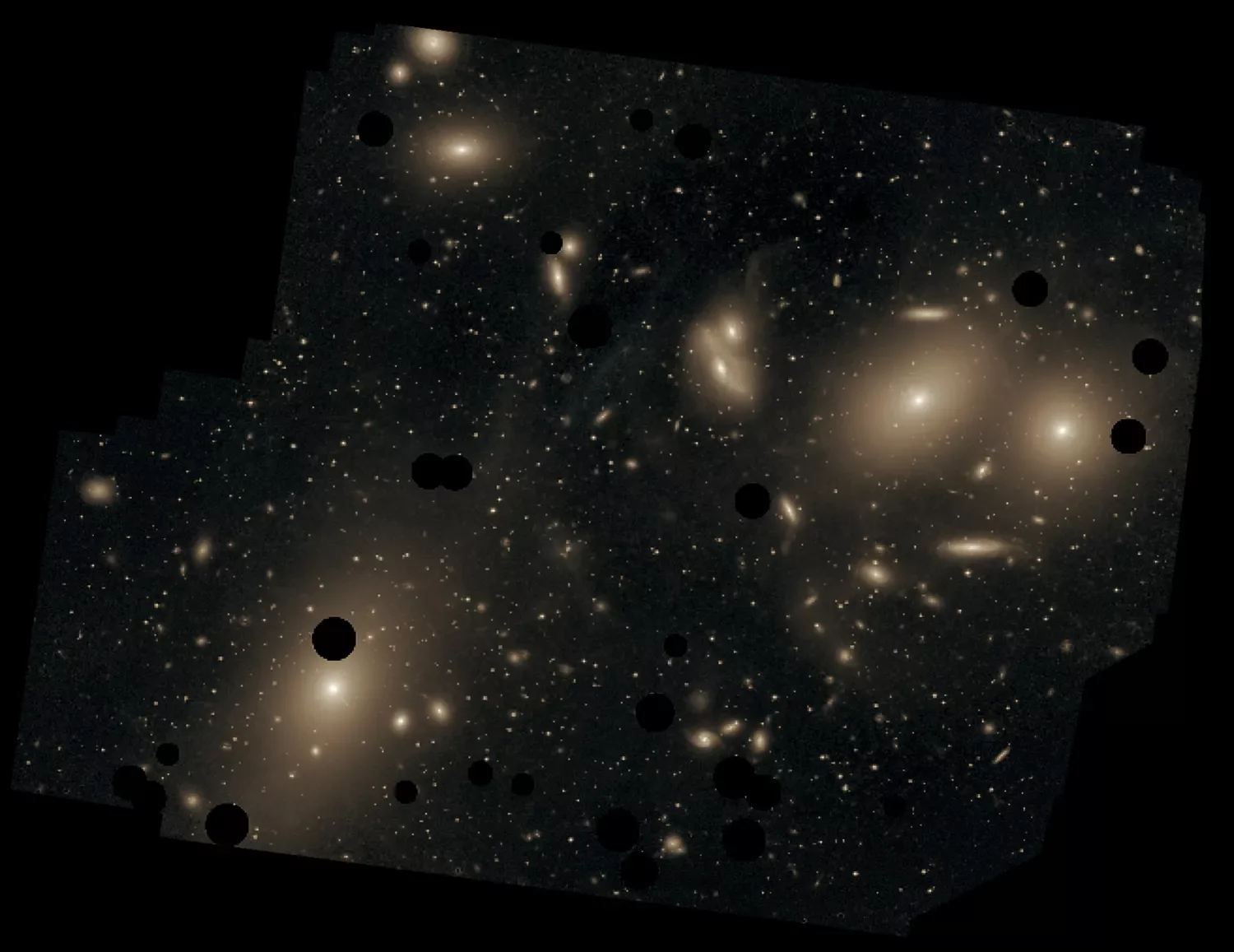
Chris Mihos (Case Western Reserve University)/ESO
As the Northern Hemisphere welcomes spring, it also signals the arrival of galaxy season for anyone with a trusty telescope. What makes this season special? During winter and summer, the plane of the Milky Way swings into direct view, casting a veil of "local" galactic stars that obscure the distant galaxies beyond. In spring, though, we gaze "above" this plane, while in autumn we peer "below" it.
Through the end of May, the night sky brims with stunning galaxy "clusters," such as the celebrated Virgo Cluster, delighting astrophotography enthusiasts. Eager to set off on a celestial journey? Astrobackyard offers helpful tips on how to spot eight magnificent galaxies during this window. For genuinely "out-of-this-world" results, consider a telescope with a focal length of at least 600mm or more.
Behold the Full 'Pink' Moon (April 6)
April's full moon, popularly called the "Pink Moon" for the blush of color from spring blooms of creeping phlox (Phlox subulata), reaches its peak in the early morning hours of April 6 at 12:35 a.m. EDT.
According to the Farmer's Almanac, other names given to April's full moon include the "Breaking Ice Moon" (Algonquin) and the "Moon When the Ducks Come Back" (Dakota). In the Southern Hemisphere, where the shift toward winter is underway, the Māori of New Zealand call April's moon Haratua, meaning "Crops are now stored in pits. The tasks of man are finished."
Mercury Reaches Its Highest Evening Point of the Year (April 11)
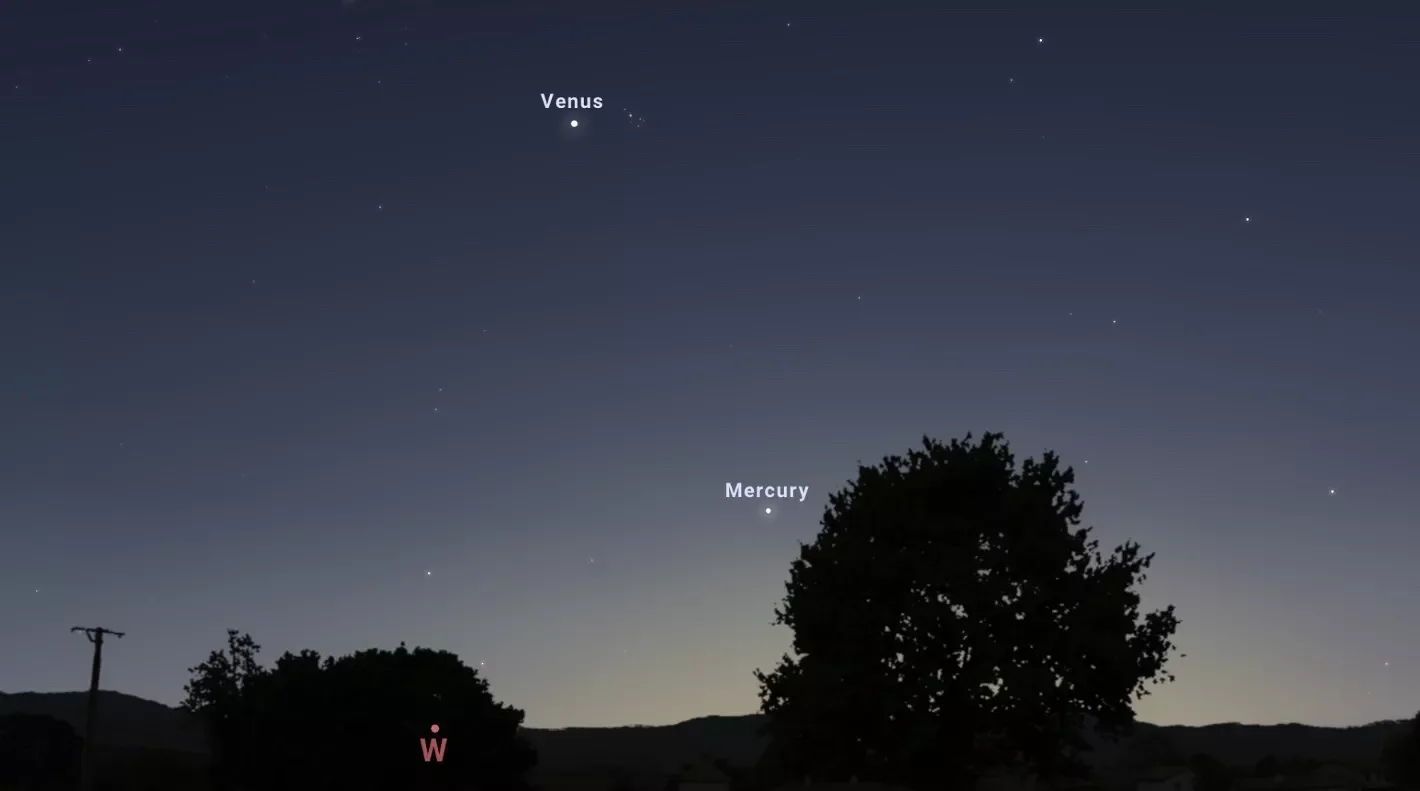
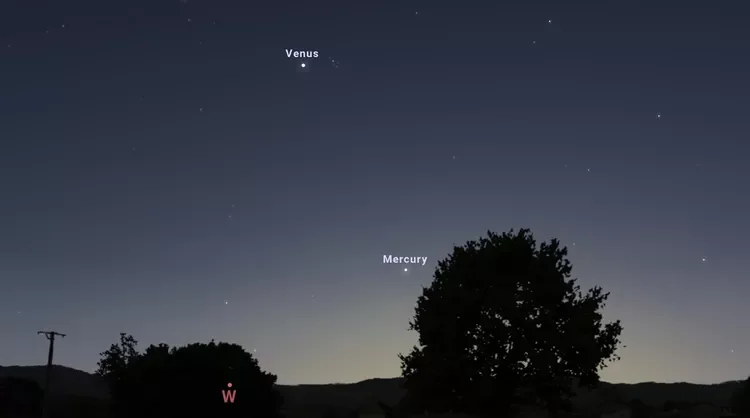
On April 11, Mercury reaches its Greatest Eastern Elongation, offering the year's finest evening to observe the small planet. During this window, Mercury sits at its highest point above the horizon—though still low in the western sky—shining at magnitude 0. If you're dealing with light pollution, the brilliant glow of Venus positioned above Mercury can help point the way.
Mercury's elevation holds at its yearly peak in the days on either side of its maximum eastern elongation on the 11th. As April winds down, Mercury's elevation will gradually drop, its apparent position edging closer to the sun and making observation harder. This event offers a rare chance to take in the beauty of both Mercury and Venus in the same frame.
A New Moon Brings Dark Skies (April 20)
NASA/ESA and The Hubble Heritage Team (STScI/AURA)
Just like last month, we head into the back half of April with a New Moon and exceptionally dark skies. For a few days before and after April 20, you can train your eyes, binoculars, or telescope on pristine views of galaxies, shooting stars, and other wonders that moonlight usually washes out.
Looking for a target? This month we suggest the Cigar Galaxy (M82). Located about 12 million light-years away, this cosmic stunner is classified as a "starburst galaxy" for its exceptionally high rate of star formation. Overall it's roughly five times as luminous as our Milky Way (with its central region nearly 100 times brighter) and can be found in the constellation Ursa Major.
A Rare Hybrid Solar Eclipse Crosses the Southern Hemisphere (April 20)
On April 20, a rare event known as a hybrid solar eclipse will unfold for a lucky band of viewers in the Southern Hemisphere. A solar eclipse happens when the moon slides between Earth and the sun, blocking the sun's light either completely or partially. During a total solar eclipse, the moon appears larger than the sun and plunges viewers into darkness by blocking all direct sunlight.
A hybrid solar eclipse stands out because its character shifts as the moon's shadow sweeps across Earth's surface. In this case, complete darkness occurs only along a narrow path, while a wider zone spanning thousands of kilometers sees a partial eclipse. Hybrid solar eclipses are uncommon, making up just 3.1% (7 of 224) of all solar eclipses in the 21st century. The next one will treat the southern U.S. to a partial eclipse on November 14, 2031.
For this hybrid solar eclipse, the regions that will experience complete darkness include the North West Cape peninsula and Barrow Island in Western Australia, parts of eastern East Timor, Damar Island, and portions of Papua province in Indonesia. To learn more, head over to Time and Date here.
Catch a Lyrid Shooting Star (April 22/23)
The Lyrid meteor shower will reach its peak on the evening of April 22/23, with a New Moon keeping the skies dark enough for even the faintest shooting stars to gleam.
The Lyrids aren't known as a particularly prolific shower, averaging around 20 meteors per hour at peak. That said, EarthSky reports that roughly a quarter of them leave behind glowing trails—a nice bonus for otherwise "blink and you'll miss it" shooting stars. If you can wait until 2042, you could witness a Lyrid outburst with an expected output of dozens of shooting stars per hour. This happens every 60 years as Earth passes through a dense debris stream left by Comet Thatcher, the source of the Lyrids. In 1982, the last outburst delivered nearly 100 meteors per hour at its peak.
To spot them, seek out a patch of night sky free of light pollution. The Lyrids appear to radiate from the constellation Lyra, which is easy to locate thanks to Vega, one of the brightest stars in the sky.
References & Sources
- Primary source: https://www.treehugger.com/what-see-night-sky-april-2023-7373590
- Regional reference: Pacific Ring of Fire geological survey.
- Cross-reference: Stratigraphic Column archive, specimen GEO-157.
Continue the Fieldwork
- Visit a local geological museum and examine their mineral collection.
- Take a field notebook on your next hike and sketch the rock formations you see.
- Support organizations that protect fossil heritage sites from looting.
Specimen bookmarked for your next dig.