May 2023's Night Sky Highlights for Stargazers
Field report
A dazzling meteor shower, an eclipse of Jupiter, and inky dark skies greet the return of greenery and warmth across the Northern Hemisphere.
Though this month's celestial lineup may be slimmer than others on the calendar, May's promise of mild evenings and bursting blooms will still tempt you to dust off that outdoor blanket, pull on a sweater, and tilt your head upward. Wishing you clear skies!
Admire the Full 'Flower' Moon (May 5)
May's full moon, popularly dubbed the "Flower Moon" for the abundant spring blossoms, reaches its peak fullness on the evening of May 5. Other traditional names include the "Frog Moon," the "Egg-Laying Moon," and the "Leaf Budding Moon," many of them originating with Indigenous peoples of North America.
Did you know?
Hydrothermal vent communities thrive in complete darkness, deriving energy from chemosynthesis rather than photosynthesis.
May's full moon will also feature a penumbral eclipse for observers in Europe, Asia, Australia, and Africa. This kind of lunar eclipse happens when the moon passes into the outer portion of Earth's shadow (the penumbra), producing a darker-than-usual grayish tint across the lunar surface. It's a subtler effect than the dramatic transformation of a total lunar eclipse, when the moon travels through the inner shadow (the umbra) and turns a deep coppery red.
Catch a Brighter-Than-Usual Eta Aquariids Meteor Shower (May 6)
The Eta Aquariids, sparked by debris from Halley's Comet streaming into our atmosphere, will peak between May 5 and 6. While this annual shower favors the Southern Hemisphere, early risers in the Northern Hemisphere will still have a shot at spotting some shooting stars.
Despite the wash of a full moon, Space.com reports that this year's shower could outshine the usual display. According to Bill Cooke, lead of the Meteoroid Environment Office at NASA's Marshall Space Flight Center, this year's shower originates from particles ejected by Comet Halley in 390 BC, with the potential for more than double the standard rate of 50 shooting stars per hour.
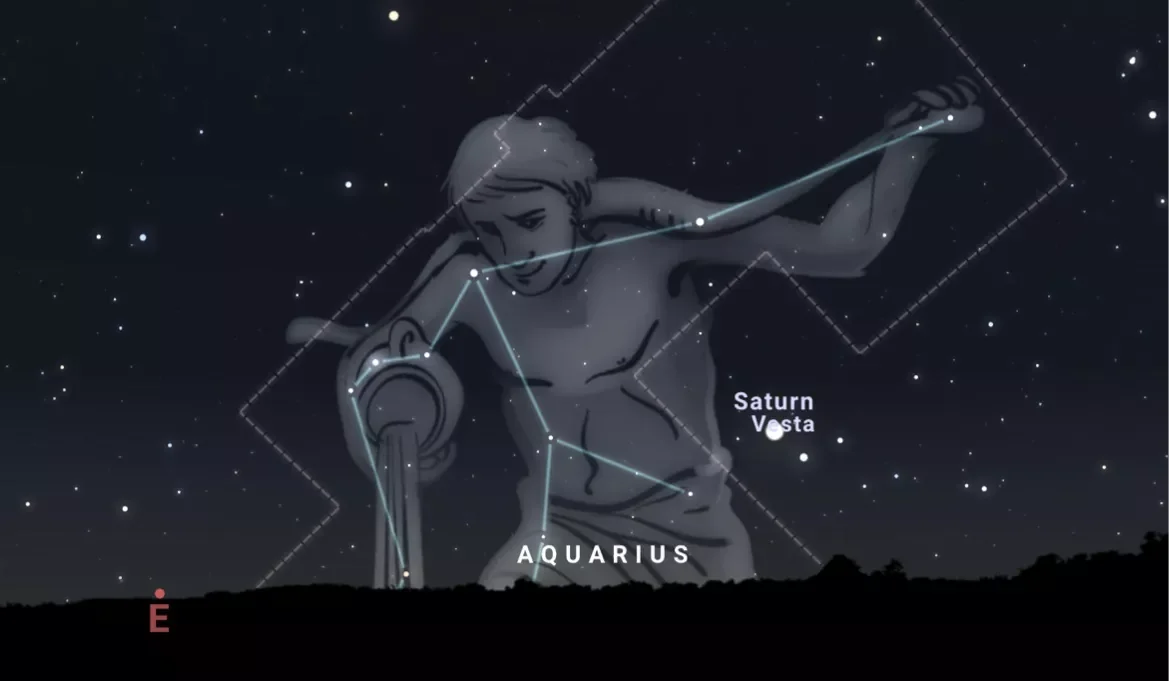
The shower takes its name from the constellation Aquarius, the point from which the meteors appear to radiate. On the morning of May 6, Aquarius rises above the eastern horizon just after 3:30 a.m. EDT. According to NASA, the shower peaks at 4 a.m., opening a narrow viewing window before dawn closes it. If the weather doesn't cooperate, the mornings on either side of the peak should still deliver a respectable showing of Eta Aquariids.
Watch the Moon Occult Jupiter (May 17)
Following January's occultation of Uranus, the next planet to slip behind the moon will be Jupiter, on May 17. Although the event unfolds after dawn for much of the U.S., those on the East Coast should still be able to watch Jupiter as it's concealed by a thin crescent moon around 7:45 a.m. EST. By the time it reemerges (around 8:52 a.m. EST), sunlight will wash out the finer details, but you may still pick out the pair with binoculars or a small telescope. As always, mind where you aim: even a fleeting glance at the sun through these instruments can cause permanent blindness.
If daylight intrudes on your view where you live, treat this year's event as a dress rehearsal for October 6, 2026. On that date, a rare occultation of Jupiter will unfold before dawn, ensuring (weather permitting) a dark backdrop for this striking event.
For a full list of times for the May 17 occultation of Jupiter from your location, jump here.
Dark Skies Return With the New Moon (May 19)
Just like last month, May opens with a New Moon and exceptionally dark skies. For a few days on either side of May 1, you can train your eyes, binoculars, or telescope on pristine views of galaxies, shooting stars, and other wonders that moonlight usually dims.
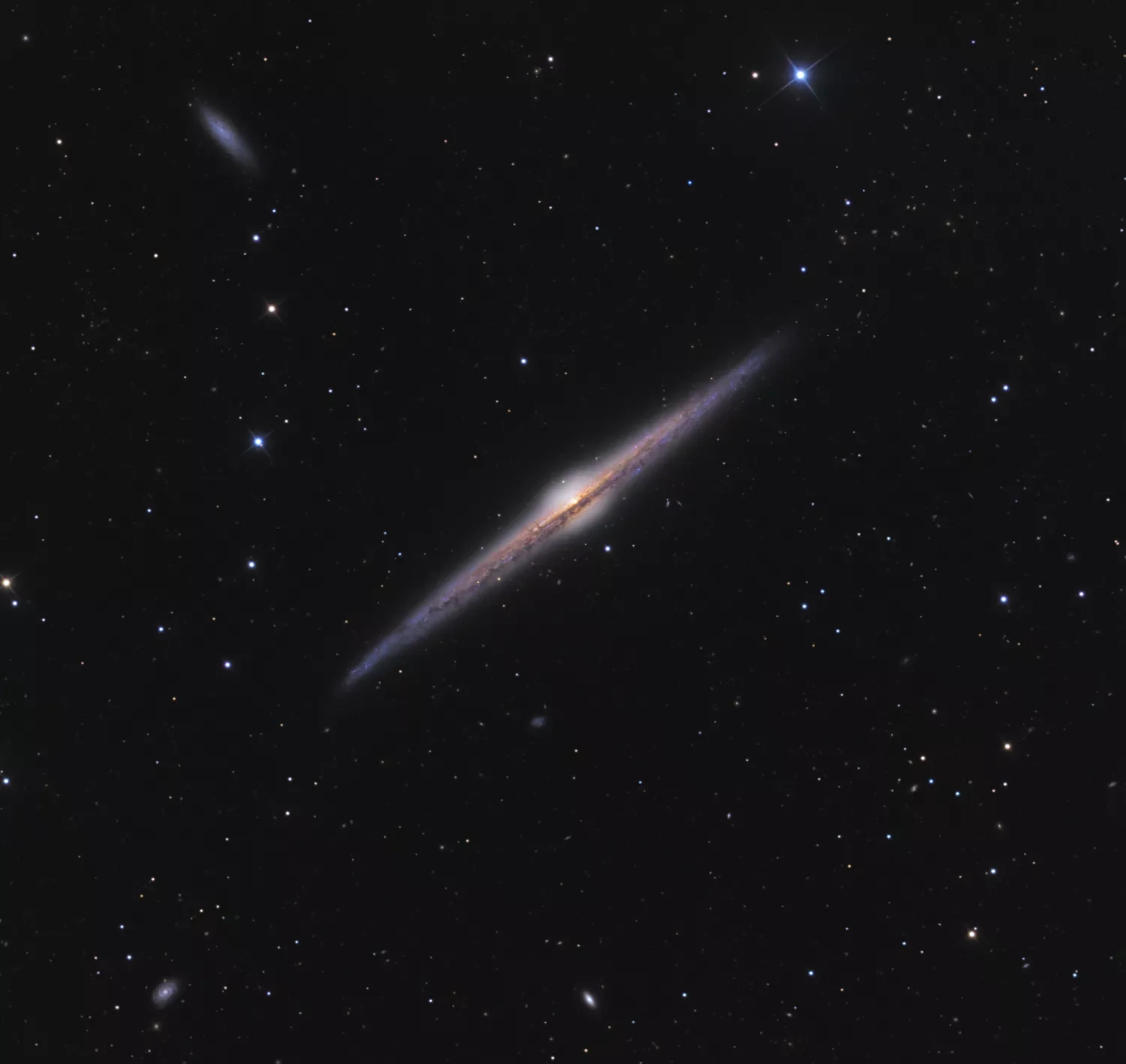
Ken Crawford / Wikimedia
Looking for a target? This month we suggest the Needle Galaxy (NGC 4565), named for its slim profile and located 40 million light-years away. Among the more breathtaking galaxies to hunt down, the Needle is cherished for its luminous rounded core and vivid dust lanes. Seek it out through an 8-inch or larger scope by focusing on the constellation Coma Berenices.
Track the Northern and Southern Lights All Month
Solar maximum, the moment when the sun's magnetic field reaches its peak strength and turbulence and solar activity surges, could arrive as early as next year. While heightened solar activity can disrupt radio communications and even the power grid, it also means a better chance of vivid auroras at lower latitudes around the globe. On April 23 and 24, a solar flare aimed straight at Earth ignited auroras over as many as 30 states, stretching from Washington to Maine and as far south as Kansas.
In the months and years ahead, as we edge toward solar maximum, opportunities to catch this colorful phenomenon will hopefully multiply. Knowing when skies are primed for auroras, however, can be tricky. If you're on Twitter, following the account Space Weather Watch, run by a space physicist, is one way to receive alerts. If you prefer your smartphone, the app SpaceWeatherLive offers another, with notifications and detailed reports of auroral activity at your fingertips. Happy aurora hunting!

References & Sources
- Primary source: https://www.treehugger.com/what-to-see-in-the-night-sky-for-may-2023-7487088
- Regional reference: Yellowstone Caldera geological survey.
- Cross-reference: Stratigraphic Column archive, specimen GEO-222.
Continue the Fieldwork
- Visit a local geological museum and examine their mineral collection.
- Take a field notebook on your next hike and sketch the rock formations you see.
- Support organizations that protect fossil heritage sites from looting.
Specimen bookmarked for your next dig.