California City Weighs Solar Canopy Over Historic Desert Aqueduct
Field report
A proposed solar canopy over the LA Aqueduct could curb evaporation and supply clean power to well over a million residents across the region.
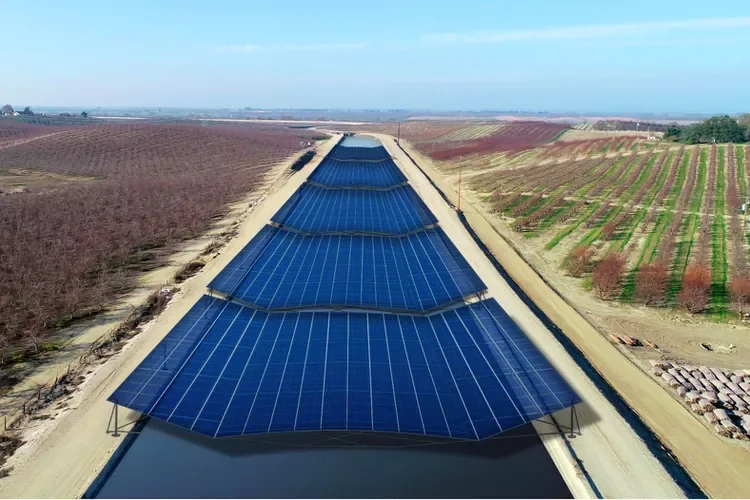
After weathering another summer of punishing heat waves—intense enough to prompt officials to design a first-of-its-kind warning system for extreme heat, similar to hurricane advisories—Los Angeles leaders are exploring an emerging idea known as "solar canals" to save water and expand renewable energy.
The Los Angeles City Council recently voted to study a proposal to suspend solar panels over the 370-mile Los Angeles Aqueduct. This gravity-fed channel carries water from the Owens River in the eastern Sierra Nevada to the city, and most of it lies open to the sky, losing an estimated 10% to 11% of its flow to evaporation each year. That amounts to billions of gallons—a staggering loss for a lifeline that supplied roughly 40% of the city's drinking water between 2013 and 2016.
Did you know?
The Earth's inner core is a solid ball of iron-nickel alloy about 1,220 km in radius, with a temperature comparable to the surface of the Sun.
City officials have framed the plan as both an environmental and a creative solution. The aqueduct is the reason modern Los Angeles exists, they argue, yet it has never been used to its full potential. Covering it with solar panels could finally bring the historic waterway into a new era of efficiency.
Beyond curbing evaporation, the team behind the proposal estimates that the solar installation could eventually supply clean electricity to 1.54 million customers in Los Angeles and another 6,000 in the Owens Valley.
Solar Canals: A Young Idea Gaining Traction
Although the Los Angeles proposal is the largest of its kind under consideration in the state, it is far from the only solar canal project on the table. The momentum behind all of them traces back to a $20-million proof-of-concept known as Project Nexus.
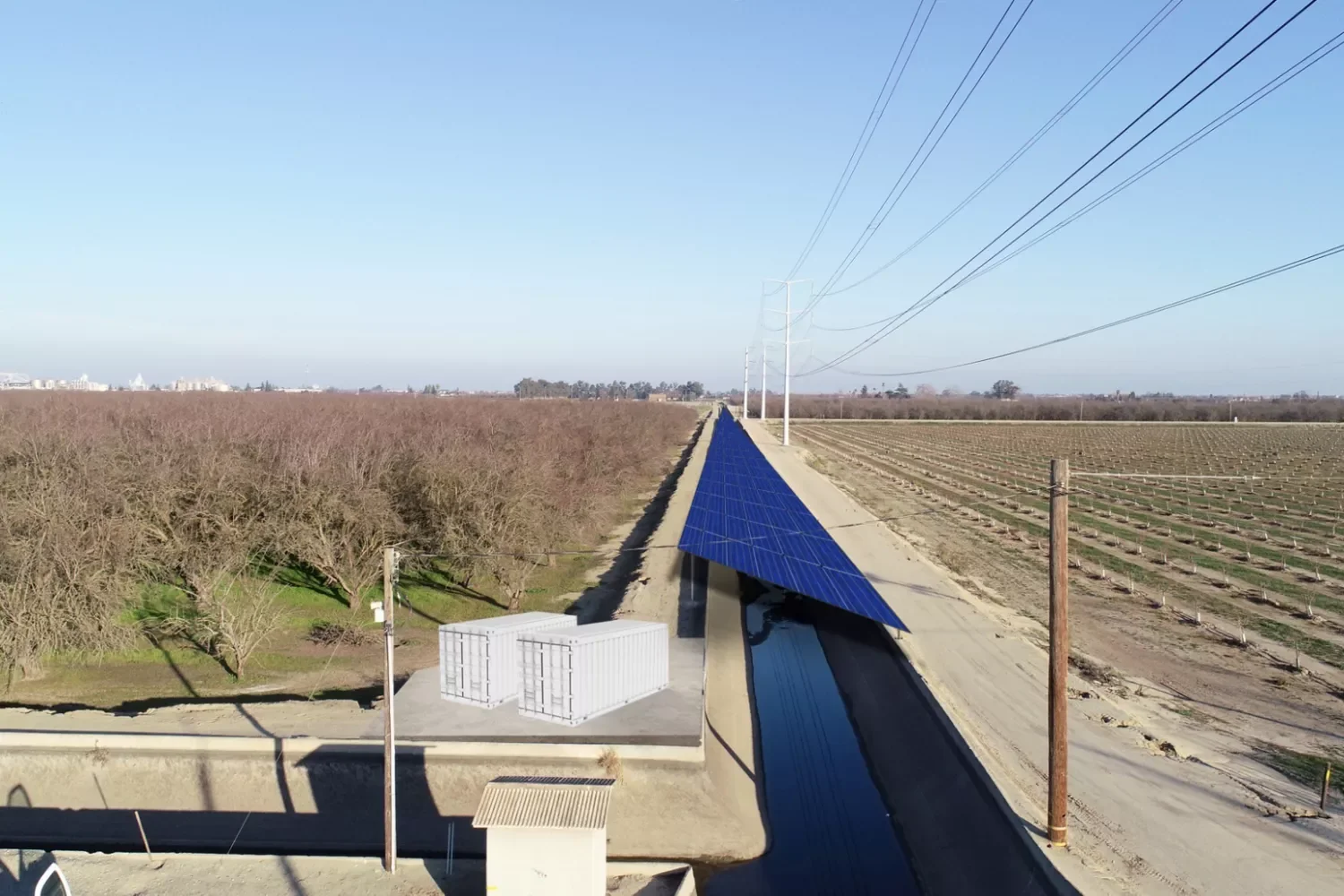
Led by the California Department of Water Resources, the Turlock Irrigation District, the University of California at Merced, and Solar AquaGrid—a firm focused on building solar canopies over waterways—Project Nexus will test both narrow and wide-span panel coverage over canals. Construction is expected to begin early next year on three canal sections totaling roughly 8,500 feet within the Turlock Irrigation District.
If the approach proves successful on these first two miles, supporters say it could readily expand to other sites across the state, turning existing water infrastructure into a dual-purpose asset.
The inspiration for Project Nexus draws on two key milestones in the short history of canal-top solar. In 2014, India pioneered the concept by covering more than 2,400 feet of irrigation channels with photovoltaic canopies. Similar projects have since multiplied across the country, including a nearly 25-mile, 100-megawatt stretch over canals branching from the Narmada River.
In 2021, researchers at UC Merced applied the same concept to California's 4,000 miles of public water-delivery canals. Their study, published in Nature Sustainability, estimated annual savings of 63 billion gallons of water alongside 13 gigawatts of renewable energy generation—enough to power hundreds of thousands of homes.
The benefits extend well beyond water conservation and electricity. Shading canals suppresses the growth of aquatic weeds, trimming maintenance costs, while the cool water flowing beneath the panels creates a microclimate that modestly boosts energy output. The study also found that for every megawatt of solar installed, 15 to 20 diesel irrigation pumps could be retired, improving air quality in nearby farming communities.
One of the most compelling advantages is the removal of a common hurdle for renewable energy projects. Because the state already owns the canals and controls access easements, the tangled legal and land-use costs that often stall solar development could be largely sidestepped.
Pairing water and energy infrastructure, researchers have found, can yield unexpected synergies—smoothing the path toward cleaner power generation and more resilient water systems at the same time.
Are Solar Canals Financially Feasible?
The benefits are clear in theory, but questions remain about whether California can realistically lead the world in canal-top solar. The UC Merced study found that over-canal installations cost more per watt than conventional ground-mounted arrays. Engineers also worry about humidity degrading structural components over time, and about whether nearby electrical infrastructure can carry the power where it is needed. Even so, the team's economic analysis concluded that the combined savings from multiple benefits made solar canals financially viable—far more than evaporation reduction alone.
Project Nexus and its varied test sites offer a rare chance to test those laboratory conclusions against real-world conditions. Researchers say they are eager to learn whether the projected benefits truly pencil out once the panels are in place and the data starts flowing.
The outcome could bode well for Los Angeles's aqueduct ambitions, as well as for California's broader goal of reaching 60% clean electricity by 2030.
There is no single fix for the state's water crisis, researchers caution. California faces a challenging water future, and finding solutions wherever they emerge—including atop canals—will be essential to building drought resilience for decades to come.
Source: L.A. City Government, "Motion."
McKuin, Brandi, et al. "Energy and Water Co-Benefits from Covering Canals with Solar Panels." Nature Sustainability, vol. 4, no. 7, 2021, pp. 609-617.
Source: California Energy Commission, "New Data Indicates California Remains Ahead of Clean Electricity Goals," 2022.

References & Sources
- Primary source: https://www.treehugger.com/los-angeles-aqueduct-solar-panels-6890654
- Regional reference: Pacific Ring of Fire geological survey.
- Cross-reference: Plate Puzzle archive, specimen GEO-980.
Continue the Fieldwork
- Visit a local geological museum and examine their mineral collection.
- Take a field notebook on your next hike and sketch the rock formations you see.
- Support organizations that protect fossil heritage sites from looting.
Specimen bookmarked for your next dig.