Artificial Light Is Erasing Nocturnal Ecosystems at an Alarming Pace

Field report
A new analysis shows we are losing the darkness that countless creatures depend on far more quickly than we knew.
Melissa Breyer was Treehugger's senior editorial director before moving to Martha Stewart. Her writing and photography have been featured in The New York Times, The Guardian, National Geographic, Audubon Magazine, and elsewhere.
Katherine Martinko is an expert in sustainable living. She holds a degree in English Literature and History from the University of Toronto.
Did you know?
Plate tectonics drive the rock cycle, recycling oceanic crust back into the mantle at subduction zones.
Weerakarn Satitniramai / Getty Images
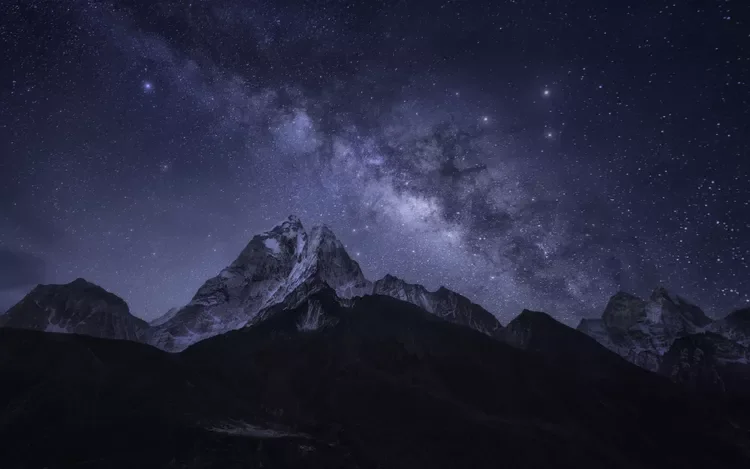
Few things are as vital to the natural world as genuine darkness. Countless generations of nocturnal creatures — moths, fireflies, bats, salamanders — have evolved under the cover of night, navigating by starlight and moonbeams, hunting and breeding in the shadows. True darkness is closely tied to the health of whole ecosystems, yet thanks to artificial light and the skyglow it produces, we are robbing these creatures of their most essential habitat.
This isn't new news. For decades, light pollution has been troubling ecologists and nature lovers alike. The impact on the natural world is staggering — from disorienting migratory birds that crash into illuminated buildings and disrupting the flash patterns of fireflies seeking mates, to confusing newly hatched sea turtles that crawl toward parking lot lights instead of the moonlit ocean and altering the feeding schedules of deer and elk that avoid lit areas. And lest we forget: the lighting that causes light pollution wastes important resources.
Yet despite this knowledge, light pollution has been challenging to document, especially on a global scale. But now, a new study shows that light pollution is rapidly worsening.
The analysis comes from Globe at Night, a citizen science program run by the National Science Foundation's NOIRLab. The study concludes that nocturnal habitat is disappearing at a stunning rate. By relying on the observations of sky-gazers across the globe, the researchers found that light pollution has had much more of an impact than indicated by satellite measurements.
From the glimmering swath of firefly-lit meadows to the moonlit migration corridors overhead, the natural nighttime world should support millions of creatures on a clear, dark night. Yet thanks to light pollution, 30% of people around the globe and around 80% of people in the United States can't even experience true natural darkness anymore.
How Much Worse Will It Get?
"At this rate of change, a child born in a location where 250 firefly species flashed on summer nights would be able to see only around 100 by the time they turned 18," said Christopher Kyba, a researcher at the German Research Centre for Geosciences and lead author of the paper.
The Globe at Night project has been collecting data since 2006. Citizen scientists submit detailed observations about what they can see (and thus, what they can't see) in the night sky, without telescopes or other instruments.
For the study, which was published in the journal Science, the authors looked at more than 50,000 observations submitted to Globe at Night between 2011 and 2022, with a focus on submissions from Europe and North America.
Skyglow
A form of light pollution characterized by the diffuse illumination of the night sky. Easily visible over cities, skyglow does not include natural light sources such as the moon and visible individual stars.
The authors used the observations to estimate how skyglow has changed over the years. They found that the loss of visible darkness was higher than expected and that sky brightness has increased 9.6% per year over the past decade. Satellite measurements, which is how sky brightness has been measured thus far, only suggested a 2% per year global increase in brightness.
Brad Thaw / EyeEm / Getty Images
"This shows that existing satellites aren't sufficient to study how Earth's night is changing," said Kyba in a statement from NOIRLab. "We've developed a way to 'translate' Globe at Night observations of darkness visibility made at different locations from year to year into continent-wide trends of sky brightness change. That shows that Globe at Night isn't just an interesting outreach activity, it's an essential measurement of one of Earth's environmental variables."
For a number of reasons, current satellites aren't great for measuring skyglow as it appears to humans and wildlife, leading the researchers to praise the importance of crowd-sourced observations in evaluating the brightness of the nighttime sky.
"The increase in skyglow over the past decade underscores the importance of redoubling our efforts and developing new strategies to protect dark skies," said National Radio Astronomy Observatory astronomer and Globe at Night developer Connie Walker. "The Globe at Night dataset is indispensable in our ongoing evaluation of changes in skyglow, and we encourage everyone who can to get involved to help protect the nocturnal world."
To help document the night sky, you can submit your observations to the Globe at Night web application.

References & Sources
- Primary source: https://www.treehugger.com/stars-disappearing-from-sight-astonishing-rate-7096817
- Regional reference: Atacama Desert geological survey.
- Cross-reference: Deep Sea Portholes archive, specimen GEO-271.
Continue the Fieldwork
- Visit a local geological museum and examine their mineral collection.
- Take a field notebook on your next hike and sketch the rock formations you see.
- Support organizations that protect fossil heritage sites from looting.
Specimen bookmarked for your next dig.