How Plants Sense and Respond to the World Around Them
Field report
It turns out plants are far more aware of their surroundings than we ever imagined. The real question is: just how responsive are they?
David Kuchta, Ph.D. has 10 years of experience in gardening and has read widely in environmental history and the energy transition. An environmental activist since the 1970s, he is also a historian, author, gardener, and educator.
JokoHarismoyo / Getty Images
Did you know?
The K-Pg boundary layer contains a spike of iridium — an element rare on Earth but common in asteroids — evidence of the impact that wiped out the dinosaurs.
One of the clearest differences between plants and animals is how they react to the world around them. Humans have brains that process sensations and decide how to act. What we call "feelings" are really just layered responses to the social and physical cues we encounter every day.
Plants may not have a brain, but they are remarkably good at picking up signals from their environment and reacting in kind. While they don't experience emotions the way animals do, they can remember threats and pass warnings along to their neighbors.
Plant vs. Animal Awareness
Animals rely on neurons to carry sensory information to a central brain for processing. In people, when your brain decides something hurts or is dangerous, it fires a signal back to the source, prompting you to pull away or protect yourself from further harm.
Animals like us store memories of painful events so we can avoid repeating them. Remembering a past injury doesn't make our bodies flood with adrenaline every time the memory surfaces.
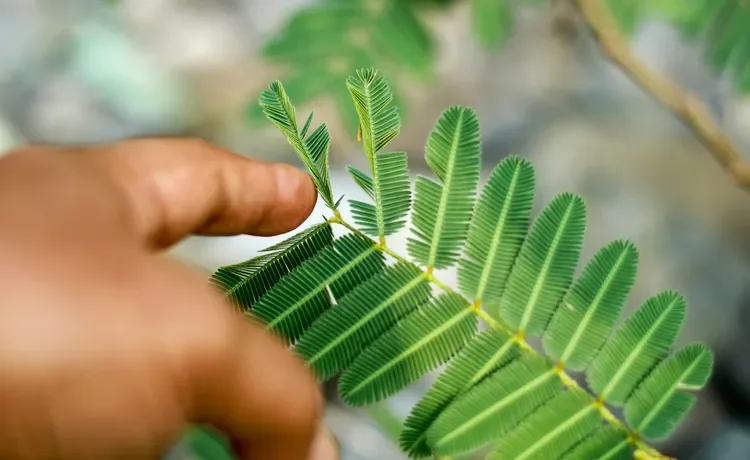
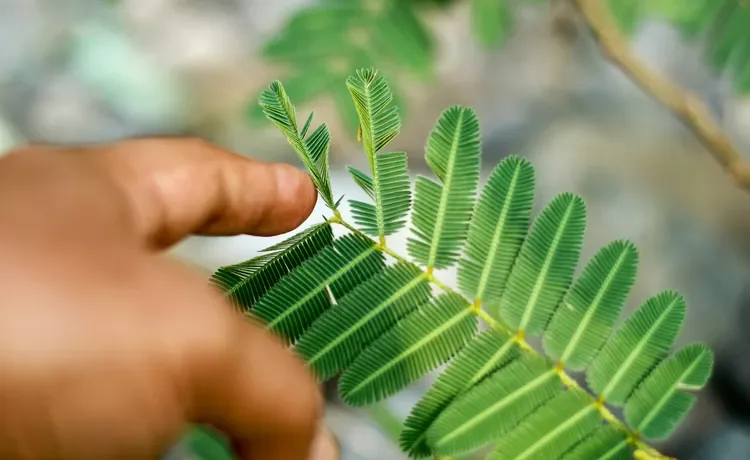
Without a central brain, plants handle sensations very differently. But they absolutely react to unpleasant stimuli. Brush the leaves of the sensitive plant, Mimosa pudica, and watch them fold shut instantly. Snip a branch from a hedge, and the plant seals the wound with a callus and pushes out new growth below the cut.
Plants hold on to memories of these experiences—not in one centralized organ, but spread throughout the plant, close to where the memory matters most. And this isn't just a reflex. Touch a sensitive plant's leaves over and over, and it eventually stops closing them. It has figured out the touch isn't dangerous, and it will remember that lesson for up to 40 days.
Similarly, perennial wildflowers remember when it's safe to start growing again each spring. Opening too early, before bees and butterflies have reappeared, means wasted effort. Sprouting while frost still threatens could be fatal. So many plants build proteins that track how many cold days have passed, only sending up shoots when conditions are genuinely safe.
Cross-Species Conversations in the Soil
oddonatta / Getty Images
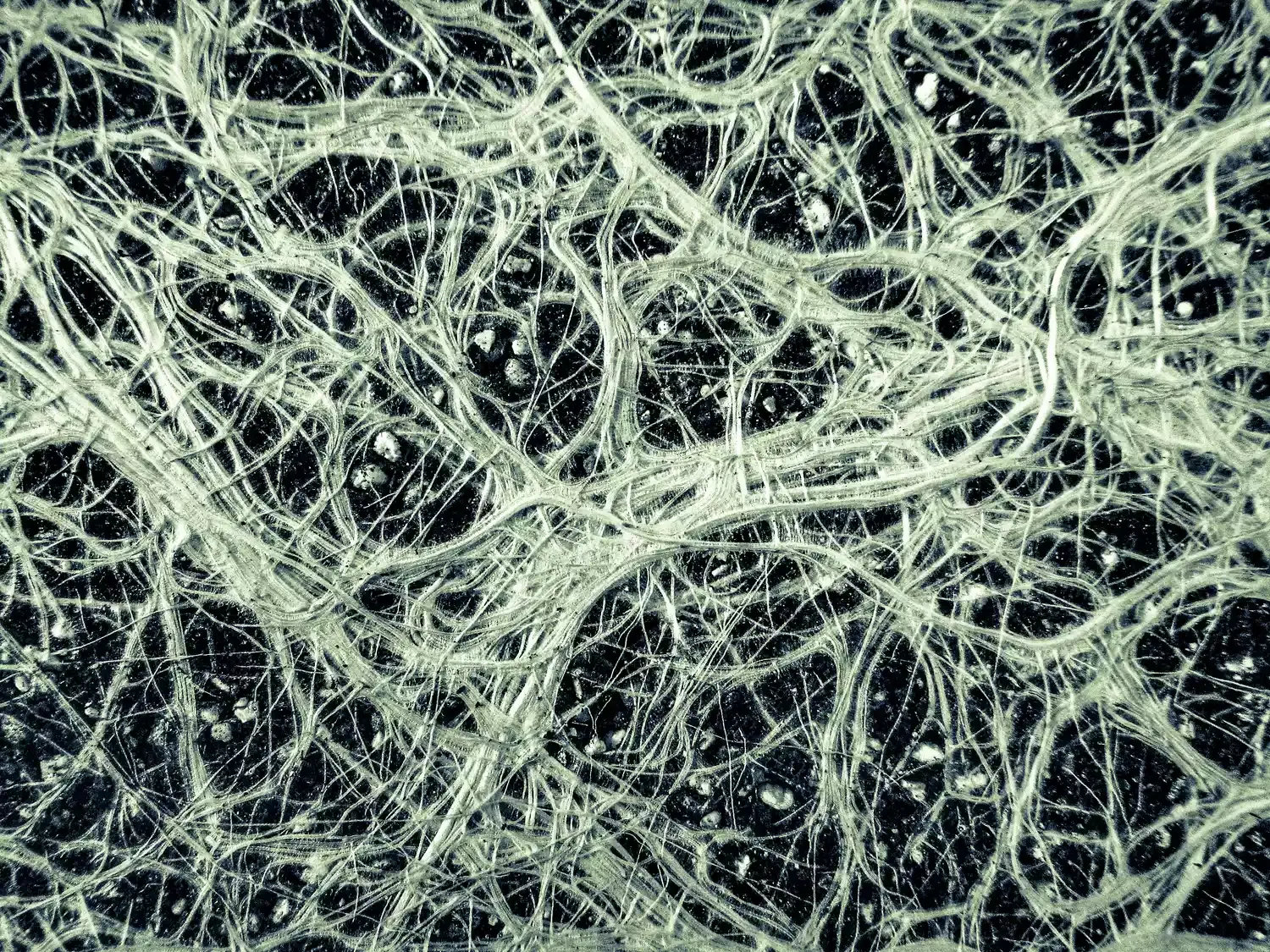
One of the most vital and widespread partnerships on Earth is the mycorrhizal bond between fungi and plant roots—a relationship shared by roughly 90% of all plant species.
Through these underground fungal highways, plants swap nutrients with fungi and neighboring plants, dispatching resources and sounding alarms when danger appears. Nitrogen, carbon, and phosphorus flow freely between connected roots. Aloe vera, tomatoes, and other species also alert each other using electrical pulses—nature's own telegraph system—triggering growth and healing responses. This sprawling underground network makes the Internet look simple.
Plants send chemical warnings through their leaves as well. When a deer nibbles on sagebrush or an acacia, the plant releases defensive toxins that don't just repel the browser—they drift on the air to nearby plants, which start producing their own toxins before the herbivore even reaches them.
Plants That Hear and Respond
Much like many animals, certain plants use sound to communicate. Sound is simply vibration traveling through air—something plant cells can generate and plant tissues can sense.
Recent research confirms that some plants release high-frequency clicks and pops. Tomato and tobacco plants, for instance, produce distinct sounds when parched or when their stems are damaged.
Plants can also be surprisingly attentive listeners. Pea seedlings steer their roots toward the gurgle of flowing water—even a recording of water is enough to attract them. And primrose blossoms sweeten their nectar within minutes of sensing the buzz of a nearby bee, whether the sound is real or played through a speaker.
The bulk of a plant's existence plays out beneath the soil. Down there, in a sprawling web of sensory and memory cells, plants process information in a distributed network that may contain over a trillion cells—comparable in number to the neurons in a human brain. We tend to prize plants for their showy flowers and fruits, but it's the hidden underground life where the real thinking happens. Like us, they depend on both awareness and action to survive.
Common Questions About Plant Awareness
Consciousness arises from intricate neural activity within a central brain—something plants simply don't have. But memory and consciousness aren't the same thing. Even in humans, memory often operates below conscious awareness. Immune cells learn to recognize and fight pathogens without any deliberate thought on our part. Vaccination works precisely because our cells remember. In both plants and people, memory can live at the cellular level, entirely separate from conscious experience.
Plants lack a limbic system—the part of the human brain that generates emotions from sensory experience—so they don't feel happiness or sorrow. When you mow the lawn, the grass isn't angry. But it does release that unmistakable fresh-cut smell, which is actually a chemical distress signal. That scent attracts predatory insects that attack the very herbivores chewing on the grass. So the grass doesn't get mad—it calls for backup.
Mancuso, Stefano.The Revolutionary Genius of Plants: A New Understanding of Plant Intelligence and Behavior. New York: Atria Books, 2018, 18.
Fu-Yu Hung, et al. “ WRKY63 transcriptional activation ofCOOLAIRandCOLDAIRregulates vernalization-induced flowering.”Plant Physiologykiac295 (June 16 2022). https://doi.org/10.1093/plphys/kiac295.
Nguyen, Nhu H. et al. “FUNGuild: An open annotation tool for parsing fungal community datasets by ecological guild”Fungal Ecology29 (2016), 241–248. https://doi.org/10.1016/j.funeco.2015.06.006.
Boyno, Gökhan, and Semra Demir. “Plant‑mycorrhiza communication and mycorrhizae in inter‑plant communication.”Symbiosis86 (2022), 155–168. https://doi.org/10.1007/s13199-022-00837-0.
Song, Yuan Yuan, et al. “Hijacking common mycorrhizal networks for herbivore-induced defence signal transfer between tomato plants.”Scientific Reports4:3915 (January 31, 2014) 1–9. DOI: 10.1038/srep03915.
Volkov, Alexander G., and Yuri B. Shtessel. “Electrotonic signal transduction betweenAloe veraplants using underground pathways in soil: Experimental and analytical study.”Biophysics4:4 (17 October 2017), 576–595. DOI: 10.3934/biophy.2017.4.576; Volkov, Alexander G., and Yuri B. Shtessel. “Electrical signal propagation within and between tomato plants.”Bioelectrochemistry124 (2018) 195–205. https://doi.org/10.1016/j.bioelechem.2018.08.001.
Karban, Richard, Patrick Grof-Tisza, and Charline Couchoux. “Consistent individual variation in plant communication: do plants have personalities?”Oecologia199 (2022),129–137. https://doi.org/10.1007/s00442-022-05173-0; Bonato, Bianca, et al. “Cracking the code: a comparative approach to plant communication.”Communicative & Integrative Biology, 14:1 (2021), 176–185, doi: : 10.1080/19420889.2021.1956719; Wohlleben, Peter.The Hidden Life of Trees: What They Feel, How They Communicate. Berkeley, CA: Greystone Books, 2015, 15.
Bhandawat, Abhishek, and Kuldip Jayaswall. “Biological relevance of sound in plants.”Environmental and Experimental Botany200 (August 2022), 104919. https://doi.org/10.1016/j.envexpbot.2022.104919.
Khait, I., et al. “Plants emit Plants airborne sounds under stress.”BioRxiv507590 (December 2019), doi: https://doi.org/10.1101/507590.
Gagliano, Monica, et al. “Tuned in: plant roots use sound to locate water.”Oecologia184 (2017), 151–160. DOI 10.1007/s00442-017-3862-z.
Veits, Marine, et al. “Flowers respond to pollinator sound within minutes by increasing nectar sugar concentration.”Ecology Letters22 (2019), 1483–1492. di: 10.1111/ele.13331.
Mancuso, op, cit., 56.
Allmann, Silke, and Ian T. Baldwin. “Insects Betray Themselves in Nature to Predators by Rapid Isomerization of Green Leaf Volatiles”Science329:5995 (27 August 2010), 1075–1078. doi: 10.1126/science.1191634.

References & Sources
- Primary source: https://www.treehugger.com/do-plants-have-feelings-science-explainer-5546944
- Regional reference: Deccan Traps geological survey.
- Cross-reference: Fossil Excavation archive, specimen GEO-394.
Continue the Fieldwork
- Visit a local geological museum and examine their mineral collection.
- Take a field notebook on your next hike and sketch the rock formations you see.
- Support organizations that protect fossil heritage sites from looting.
Specimen bookmarked for your next dig.