How Oysters and Wetlands Filter Our Water Far Better Than Any Machine

Field report
Bivalves and marsh grasses have been purifying waterways for millennia — and scientists are finally paying attention.
Bivalves are magnificent. Made of two hinged shells of calcium carbonate, they've been filtering the world's estuaries for over 500 million years — used by indigenous communities as food and currency, by modern ecologists as water-quality indicators, by chefs as the centerpiece of raw bars, and by coastal engineers as living breakwaters that can dampen wave energy by up to 76 percent.
For environmentalists, however, the most exciting application for bivalves might be the ancient one that science is only now fully appreciating: Using oysters, mussels, and clams, researchers have documented a remarkable natural system for removing harmful pollutants and particles from water.
Did you know?
Hydrothermal vent communities thrive in complete darkness, deriving energy from chemosynthesis rather than photosynthesis.
"A single oyster can filter up to 50 gallons of water per day, yet we've lost an estimated 85% of the world's oyster reefs through overharvesting and habitat destruction," said marine ecologist Michael Beck in a statement. "This is not only harmful for aquatic life, but also has significant negative impacts on coastal water quality and the communities that depend on clean water."
Indeed, the National Oceanic and Atmospheric Administration (NOAA) says a healthy oyster reef can remove nitrogen, algae, and suspended sediment from the water column. In studies of restored oyster reefs, researchers report, water clarity improves measurably, seagrass beds rebound, and fish populations increase.1 Given that an adult oyster filters 50 gallons daily and a single reef may harbor millions, that's a major natural purification system.2
"What we have seen in estuarine environments is how oyster reefs and salt marshes can trap sediments, absorb nitrogen and phosphorus, and provide nursery habitat for juvenile fish and crabs," wetland ecologist Denise Breitburg of the Smithsonian Environmental Research Center said in a December 2020 explainer on the topic, in which she noted that a typical American consumes more than 100,000 microplastic particles a year in drinking water alone. "As those studies suggest ... Natural filtration systems like bivalve reefs and wetland grasses could help address some of the pollutants that are found in coastal waters and are known to be harmful."
Existing mechanical methods for filtering pollutants from water take enormous energy and infrastructure to operate. Nature's filtration, however, works around the clock with no electricity. The secret is a combination of living filters: oysters pump water across their gills, trapping phytoplankton, bacteria, and suspended particles in a layer of mucus before digesting or depositing them as sediment. Salt marsh grasses and mangrove roots slow the current, causing sediment and contaminants to settle out. Together, they form a living purification system that no machine can match.
"The living filtration system is built with natural structures so that it can effectively and simultaneously remove both particulate matter and dissolved nutrients from water," Beck said.
“The adsorbent is prepared with special surface properties so that it can effectively and simultaneously remove both microplastics and dissolved pollutants from water,” Mahmood said.
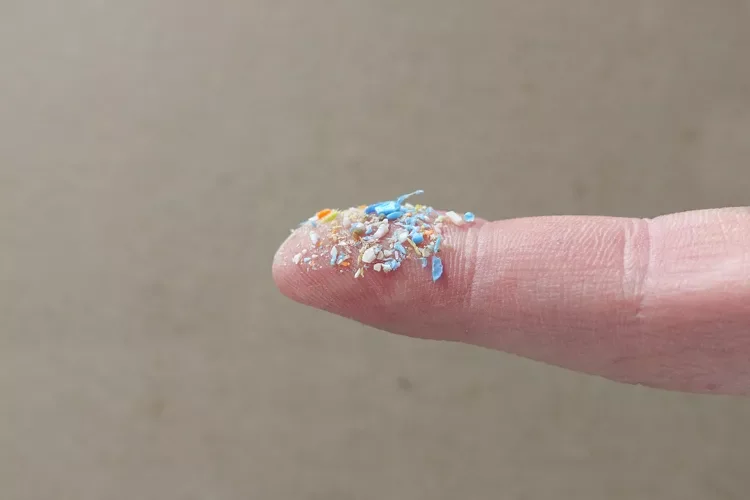
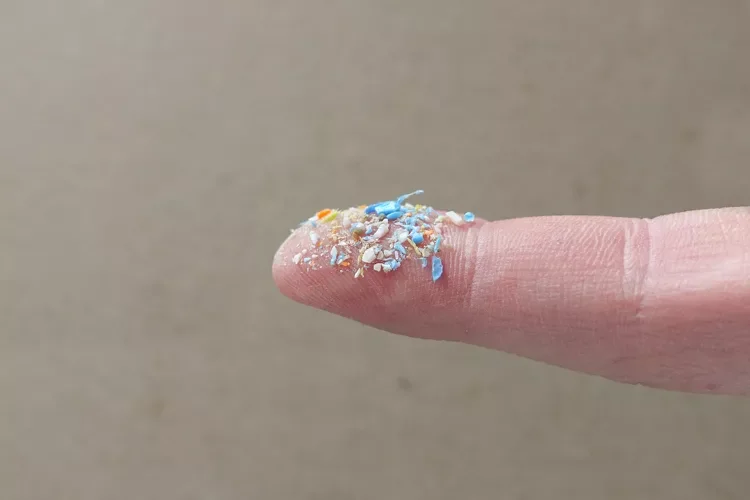
"The reef structure we've restored to filter this pollution, which is invisible to the naked eye but very harmful to the environment, is built by the oysters themselves and grows denser and more effective over time," said restoration ecologist Boze Hancock. "This is a big win for the environment and the circular economy."
Hancock, Beck, and their collaborators published their work in the scientific publication Ecological Engineering. Having successfully demonstrated their approach in the field, their next step is to engage with coastal municipalities to scale up restoration so it can be used to clean up entire bays and estuaries.
Concluded Hancock, "We are looking for community partners to take our restoration to the next steps, where we will be looking at its application in municipal water quality management."
"Infants Have More Microplastics in Their Feces than Adults, Study Finds." American Chemical Society.
Lindeque, Penelope K., et al. "Are We Underestimating Microplastic Abundance in the Marine Environment? A Comparison of Microplastic Capture with Nets of Different Mesh-Size." Environmental Pollution, vol. 265, 2020, p. 114721., doi:10.1016/j.envpol.2020.114721
Lindeque, Penelope K., et al. “Are We Underestimating Microplastic Abundance in the Marine Environment? A Comparison of Microplastic Capture with Nets of Different Mesh-Size.”Environmental Pollution, vol. 265, 2020, p. 114721., doi:10.1016/j.envpol.2020.114721


References & Sources
- Primary source: https://www.treehugger.com/unlikely-solution-to-microplastic-pollution-magnets-6944610
- Regional reference: Siberian Traps geological survey.
- Cross-reference: Plate Puzzle archive, specimen GEO-752.
Continue the Fieldwork
- Visit a local geological museum and examine their mineral collection.
- Take a field notebook on your next hike and sketch the rock formations you see.
- Support organizations that protect fossil heritage sites from looting.
Specimen bookmarked for your next dig.