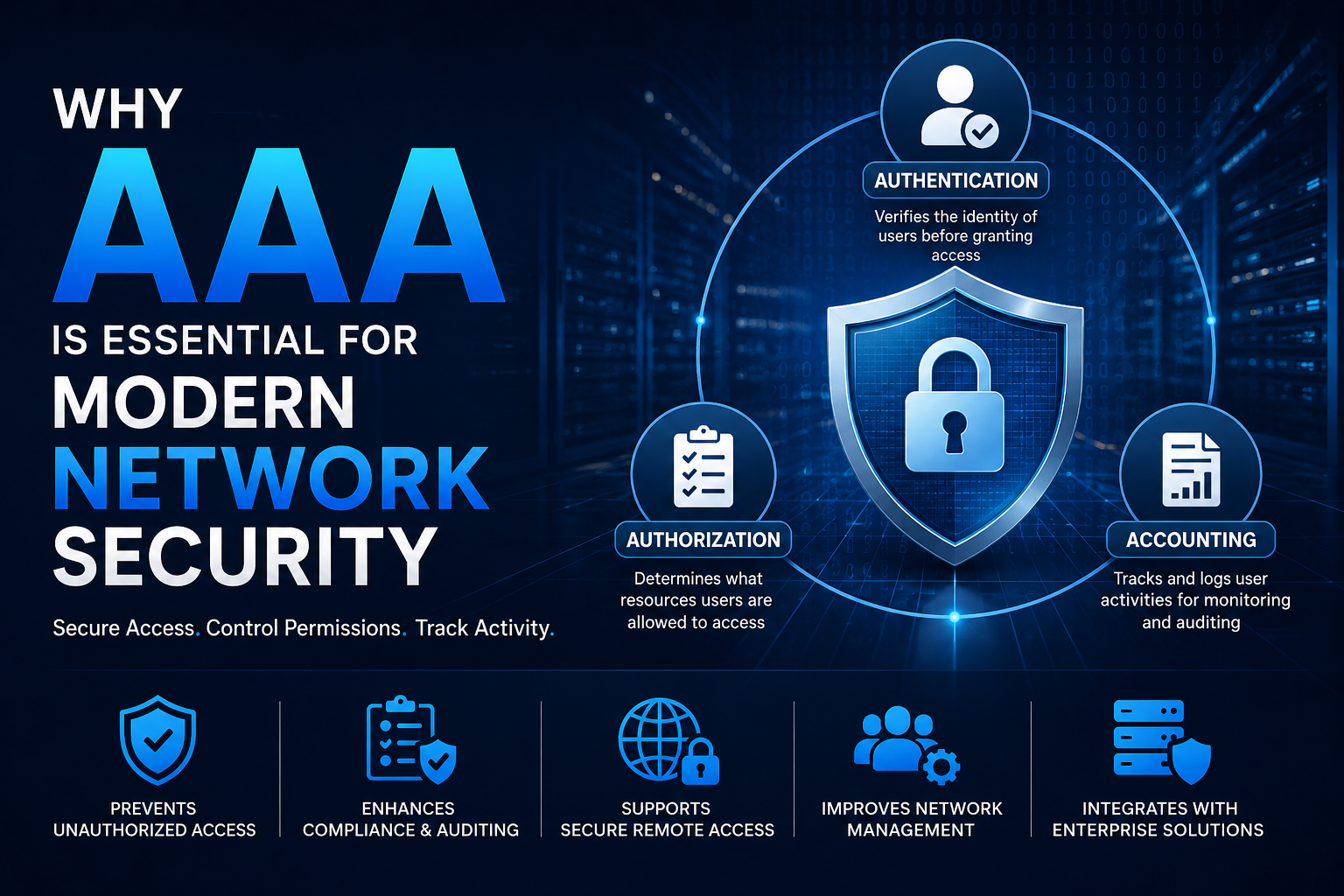
As businesses continue to embrace digital transformation, protecting network resources has become more important than ever. Organizations manage thousands of users, devices, and applications that require secure access to sensitive information. Without proper access controls, networks become vulnerable to unauthorized users, data breaches, and cyberattacks. This is where AAA (Authentication, Authorization, and Accounting) plays a vital role. AAA is a security framework that helps organizations verify user identities, control access permissions, and monitor user activities across the network.
Understanding the AAA Framework
AAA consists of three essential components that work together to strengthen network security:
- Authentication verifies the identity of a user before granting access. This process may involve usernames, passwords, multi-factor authentication (MFA), biometric verification, or digital certificates.
- Authorization determines what resources and actions an authenticated user is allowed to access based on predefined roles and permissions.
- Accounting records user activities, including login attempts, access times, commands executed, and session duration. These logs are valuable for monitoring, auditing, and troubleshooting.
Together, these three functions create a comprehensive security system that protects enterprise networks from unauthorized access.
Preventing Unauthorized Access
One of the biggest advantages of AAA is its ability to prevent unauthorized users from entering the network. Authentication ensures that only verified users can access systems, while authorization limits users to the resources necessary for their job responsibilities. This follows the principle of least privilege, reducing the risk of accidental or malicious misuse of sensitive data.
Strengthening Compliance and Auditing
Many industries must comply with regulations such as GDPR, HIPAA, PCI DSS, and ISO 27001. AAA supports these compliance requirements by maintaining detailed logs of user activities through its accounting function. Security teams can review login records, access history, and administrative actions to demonstrate compliance during audits and quickly investigate suspicious behavior.
Supporting Secure Remote Access
With hybrid work environments becoming the norm, employees often connect to corporate networks from different locations and devices. AAA enhances remote access security by verifying user identities before allowing VPN or network access. Combined with multi-factor authentication, it significantly reduces the risk of compromised credentials being used by attackers.
Improving Network Management
AAA also simplifies network administration. Instead of assigning permissions individually, administrators can implement role-based access controls that automatically grant appropriate privileges to users based on their roles. This reduces administrative workload while maintaining consistent security policies across the organization.
Integrating with Enterprise Security Solutions
Modern AAA implementations integrate seamlessly with technologies such as RADIUS, TACACS+, LDAP, and Active Directory. These integrations provide centralized identity management, allowing organizations to enforce security policies across multiple systems and network devices from a single platform.
Conclusion
AAA is a cornerstone of modern network security because it combines authentication, authorization, and accounting into a unified framework. By verifying user identities, controlling access permissions, and tracking user activities, AAA helps organizations protect sensitive data, meet compliance requirements, and strengthen their overall cybersecurity posture. As cyber threats continue to evolve, implementing a robust AAA framework is no longer optional—it is an essential part of securing today’s enterprise networks.